

Key Takeaways
Used parts can reduce repair costs, but EV components require more careful identification and handling than ordinary replacement parts.
- Match the part to the exact model, year, trim, drivetrain, and VIN.
- Ask for condition details, photographs, test results, and part history.
- Compare the full fitted cost, including freight, storage, diagnostics, and labour.
- Treat batteries and other high-voltage components as specialist equipment.
- Keep every invoice, warranty, and compatibility record after installation.
Understanding the used BYD parts market in Australia
The market for recycled EV components is developing alongside the growing number of electric vehicles on Australian roads. Used bodywork and cabin parts are usually easier to source than complex electronic assemblies, while availability can change quickly as newer models enter dismantling yards. For anyone searching for used BYD parts Australia, the sensible approach is to treat each listing as a starting point for verification rather than proof of fitment.
Why demand for recycled BYD components is growing
Repairing a damaged vehicle with a recycled component can make financial sense when the part is sound and correctly matched. It also gives dismantlers a route to recover useful components from vehicles that are no longer economical to repair. Demand is especially noticeable for visible crash-repair items, lights, doors, mirrors, wheels, and interior pieces, where a replacement may be needed even when the vehicle’s main systems remain serviceable.
The age and mix of the local vehicle fleet also influence supply. Some parts appear regularly because particular models are being dismantled, while others may need to be sourced through a broader network. A supplier who can explain where a component came from is generally easier to assess than one offering only a stock number and a low price.
Common BYD models and parts availability
Australian listings can include the Atto 3, Dolphin, Seal, Sealion variants, and Shark models, with availability varying by state, model year, and the type of damage suffered by the donor vehicle. A yard may have several doors but no matching trim, or a complete lamp assembly without the related control module. That is why a request should describe the complete vehicle specification, not simply the family name.
The BYD parts network can be a useful place to compare the kinds of components appearing in Australian stock, including body, electrical, and drivetrain items. Use those listings to narrow the search, then confirm the individual part number and condition with the seller before paying.
New, used, refurbished, and aftermarket options
A used part is not automatically the best value. New genuine components may offer the clearest fitment path, while refurbished parts can be appropriate when a specialist has inspected and repaired them. Aftermarket parts may cost less, but quality and compatibility vary, so the buyer needs to check whether the component is cosmetic, mechanical, electronic, or safety-related.
The right comparison is between equivalent assemblies. A quoted price for a bare housing should not be compared with a price for a complete tested assembly containing sensors, wiring, brackets, or control hardware. The complete cost matters more than the number shown beside the listing.
How Australian dismantlers and recyclers source parts
Dismantlers may acquire vehicles through auctions, insurance channels, trade-ins, salvage sales, and industry contacts. They then record identifying details, remove usable components, and grade or test parts according to their own processes. Those processes are not identical from one business to another, which makes direct questions worthwhile.
Ask whether the part was removed from a running vehicle, a collision-damaged vehicle, or one with an unknown electrical condition. For a high-voltage component, also ask whether the supplier has recorded isolation, storage, and transport information. A clear answer will not guarantee the part, but it gives you something concrete to evaluate.
Finding reputable used BYD parts suppliers
A good supplier makes fitment and condition easier to understand before the sale. Compare the information provided, not only the advertised price, and be wary of listings that avoid photographs or give no return terms. It is also worth checking the seller’s experience with EV components, because ordinary dismantling experience does not necessarily cover high-voltage systems.
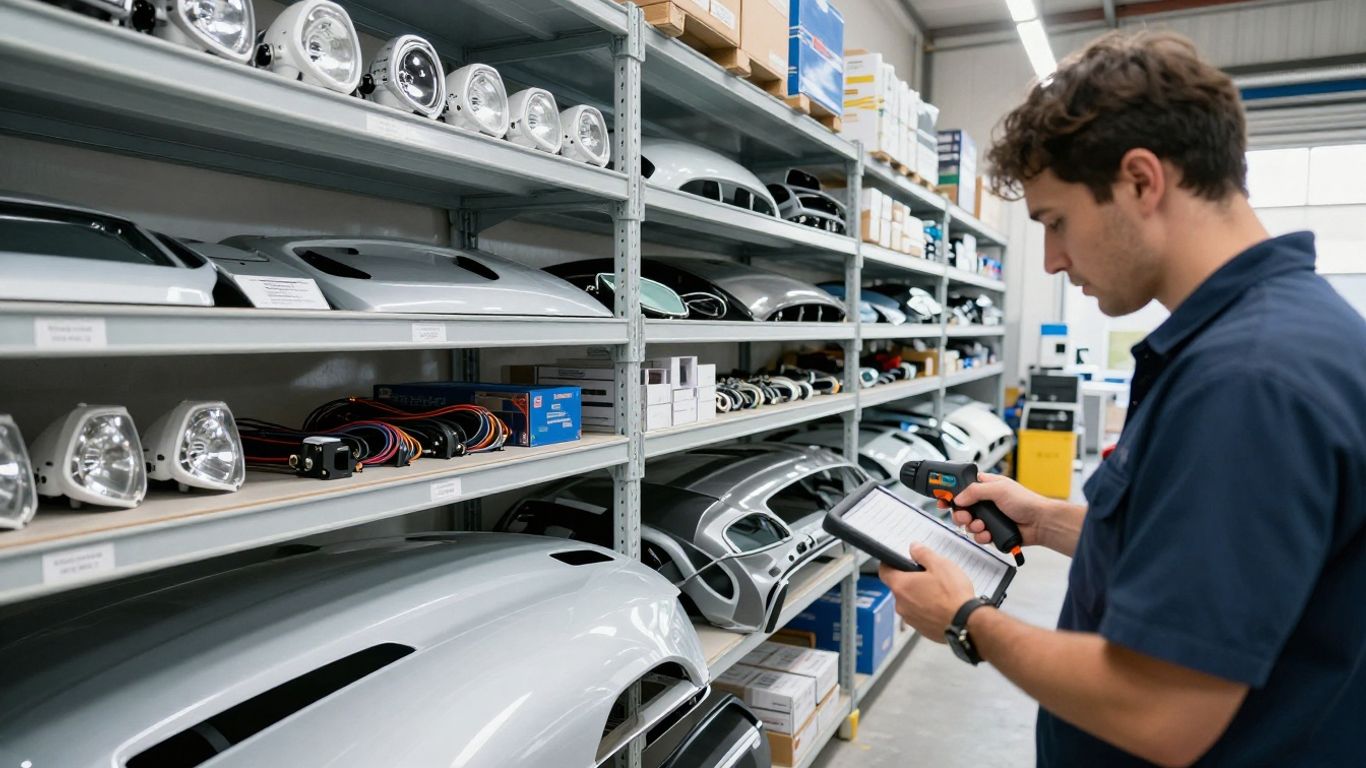
Comparing BYD wreckers, dealerships, and online marketplaces
Wreckers can offer recycled assemblies and useful donor-vehicle information, while dealerships may be better placed to confirm new-part identification, software requirements, or warranty conditions. Online marketplaces broaden the search but often place more responsibility on the buyer to verify the seller, part number, and condition.
A practical comparison should include response time, the detail of the listing, whether the seller supplies serial or part numbers, and how a damaged shipment is handled. The BYD Atto 3 parts store is another reference point for checking the type of exterior and interior components available through a genuine-parts channel, even when you ultimately choose a used item.
Checking supplier experience with electric vehicles
Ask how the business handles batteries, electric motors, inverters, charging equipment, and damaged vehicles. The answer should identify who performs testing and whether the item has been stored in a controlled, documented way. For non-high-voltage items, experience with model-specific electronics still matters because modern panels and lamps may contain sensors or modules.
A supplier’s wider service information can also help you frame questions for a repairer. For example, BYD service and warranty information provides a reference for the sort of scheduled maintenance and high-voltage checks associated with these vehicles. It does not replace a part inspection, but it can help separate routine servicing from specialist repair work.
Reviewing warranties, return policies, and customer feedback
Read the warranty before ordering, especially for electrical and drivetrain components. Check whether labour, diagnostics, freight, and removal are excluded, and find out whether the seller offers a refund, exchange, or credit when the supplied part is incorrect. Customer feedback is most useful when it describes how the business handled a problem, rather than simply praising fast delivery.
The same habit applies when assessing other service providers: compare evidence, scope, and accountability. Guidance on finding reliable local plumbers, for example, stresses checking experience, licensing, reviews, and pricing rather than relying on a single recommendation. Those principles transfer neatly to parts buying without making a plumbing service relevant to the vehicle itself.
Confirming shipping coverage across Australia
Before payment, confirm that the supplier delivers to your postcode and ask how the part will be packaged. Large panels, glass, batteries, and heavy drive components may have different freight arrangements, while remote locations can involve surcharges or depot collection. Get the estimated delivery window and the process for reporting transit damage in writing.
It can also help to separate freight from installation planning. A part arriving on a Friday may still need inspection, programming, or a technician’s booking before the car can return to service. Clear timing prevents a seemingly cheap purchase from creating a long and expensive delay.
Choosing the right part for your BYD
Correct identification is the foundation of a successful used-part purchase. Model names alone are too broad for many EV components, and the same vehicle line may contain changes across production periods or equipment levels. Gather the vehicle’s records before contacting suppliers, then send the information consistently to each one.
Matching the model, year, trim, and drivetrain
Start with the model designation, build year, delivery year, trim, drivetrain, and whether the vehicle is fully electric, hybrid, or another configuration. Record left- or right-hand fitment where relevant, along with colour, wheel size, camera equipment, and sensor options. These details are particularly useful for body parts that appear identical in a small photograph.
For mechanical parts, the drivetrain and braking specification may matter more than the exterior trim. A front-drive component should not be assumed to suit an all-wheel-drive vehicle simply because the model name is the same. Send the full specification and ask the supplier to confirm it in writing.
Using the vehicle identification number for accurate fitment
The VIN gives a repairer or parts specialist a stronger starting point than a registration number or a seller’s generic catalogue description. Provide the VIN privately through the supplier’s normal business channel, and ask for the matching part number or an explanation if the seller cannot verify it.
VIN confirmation is still not a substitute for checking the physical item. A part may have been superseded, modified, or removed with additional brackets and wiring. The safest exchange includes the VIN, a photograph of the damaged part, and a clear description of what must be included in the replacement.
Identifying differences between regional specifications
Regional versions can differ in lighting, communications hardware, charging equipment, safety systems, and interior fittings. Australian vehicles may also have local compliance requirements that are not obvious from an overseas listing. A component that physically bolts into place may still fail to communicate correctly with the vehicle.
Ask where the donor vehicle was originally supplied and whether the component was removed from an Australian-market vehicle. If the answer is unknown, treat that uncertainty as a cost or risk factor rather than assuming interchangeability.
Confirming compatibility for electronic and high-voltage components
Electronic modules, charge equipment, motors, inverters, and battery assemblies need more than a visual match. Confirm the part number, connectors, software or pairing requirements, and whether the repairer expects calibration after installation. A qualified technician should determine whether the component can be safely tested and commissioned.
Do not let a familiar connector settle the question. Similar housings can conceal different ratings or control hardware, and a used component may need diagnostic procedures before the vehicle recognises it. This is a point where a supplier and repairer should communicate directly.
Inspecting used BYD parts before purchase
Inspection standards should reflect the part’s function. Scratches on a trim panel are mainly a cosmetic concern, while hidden corrosion, impact damage, bent mounts, or unknown electrical history can make a safety-critical component unsuitable. Request enough evidence to judge the particular item, not just a stock photograph.
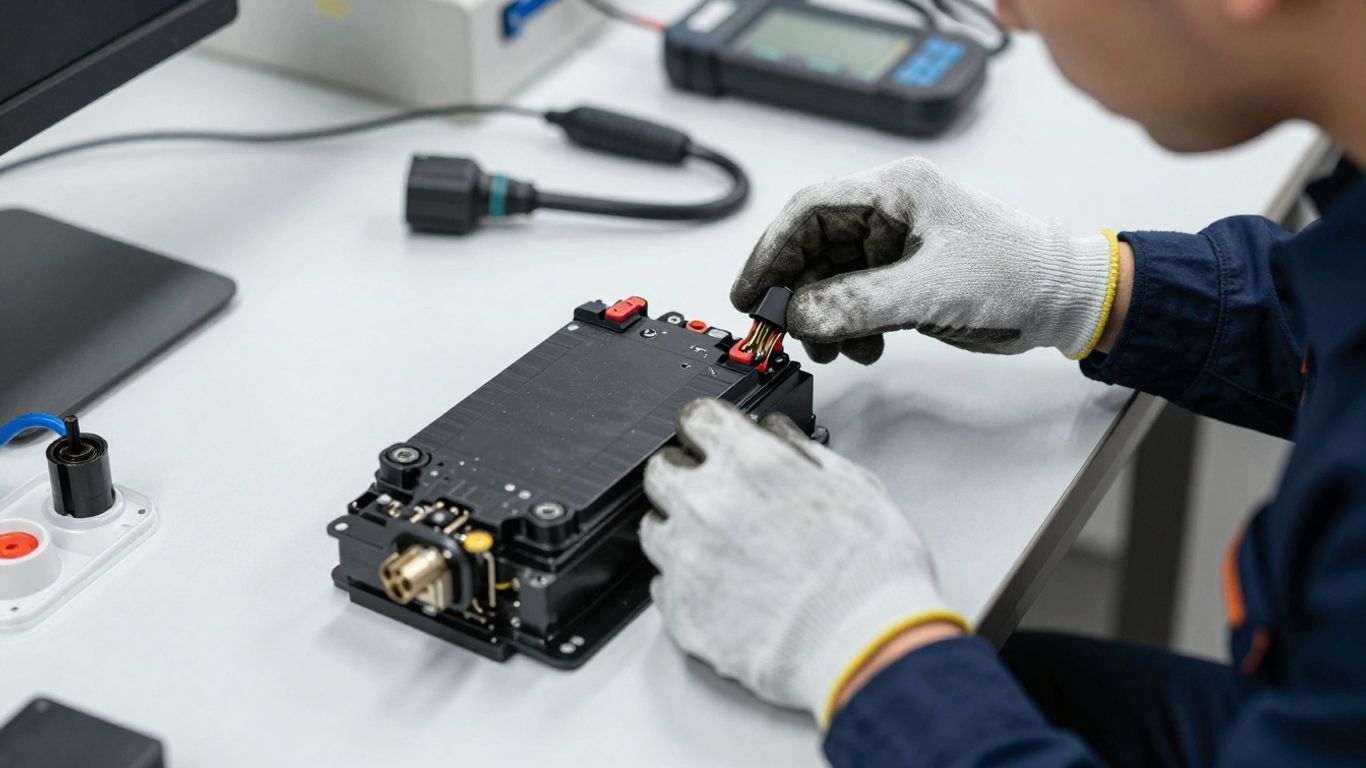
Checking body panels, lights, glass, and interior components
For panels, check edges, mounting points, creases, rust, previous repairs, and paint-code differences. For lights and glass, ask about chips, cracks, moisture, broken tabs, and included modules. Interior parts should be checked for torn upholstery, odour, broken clips, deployed safety equipment, and colour or trim mismatches.
Photographs taken in good light are more useful when they show the whole part and close-ups of likely damage. Confirm whether a bumper includes grilles, sensors, brackets, and wiring, since a bare shell can look like a complete replacement in a quick listing.
Assessing suspension, braking, and steering parts
Suspension, braking, and steering components deserve a closer mechanical inspection than ordinary cosmetic parts. Ask whether the donor vehicle suffered an impact near the relevant corner and whether the component was checked for bending, cracks, leaks, seized hardware, or abnormal wear. Brake parts also need attention to disc condition, pad thickness, and corrosion.
A component that appears clean may still have absorbed crash loads. Have a repairer inspect it before installation when there is any doubt, especially if the vehicle’s alignment, steering feel, or braking performance was affected by the original incident.
Evaluating batteries, motors, inverters, and charging equipment
High-voltage parts require documented handling and meaningful test information. For a battery, ask about state of health, usable capacity where available, fault codes, isolation readings, temperature history, impact exposure, and the condition of its casing and connectors. Motors, inverters, and charging equipment likewise need identification and test evidence rather than a simple statement that they are “working.”
The report should identify what was tested, when it was tested, and under what conditions. If the seller cannot explain the test method or the component’s history, the uncertainty may outweigh the saving. Never open, probe, or move a high-voltage assembly yourself to satisfy curiosity.
Requesting photographs, test results, and part history
Make your request specific so the supplier knows what evidence is needed. A short written checklist prevents misunderstandings and gives you a record if the item delivered differs from the description.
Useful requests usually include:
- A photograph of the complete part and its identification label.
- Close-ups of connectors, mounting points, damage, and wear.
- The donor vehicle’s model, year, and known damage history.
- Test results for mechanical, electronic, or high-voltage components.
After the seller responds, compare the photographs with the quoted assembly and ask about anything that is missing. This small pause often reveals whether the advertised price includes the complete part you actually need.
Understanding costs and value
The purchase price is only one part of the decision. Freight, inspection, programming, fitting, disposal, and possible follow-up repairs can change the total substantially. A used component is valuable when its condition and fitment reduce those uncertainties, not merely when its listing price is low.
Comparing used BYD parts with new replacement components
Obtain a new-part price where possible, then compare like for like. A new assembly may include hardware, sensors, seals, or updated software, while a used listing may include only the main housing. Conversely, a clean recycled panel may be a sensible choice when a new cosmetic component is expensive and the used item is well documented.
The comparison should also consider waiting time and warranty support. A cheaper component that needs repeated freight or extra diagnostics may cost more than a correctly specified replacement from the start.
Calculating shipping, handling, and installation expenses
Ask for a written landed estimate covering the part, packaging, freight, insurance, taxes or fees if applicable, and any surcharge for a remote address. Add labour for removal and fitting, plus diagnostic or calibration time. Glass and large panels may require specialist handling, while batteries may require special transport arrangements.
A simple written calculation is often enough to expose an unrealistic bargain. It also lets you compare two suppliers on the same basis rather than mixing an all-in quote with a parts-only price.
Evaluating battery condition and remaining capacity
Battery value depends on more than the vehicle’s age. Capacity, cell balance, fault history, impact exposure, storage conditions, and the completeness of the assembly all affect whether the unit is appropriate. Ask for a report that distinguishes measured results from estimates, and have a qualified EV technician interpret it before purchase.
There may be no single universally comparable figure across suppliers, so record the test method and date. A battery with a clear history and verifiable results can be preferable to one advertised with a broad percentage but no supporting data.
Recognizing unusually low prices and incomplete assemblies
An unusually low quote may exclude the battery management hardware, brackets, covers, sensors, wiring, keys, or other pieces required for installation. It can also reflect unknown provenance, damage, or a part sold strictly as-is. Ask what is included and whether the photographed item is the exact item being shipped.
The same caution applies to service estimates outside the automotive field. For example, construction painting contractors are assessed by scope, insurance, experience, and site standards; a parts seller should likewise be judged by clear inclusions and accountability, not by a headline price alone.
Buying and transporting high-voltage BYD components safely
High-voltage components are not ordinary salvage. Batteries and related equipment can retain dangerous energy, and damaged units may present additional fire or electrical risks. Buyers should plan the handling route before agreeing to a sale, including who will receive, inspect, store, and install the component.
Understanding Australia’s EV repair and handling requirements
Requirements can depend on the work, the state or territory, the business, and the technician’s training. A repairer should be able to explain how the vehicle will be isolated, how the component will be secured, and what checks are required before work begins. Ask for advice from a qualified professional rather than relying on a general mechanical workshop’s assumptions.
Asking suppliers about battery storage and transport procedures
Find out whether the battery was inspected for impact or swelling, how its terminals were protected, and how it was packaged. Ask whether the carrier accepts that type of shipment and whether the supplier has procedures for damaged or suspect units. A refusal to discuss storage or transport is a reason to pause the purchase.
Choosing qualified technicians for high-voltage work
Use a repairer with suitable EV and high-voltage training for diagnosis, removal, installation, and commissioning. The technician should be comfortable documenting isolation checks, fault scans, and post-installation testing. That record is useful if a warning appears later or a warranty claim is needed.
Avoiding unsafe DIY removal or installation
Do not remove a traction battery, open an inverter, bridge connectors, or transport a suspect component in an improvised vehicle. Even when the car is switched off, stored energy and damaged insulation can create serious hazards. Leave the physical work and electrical assessment to qualified personnel.
Installing used BYD parts and protecting your purchase
Installation is the point where fitment, condition, and electronic compatibility are tested together. A part that looks correct may require calibration, coding, relearning, or a fault scan before the vehicle operates normally. Agree on those requirements before the repair begins so the final invoice does not come as a surprise.
Preparing for diagnostics, calibration, and software compatibility
Ask the repairer whether the replacement needs programming, pairing, calibration, bleeding, alignment, or a system reset. Cameras, sensors, control modules, and charging equipment may need diagnostic attention even when the physical installation is straightforward. Record the part number and any software-related instructions supplied by the seller.
Confirming installation requirements with a qualified repairer
Give the repairer the supplier’s photographs, test results, warranty, and donor-vehicle details. They can identify missing hardware or incompatibility before dismantling the vehicle further. For high-voltage work, confirm the technician’s qualifications and the workshop’s process for safe isolation and recommissioning.
Testing the vehicle after installation
Testing should cover the repaired system and any related warning lights or stored faults. Depending on the component, that may include a road test, wheel alignment, brake assessment, charging test, camera or sensor calibration, and a diagnostic scan. Do not accept a vehicle as finished merely because the replacement is bolted on.
Keeping invoices, warranties, and compatibility records
Save the invoice, part number, VIN confirmation, photographs, test report, freight documentation, and repairer’s final notes. These records make future troubleshooting easier and support a return or warranty discussion. If the part was supplied as an assembly, keep a written list of what was included.
For broader travel and purchase planning, Resapass hotel deals is unrelated to vehicle repair, but it illustrates a useful consumer principle: transparent pricing and cancellation terms matter. Apply that principle here by making sure the parts quote, return conditions, and delivery responsibilities are all explicit.
Conclusion
Sourcing used BYD parts in Australia is most successful when buyers slow down at the identification and inspection stages. Match the component carefully, ask for evidence, price the complete repair, and use qualified technicians for high-voltage work. A documented part from a responsive supplier may offer excellent value, but safety and compatibility should always come before a tempting bargain.
Frequently Asked Questions
Are used EV parts reliable?
They can be reliable when the part is correctly identified, inspected, and supplied with credible condition information. Reliability depends on the component, donor vehicle, storage history, and installation quality.
How do I confirm a used part will fit?
Provide the VIN along with the model, year, trim, drivetrain, photographs, and the original part number if available. Ask the supplier to confirm the exact replacement in writing.
Is a used traction battery safe to buy?
Only consider one that has been handled, stored, and tested through appropriate professional processes. A qualified EV technician should assess its condition and suitability before transport or installation.
What should a parts warranty cover?
Review the covered failure period, exclusions, return window, freight responsibility, and whether labour or diagnostic costs are included. These terms vary considerably between suppliers.
Why can two apparently identical parts have different prices?
They may differ in condition, completeness, mileage or usage history, testing, warranty, provenance, or included hardware. Compare the assemblies and terms line by line.
Can I install used electronic components myself?
Physical installation may not be the only requirement; programming, calibration, and diagnostic work may follow. Use a qualified repairer when the component affects safety, charging, communications, or high-voltage systems.
What records should I keep after the repair?
Keep the invoice, part number, VIN match, photographs, test results, warranty, shipping documents, and the repairer’s installation and diagnostic notes. These records help with future maintenance and disputes.
Pingback: Affordable BYD parts Adelaide: A practical guide to sourcing, checking, and fitting replacement components