

Key Takeaways
Recycled parts can make BYD repairs more manageable, but the right component must be matched carefully and assessed on more than price alone.
- Confirm the exact BYD model, year, trim, and VIN before ordering.
- Treat high-voltage components as specialist parts requiring appropriate inspection.
- Ask suppliers about testing, condition, mileage, warranty, and returns.
- Compare the delivered and fitted cost, not only the advertised price.
- Use a qualified technician for installation, calibration, and safety checks.
Understanding the value of recycled BYD parts
Searching for recycled BYD parts Brisbane drivers can rely on is less about finding the cheapest listing and more about finding a component with a clear fit and usable history. Recycled parts may come from vehicles that are dismantled after collision, mechanical failure, insurance assessment, or end-of-life processing. Their condition can therefore vary widely. A careful buying process helps separate a sensible repair from an expensive mistake.
What recycled BYD parts include
Recycled parts can include exterior panels, doors, mirrors, lights, seats, trim, suspension components, cooling equipment, steering parts, and selected electrical assemblies. Some are sold as complete units, while others are removed individually from a dismantled vehicle. The useful detail is not simply whether a part is called “used”; it is how the supplier describes its condition, identification, testing, and source.
For a body repair, a matching door or mirror may be relatively straightforward to assess visually. A control module or charging component calls for more careful compatibility checks. Ask for photographs of the actual item rather than relying on a generic catalogue image, particularly when colour, connectors, brackets, or trim variations matter.
Why EV components require specialized handling
An electric or hybrid vehicle contains ordinary automotive parts alongside systems that may carry substantial electrical energy. High-voltage batteries, cables, inverters, motors, and charging equipment should not be handled casually or tested with improvised methods. A component can look undamaged while still requiring isolation, controlled storage, and specialist inspection.
The buyer should ask whether the part was removed by trained personnel and whether its condition was recorded before storage. If a vehicle has suffered water, fire, or major collision damage, that history deserves particular attention. Safety comes before savings when a replacement involves a high-voltage system.
How recycled parts compare with new and aftermarket options
New manufacturer-supplied parts may offer the clearest support path, but they can also carry a higher purchase price and may not be readily available. Aftermarket parts can be suitable in some categories, though fit, finish, specifications, and warranty terms differ between suppliers. A recycled original component may sit between those options: potentially more affordable than new, while retaining the original vehicle design.
The comparison should include availability and installation risk. A lower-priced component is not necessarily good value if it arrives incomplete, needs extra programming, or cannot be returned after an incorrect order. Conversely, a clean, correctly identified recycled part can be a practical choice for an older vehicle or a repair where a complete new assembly is disproportionate to the vehicle’s value.
When recycled parts can offer the best value
Recycled parts often make most sense when the replacement is identifiable, the damage is visible, and the supplier can explain its condition. Body panels, glass, mirrors, seats, trim, and some mechanical assemblies are commonly easier to compare than hidden electronic units. That does not make them risk-free; it simply gives the buyer more ways to inspect the item before committing.
It is also worth considering delivery time. A locally available part may reduce vehicle downtime, especially when the alternative is waiting for a new component. The best decision balances price, availability, condition, compatibility, and the labour needed to fit it.
Finding reputable BYD parts suppliers in Brisbane
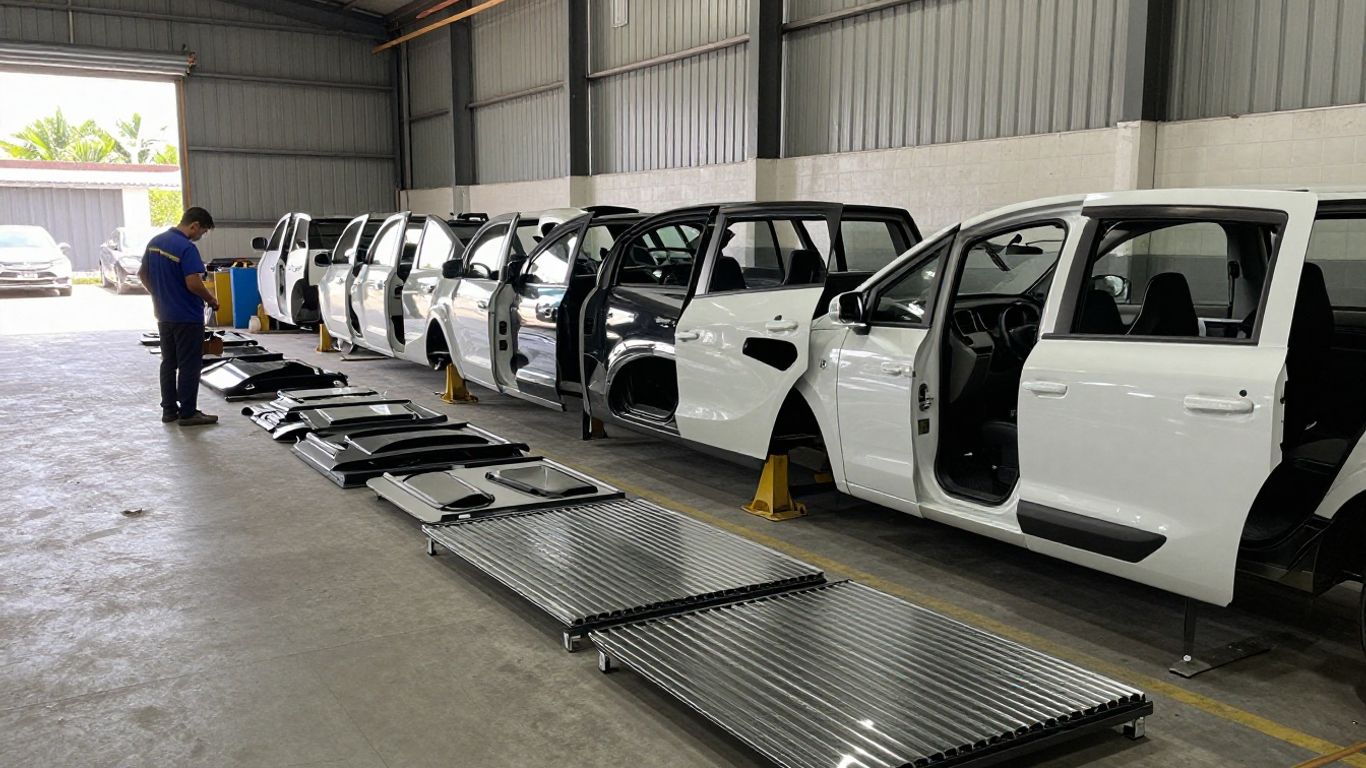
A local supplier can be useful because you may be able to discuss the vehicle in detail, view photographs, and clarify freight or collection arrangements before paying. Brisbane has a broad automotive recycling market, so the quality of the buying experience depends on the individual yard or parts operation. Look for clear answers rather than confident but vague assurances.
What to look for in a dismantler or recycler
A reputable dismantler should be able to identify the vehicle the part came from and explain how the component was assessed. The business should provide a physical or business address, reachable contact details, and written terms for payment, freight, warranty, and returns. It should also be comfortable saying when a part needs specialist evaluation rather than pretending every item is a simple plug-and-play replacement.
A useful starting point is a supplier’s stock description and its willingness to provide the actual part number. For general Brisbane sourcing, Brisbane Auto Wreckers is one example of a local recycler whose listed range includes tested recycled auto parts; still, any buyer should confirm the specific BYD component, condition, and applicable terms directly.
How local inventory and vehicle compatibility are verified
Inventory systems are helpful, but a listing alone does not prove compatibility. Ask the supplier to check the donor vehicle’s model, build year, variant, and identifying numbers against your vehicle details. Photographs can confirm connector shapes, mounting points, colour, and visible damage, while a technician can advise on whether software configuration or calibration will be needed.
Local stock is especially valuable when the supplier can hold or inspect the component before dispatch. Take care with listings that combine several model years or variants under one description. Small changes in wiring, sensors, trim, or mounting hardware can affect whether the part is genuinely suitable.
Questions to ask before requesting a quote
A precise request usually produces a more useful quote. Give the supplier the VIN, registration details if appropriate, model and year, the required side or position, and a short description of the fault or damage. Include photographs when they clarify the problem, but do not assume a visible symptom identifies the failed part.
Before accepting the quote, ask these practical questions:
- Is the quoted component the exact part shown in the photographs?
- What donor vehicle, year, and mileage are recorded?
- Has the part been tested, and what testing was performed?
- Are brackets, sensors, keys, wiring, or other accessories included?
- What are the freight, warranty, and return conditions?
The answers help reveal whether the quote is genuinely comparable with other options. They also create a written record of what was promised, which can be useful if the delivered part differs from the description.
Why supplier warranties and return policies matter
A warranty does not turn an uncertain component into a guaranteed fit, but it can reduce the financial risk of a reasonable purchase. Read whether the warranty covers the part itself, labour, freight, or only a replacement. Some terms exclude incorrect diagnosis, modified wiring, overheating, water damage, or installation by an unapproved repairer.
Return rules deserve equal attention. Confirm the time limit, restocking fees, packaging requirements, and whether electrical parts can be returned once connected. A supplier with clear written conditions gives you a better basis for deciding whether a lower upfront price is worth the possible risk.
Choosing the right parts for your BYD model
Model name alone is rarely enough to identify a replacement component. Vehicles can change across production years, variants, markets, and equipment levels. Even when two cars look similar, their sensors, wiring, trim, software, or mounting hardware may differ. Treat compatibility as a technical question, not an assumption based on appearance.
Matching components to the exact model and year
Start with the complete vehicle description: model, build date, variant, body style, drivetrain, and any relevant equipment. A part described as fitting a broad range of vehicles may still require a particular connector, bracket, colour code, or control unit revision. The donor vehicle’s details should be recorded alongside the replacement part’s identification number.
For body parts, colour and finish can be as important as shape. For mechanical or electrical components, the internal specification may matter even when the casing appears identical. Ask the supplier to explain any uncertainty before the component is removed or shipped.
Checking compatibility across BYD vehicle systems
A replacement does not work in isolation from the rest of the vehicle. Cameras, radar equipment, parking sensors, lighting modules, battery controls, charging hardware, and infotainment units may interact with other systems. Some components may need calibration, coding, pairing, or a post-installation fault scan.
That does not mean every recycled part is unsuitable. It means the purchase should include a plan for installation and verification. Ask the technician whether the existing diagnostic equipment can confirm operation and whether any required calibration is available locally.
Identifying the difference between cosmetic and mechanical parts
Cosmetic components can often be assessed through photographs and a close inspection of surface condition. Mechanical parts need questions about wear, seals, movement, corrosion, leaks, and previous repairs. Electronic parts need an even more specific account of testing and donor history.
The distinction affects the quote as well. A door may be sold complete with glass, regulator, trim, mirror, and wiring, or as a bare shell. A cooling assembly may include fans and shrouds, or only one individual part. Confirm exactly what is included before comparing prices.
Using the VIN to reduce ordering errors
The VIN gives a supplier and technician a stronger starting point than a model name typed into a search box. Send it securely through the supplier’s normal contact channel and ask that it be recorded on the quote. Pair it with photographs of the damaged part and its connectors where possible.
The VIN cannot replace inspection or professional diagnosis, but it can reduce obvious ordering errors. If the supplier declines to check basic vehicle details, pause before paying for a component that may be difficult or impossible to return.
Evaluating recycled BYD electric and hybrid components
High-voltage parts deserve a separate buying process. The attractive price of a recovered battery or power electronics component can be outweighed by transport restrictions, installation requirements, diagnostic work, or an unknown internal condition. Ask what is known, what has been tested, and what remains uncertain.
Battery packs and high-voltage system considerations
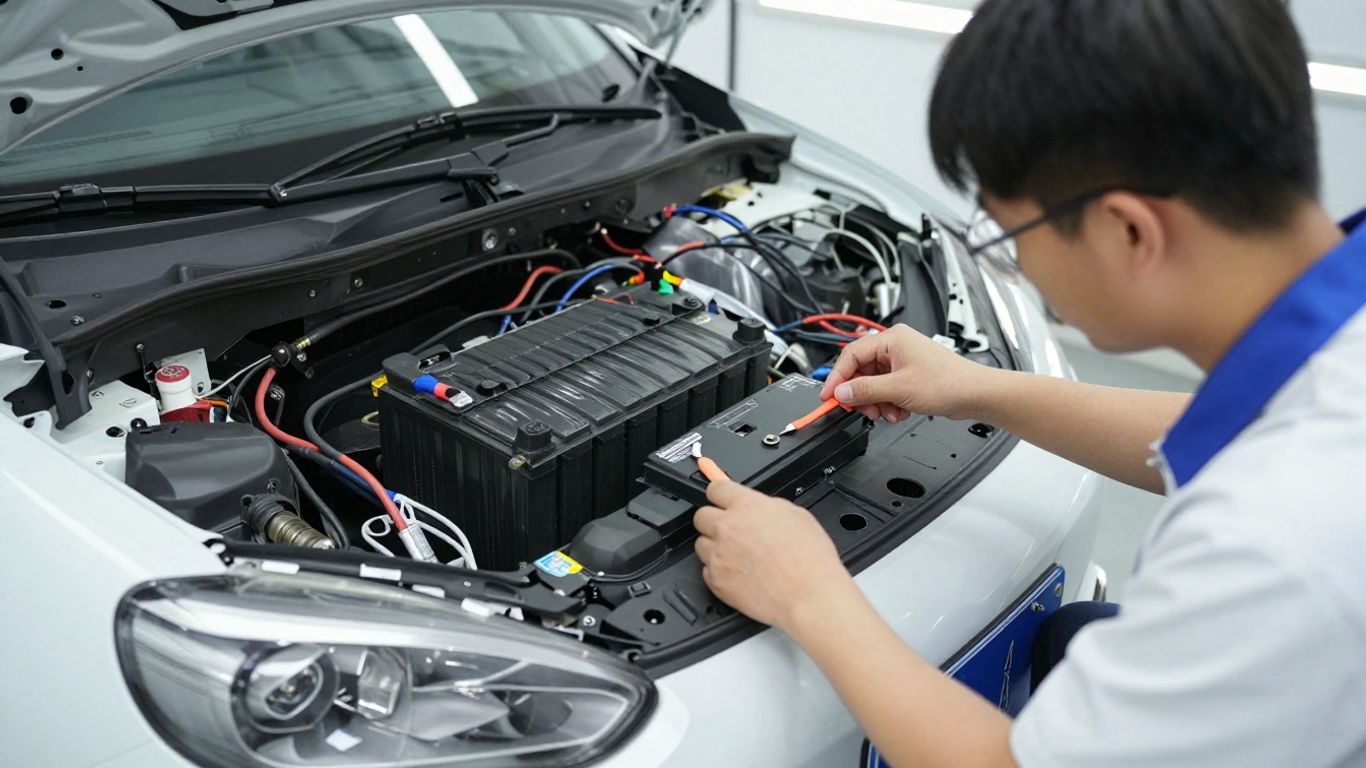
A battery pack should never be judged by its casing alone. Relevant information may include donor vehicle details, storage conditions, visible damage, isolation status, diagnostic results, and any available capacity or fault information. Ask who removed the pack and whether it has been stored in a controlled, appropriate manner.
A supplier may not be able to provide every measurement, but the limits of the available information should be stated plainly. Do not transport or install a suspected damaged pack without professional advice. The repairer should also confirm whether the vehicle will accept the replacement and what commissioning work may be required.
Electric motors, inverters, and charging components
Motors, inverters, onboard chargers, and related cables can have vehicle-specific connectors and control requirements. Their condition may depend on exposure to water, impact, heat, contamination, or incorrect storage. A visual inspection is useful, but it cannot establish full electrical or operational health.
Request the exact part number, donor details, photographs of connectors and housings, and a description of any testing. Ask whether ancillary brackets, cooling lines, seals, and fasteners are included. Missing small items can delay installation and change the real cost of the purchase.
Safety requirements for damaged or recovered EV parts
Damaged or recovered high-voltage components should be isolated, labelled, transported, and stored according to appropriate workshop procedures. Buyers should not attempt to open a battery pack, probe high-voltage terminals, or bypass protective equipment. A part removed from a damaged vehicle requires more caution, not less, simply because it is being sold second-hand.
A qualified repairer can determine whether the component is safe to handle and whether further testing is justified. If the supplier cannot explain the removal and storage history, treat that gap as a material risk rather than an inconvenience.
When specialist inspection is necessary
Specialist inspection is sensible whenever the part affects high-voltage safety, propulsion, charging, or critical vehicle control. It is also appropriate when a vehicle has experienced fire, flood, severe collision, or an unexplained electrical fault. The inspection cost should be included in the buying decision from the beginning.
A specialist may recommend testing the existing system before replacing anything. That step can prevent a good recycled component from being fitted to a vehicle whose actual fault lies elsewhere, and it may avoid unnecessary exposure to a high-voltage repair.
Buying body, interior, and mechanical BYD parts
The broadest range of recycled stock is often found in the visible and conventional parts of a vehicle. Even here, details matter: a mirror may include a camera, a door may include electronics, and a bumper may contain sensor mounts. A clear description of the assembly prevents surprises when the parcel arrives.
Panels, doors, mirrors, and lighting assemblies
Check panels for creases, corrosion, previous repairs, broken mounting tabs, and paint mismatch. For doors, ask whether the item is bare or complete and whether the glass, regulator, lock, trim, wiring, and mirror are included. Mirrors and lights may contain sensors or control hardware that must match the vehicle’s equipment.
Photographs should show all edges, mounting points, lenses, and connector areas. If a component is being freighted, ask how it will be packaged. A panel that was sound at the yard can arrive damaged if it is not protected properly.
Seats, trim, infotainment, and interior components
Interior parts are usually easier to inspect, but condition is still subjective. Ask about stains, odours, tears, broken clips, fading, and missing fasteners. Trim colour and texture can vary between versions, so a photograph in natural light is more useful than a short description such as “good condition.”
Infotainment and electronic interior components may require pairing or configuration. Confirm whether the part is supplied with its screen, control panel, wiring, storage media, or other associated pieces. A technician can advise whether the replacement is likely to work without additional programming.
Suspension, brakes, steering, and cooling parts
Mechanical safety parts require a more detailed condition report than cosmetic stock. Ask about bushings, bearings, leaks, corrosion, straightness, wear surfaces, and any signs of impact. Brake components should be assessed for remaining service life and replaced or checked as appropriate rather than accepted solely because they came from a running vehicle.
Cooling parts deserve attention after collision or overheating. Radiators, pumps, fans, hoses, and fittings can look acceptable while carrying hidden damage. A qualified technician should inspect the system and confirm that the replacement matches the vehicle’s requirements.
Selecting complete assemblies versus individual components
A complete assembly can reduce the chance of missing a small bracket, sensor, connector, or fastener. It may also shorten workshop time. Individual components can cost less and make sense when the surrounding assembly is known to be sound, but the labour and compatibility checks may be greater.
Use the repair diagnosis to guide the choice. If only one part has failed, replacing an entire assembly may be unnecessary. If several connected pieces are damaged or unavailable separately, a tested complete unit may be the more predictable option.
Checking quality, condition, and pricing
Price is a useful filter, not a final decision. Two listings can appear similar while differing in included parts, testing, freight, warranty, and installation complexity. A reliable comparison puts those details beside the purchase price instead of leaving them until checkout.
How suppliers grade used and recycled parts
Grading language is not universal. One supplier’s “good” may mean clean and functional, while another may use it only to describe acceptable cosmetic wear. Ask for the supplier’s own definition and request photographs of the actual component.
The following comparison can help organise a quote, although it does not replace a supplier’s written condition report:
| Checkpoint | Questions to ask | Why it matters |
|---|---|---|
| Identity | What is the part number and donor vehicle? | Confirms the item being priced |
| Condition | What damage, wear, or repairs are visible? | Sets realistic expectations |
| Testing | What was tested, and when? | Shows how functionality was assessed |
| Included items | Are brackets, wiring, sensors, and trim included? | Prevents missing-part costs |
| Protection | What warranty and return terms apply? | Limits avoidable purchasing risk |
Use the answers to compare like with like. A slightly higher quote may be preferable when it includes the required accessories, clearer testing, and workable return protection.
Signs of wear, damage, or previous repairs
Look closely at seams, mounting points, fasteners, housings, connectors, and repaired surfaces. Uneven panel gaps, fresh paint over damage, cracked tabs, bent brackets, corrosion, fluid residue, and broken seals are all reasons to ask further questions. On electrical components, damaged insulation or moisture marks should be treated seriously.
Request additional photographs rather than relying on a seller’s general condition label. If the supplier cannot show a critical area, ask whether the part can be inspected before dispatch or assessed by your technician on arrival.
Comparing total costs beyond the advertised price
The final cost may include freight, insurance, diagnostic time, programming, calibration, consumables, seals, replacement fasteners, and removal of the old component. A part that is inexpensive to buy can become costly if it arrives incomplete or needs several hours of extra work.
Write down each likely cost before choosing. Also consider downtime: waiting for a replacement after an incorrect order may affect transport, work, and workshop availability. This broader calculation gives a more honest view of value.
Confirming testing, mileage, and part history
Ask for the donor vehicle’s recorded mileage where it is available, along with the date and nature of any testing. For a mechanical assembly, that may involve inspection for leaks or wear. For electronic equipment, it may involve diagnostic checks or confirmation that the component powered up in the donor vehicle. The exact test should be named, not implied.
Part history may be incomplete, and that is acceptable if the uncertainty is disclosed. What matters is knowing which facts are verified and which are estimates. Keep the quote, photographs, messages, and invoice together in case a warranty or return discussion becomes necessary.
Installing and maintaining recycled BYD parts
A suitable part still needs a suitable installation. Correct fitting can involve mechanical work, diagnostic scans, calibration, software configuration, or high-voltage isolation procedures. Discuss the complete job with the technician before ordering so the part arrives in a form the workshop can actually use.
Choosing a qualified technician in Brisbane
Choose a workshop that is experienced with the relevant vehicle systems and can explain how it will make the vehicle safe before work begins. For high-voltage components, ask about technician training, isolation procedures, protective equipment, and diagnostic capability. For body and interior work, confirm whether the shop can handle sensor alignment or electrical connections affected by the repair.
A supplier may sell the part, but the installing workshop is responsible for assessing the vehicle and confirming the repair. Keeping those roles clear helps avoid the assumption that a parts listing is also a technical diagnosis.
Preparing for installation and calibration
Before fitting, compare the delivered component with the invoice, photographs, part number, connectors, and mounting points. Do not discard packaging until the workshop confirms that the item is correct and undamaged. Record any discrepancy immediately and contact the supplier before modifying or installing the part.
Calibration may be needed after work involving cameras, sensors, steering, suspension, lighting, or other electronically controlled systems. The technician should complete the relevant checks and road-test the vehicle where appropriate. A successful physical installation is only one part of a complete repair.
Understanding warranties after fitting
Read the warranty before installation because some suppliers require fitting by a qualified repairer or require an initial diagnostic report. Clarify whether labour is included and what evidence is needed if a fault appears. Keep the invoice from the technician and any test results with the parts paperwork.
If a problem develops, stop using the affected system when continued operation could create a safety risk. Describe the symptoms accurately, avoid unauthorised disassembly, and follow the supplier’s written claim process. Clear records usually make that conversation easier.
Maintaining replaced components for longer service life
Maintenance begins with addressing the cause of the original failure. A replacement cooling component may not last if overheating remains unresolved, and a suspension part may suffer if related damage is ignored. Ask the technician whether surrounding components should be inspected at the same time.
Keep service records and watch for new warning lights, unusual noises, leaks, charging changes, vibration, or inconsistent operation. Early attention can prevent a small installation or adjustment issue from becoming a second repair. For high-voltage concerns, use a qualified workshop rather than attempting home troubleshooting.
Conclusion
Sourcing recycled BYD parts Brisbane buyers can use with confidence takes a little more work than comparing prices online. Verify the vehicle and part identity, ask for honest condition and testing details, account for fitting and calibration, and involve a qualified technician when electrical or safety-critical systems are involved. With those checks in place, recycled components can be a practical part of a careful repair plan.
Frequently Asked Questions
Are recycled BYD parts reliable?
Reliability depends on the individual component, its donor history, testing, storage, compatibility, and installation. Ask for specific evidence rather than relying on the word “recycled” or a general condition grade.
How can I confirm that a part fits my vehicle?
Provide the VIN along with the exact model, year, variant, body style, and photographs of the original part. A supplier and technician should confirm part numbers, connectors, mounting points, and any required programming.
Are recycled EV batteries safe to buy?
They can only be assessed safely through appropriate handling and specialist inspection. Ask about removal, storage, damage history, testing, isolation status, and installation requirements, and never open or probe a high-voltage pack yourself.
Is a used original part better than an aftermarket part?
Neither option is automatically better. Compare fit, condition, availability, warranty, testing, total cost, and the technician’s view of the repair before choosing.
What should I ask a Brisbane parts supplier?
Ask for the exact part number, donor vehicle details, mileage if available, test results, included accessories, freight cost, warranty, and return conditions. Request photographs of the actual component.
Can recycled parts require calibration?
Yes. Components connected with cameras, sensors, steering, suspension, lighting, charging, or vehicle control may need diagnostic checks, pairing, coding, or calibration after installation.
Should I buy a complete assembly or only the failed part?
The best choice depends on the diagnosis and the condition of the surrounding components. A complete assembly can reduce missing-part and compatibility problems, while an individual part may reduce cost when the rest of the system is known to be sound.