

Key Takeaways
Buying a used BYD part in Perth is less about finding the lowest listing and more about matching the correct component to the vehicle, checking its history, and planning a safe installation.
- Confirm the model, build year, trim, drivetrain, and vehicle identification number before contacting sellers.
- Compare wreckers, dismantlers, dealers, and online listings while checking delivery and return terms.
- Request part numbers, photographs, test information, and clear details about condition.
- Treat batteries, charging equipment, airbags, brakes, steering, and other safety-related parts with extra care.
- Record the sale and use a qualified technician when fitting complex or high-voltage components.
Identify the right BYD part before you shop
A precise description saves time and reduces the chance of receiving an incompatible component. BYD vehicles can look similar across listings while differing in year, trim, powertrain, or equipment. Before you buy used BYD parts Perth drivers can trust, gather the vehicle details and identify exactly what has failed or been damaged.
Match the part to your BYD model and build year
Start with the model name and build year, then add the body style and the location of the part. A front bumper, mirror, door, suspension arm, or charging component may have changed during a production run, even when the vehicle name is unchanged. The registration number can help a seller begin a search, but the build date and the original part number are usually more useful for confirming a match.
Describe the component in practical terms: left or right side, front or rear, driver or passenger side, and whether it includes attached sensors, wiring, brackets, or trim. If the vehicle has suffered a collision, ask whether surrounding mounts and connectors also need inspection. That broader check can prevent a replacement part from being fitted to damaged supporting hardware.
Use the vehicle identification number for accurate sourcing
The vehicle identification number, or VIN, gives a parts supplier a stronger starting point than a model name alone. Provide it through a trusted business channel and ask the seller to confirm the application before payment. A careful supplier should be able to explain whether the quoted item is matched by VIN, part number, visual inspection, or only a general model description.
Keep a photograph of the VIN plate and the damaged component ready when making enquiries. You can also share photographs of connectors, mounting points, and labels, provided no private information beyond what is needed for sourcing is exposed. If a listing does not allow the seller to verify compatibility, treat that uncertainty as a cost rather than assuming the part will fit.
Confirm trim levels, battery sizes, and drivetrain differences
Trim names can affect equipment such as lights, wheels, cameras, infotainment hardware, seats, and exterior details. Electric and hybrid versions can also use different components around the drivetrain, cooling system, charging system, and control electronics. Do not rely on a seller’s description that says only “fits BYD”; ask what exact configuration was used in the donor vehicle.
A useful enquiry includes the model, build year, trim, drivetrain, battery specification if relevant, and the part number. For a body or interior item, colour and finish may matter as much as mechanical compatibility. For electrical equipment, connector design and software compatibility deserve particular attention because a physically similar unit may still require additional diagnosis or programming.
Distinguish cosmetic parts from safety-critical components
Cosmetic pieces such as badges, mouldings, some interior trims, and undamaged panels are usually easier to assess from photographs and measurements. Safety-critical parts need a much higher standard of proof. Airbags, seat belts, steering components, braking hardware, suspension components, structural parts, and high-voltage equipment should not be judged by appearance alone.
Ask what caused the donor vehicle to be dismantled and whether the component was exposed to impact, water, heat, or electrical damage. A small crack, stretched mounting point, bent bracket, or damaged connector can matter even when the visible surface looks acceptable. Safety comes before savings whenever a part affects occupant protection, vehicle control, or high-voltage isolation.
Find reliable sources for used BYD parts in Perth
Perth buyers may find parts through dismantlers, specialist wreckers, dealers, private sellers, and online marketplaces. Each source can offer a different balance of price, availability, inspection support, and after-sale help. The best choice depends on the part and the level of certainty you need, not simply on which listing appears first.
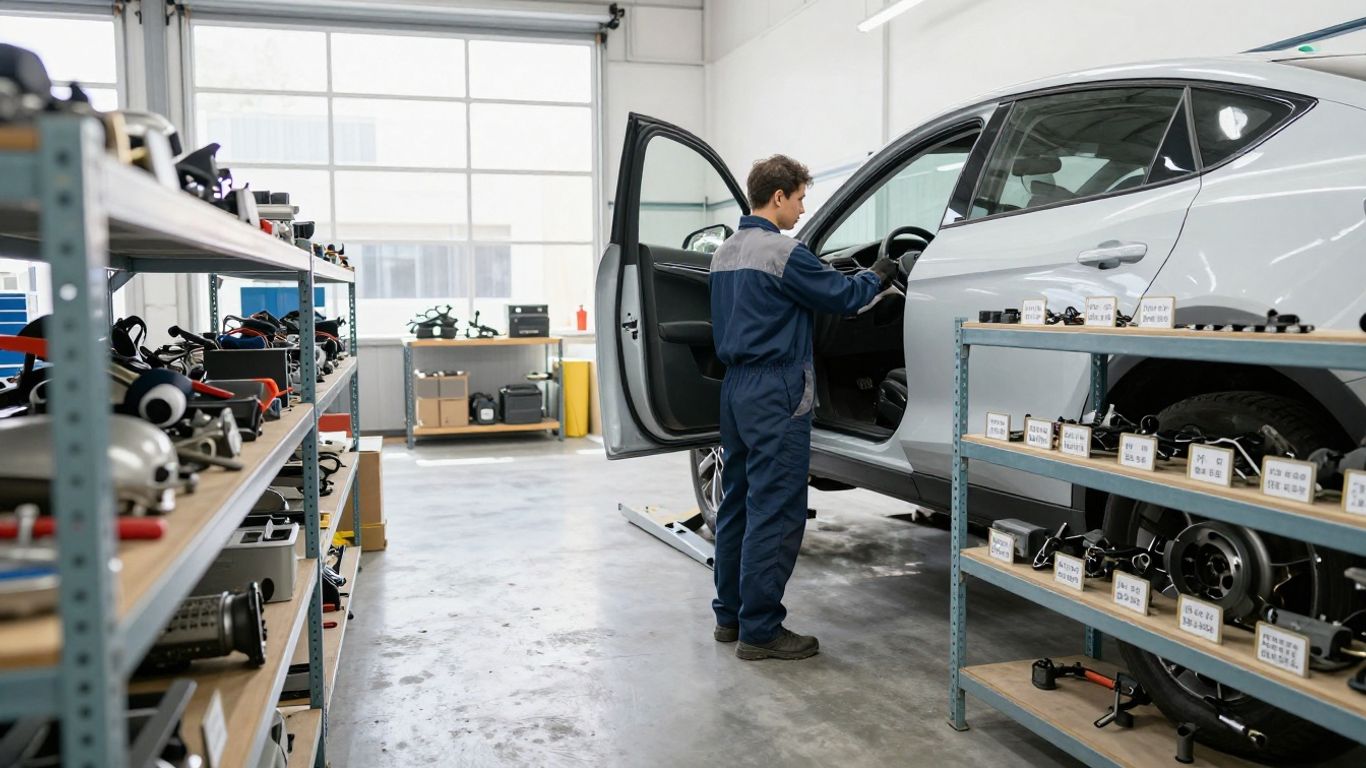
Compare BYD wreckers, dismantlers, dealers, and online marketplaces
A dismantler may know the donor vehicle and have photographs of the component before removal. A dealer or authorised service channel may offer stronger identification support, although the price and availability can differ. An online marketplace can widen the search, but it places more responsibility on you to verify the seller, application, condition, and transaction terms.
For a broad search, a listing of used BYD spare parts can help you see how model, year, fuel type, and location are presented across dismantler stock. Treat the listing as a starting point rather than proof that a particular item will fit your vehicle. Ask the individual seller to confirm the actual part number and condition.
Check local stock and interstate delivery options
Local Perth stock can be convenient when you need to inspect a part, avoid long freight delays, or arrange fitting with a nearby workshop. Interstate supply may provide more choice, particularly for newer or less common models, but freight packaging and insurance become part of the decision. Ask whether the price includes delivery, whether the item is already removed, and how quickly it can leave the yard.
Before paying, confirm the pickup address or delivery service, estimated dispatch date, and what happens if the part arrives damaged. Large panels, glass, battery-related equipment, and delicate electronic modules may require special handling. A slightly higher local price can be sensible if it gives you a chance to inspect the item and resolve a mismatch in person.
Review seller experience with electric and hybrid vehicles
Experience with electric and hybrid vehicles matters most when the part involves charging, battery management, power electronics, cooling, or high-voltage cabling. Ask how the donor vehicle was isolated, whether the component was removed by a qualified person, and what testing was completed. For ordinary trim or a mirror cap, the same level of technical detail may not be necessary, but basic identification still is.
A seller who answers specific questions clearly is easier to work with than one who offers vague assurances. You can also ask for the donor vehicle’s model and build year, the removal date, and any known fault codes. Do not interpret confidence alone as technical evidence; look for records, photographs, and a realistic explanation of what has and has not been tested.
Verify business details, warranties, and return policies
Check that a business provides a physical location, working contact details, and a written description of its terms. Before ordering, read whether the warranty covers parts only or parts and labour, how long it lasts, and whether installation by a qualified workshop is required. Return conditions may exclude electrical items, special orders, fitted parts, or damage caused during installation.
Save the listing, invoice, messages, photographs, and payment record. If the part is being shipped, photograph the packaging before opening it and record any visible damage. These simple steps make a dispute easier to explain and help a workshop decide whether the problem lies with the component, the installation, or another vehicle system.
Check the condition and compatibility of used parts
A used part can be excellent value when its history and application are clear. It can also become expensive if hidden damage, missing hardware, or an incorrect revision is discovered only after fitting. Condition checks should therefore combine visual evidence, identification details, and a realistic plan for testing.
Ask for clear photos, measurements, and part numbers
Request photographs taken in good light from several angles, including labels, connectors, mounting points, and any damaged areas. For panels and trim, ask for measurements and close-ups of clips or tabs. For electronics, request the label and connector view; for mechanical items, ask to see shafts, housings, threaded sections, and contact surfaces where relevant.
The part number should be readable rather than typed from memory. Compare it with the number removed from your vehicle, while allowing for superseded numbers or approved revisions that a technician can verify. If the seller cannot provide a photo or a credible explanation for the missing label, keep looking unless the price reflects that uncertainty and an expert has approved the risk.
Inspect body panels, interior components, and mechanical parts
Body panels should be checked for creases, corrosion, repaired areas, distorted edges, and broken mounting tabs. Colour matching can be difficult even when two panels share the same colour code, so ask whether repainting will be needed. Interior components need inspection for stains, odours, missing fasteners, broken clips, fading, and damage from deployed airbags.
Mechanical parts deserve a closer look than a single clean photograph. Ask about play, leaks, cracks, seized fasteners, and the donor vehicle’s condition before dismantling. If possible, have the part inspected against the vehicle before installation, especially when labour to remove and refit it would be significant.
Evaluate battery, charging, and high-voltage system components
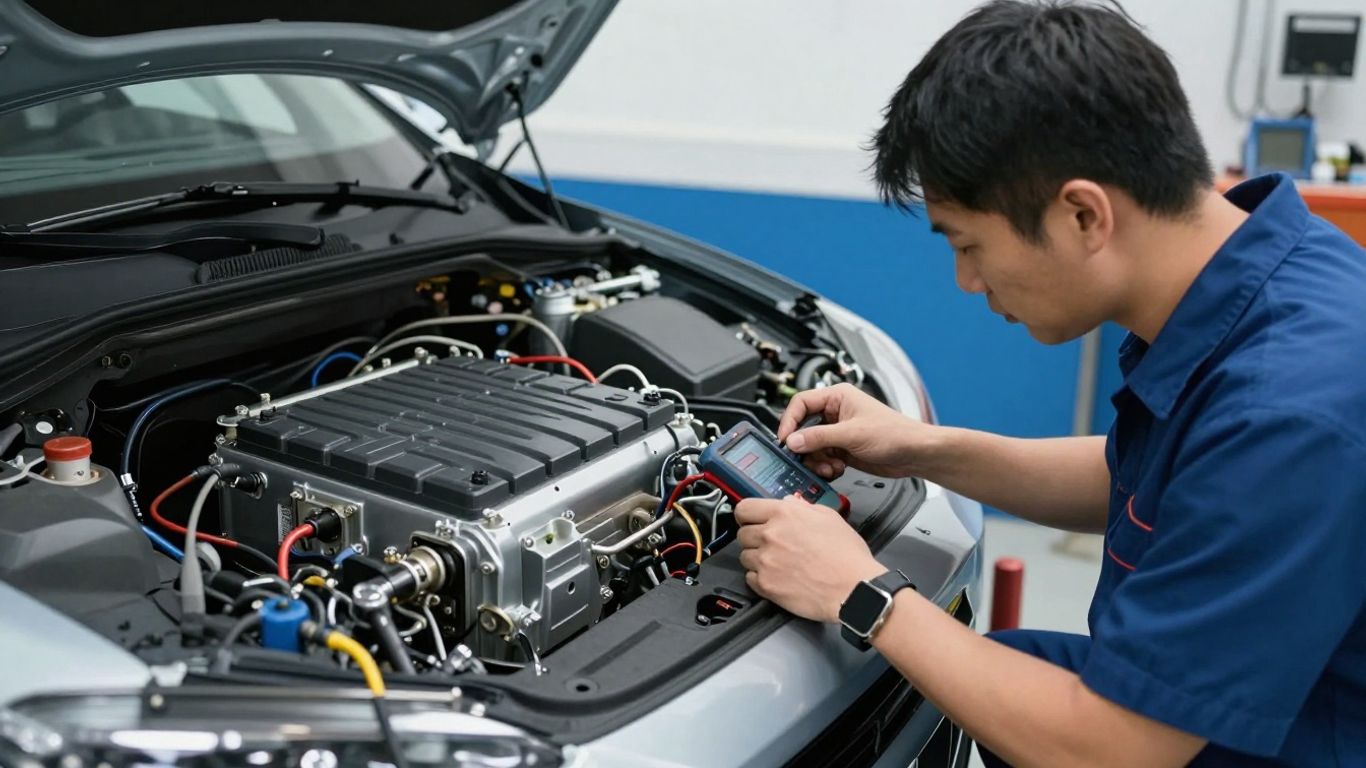
Battery packs, modules, inverters, onboard chargers, charging connectors, high-voltage cables, and related control equipment should be treated as specialist components. Ask for the exact assembly identification, removal procedure, storage conditions, and available test data. A seller should not be asked to guess at battery health from appearance, and a buyer should not infer safe operation from a vehicle merely having been driven before dismantling.
Request an appropriately detailed assessment from a qualified technician. Depending on the component, that may include isolation checks, fault-code review, physical inspection, and measurements made with suitable equipment. Do not open a battery enclosure or handle exposed high-voltage wiring yourself just to verify a listing.
Confirm whether the part is tested, refurbished, or sold as-is
“Tested,” “refurbished,” and “sold as-is” describe different levels of responsibility, so ask the seller to define the wording. Testing might mean a basic visual check, a bench test, or confirmation that the part operated in the donor vehicle. Refurbishment may involve cleaning, replacement of selected components, or a more comprehensive rebuild.
Get the test scope and warranty in writing. If a component is sold as-is, calculate the cost of diagnosis, return freight, and possible disposal before deciding that the low price is attractive. A transparent seller may still offer a useful part under those terms, but the risk should be understood rather than hidden inside an ambiguous description.
Understand pricing for used BYD parts
The sticker price is only one part of the repair cost. A used panel may need paint, an electronic module may need diagnosis, and a bulky item may cost more to freight than expected. Compare complete installed costs while keeping the quality and certainty of each option in view.
Compare used, refurbished, aftermarket, and genuine replacement costs
Used parts are often most attractive for older vehicles, cosmetic repairs, and components where a tested donor item is readily available. Refurbished parts may cost more because inspection or replacement work has already been completed. Aftermarket and genuine replacement parts each have their own fitment, warranty, and availability considerations, so compare like with like rather than treating the categories as interchangeable.
A simple comparison should record what is included and what is not. This table is useful when several quotes look similar but carry different levels of support:
| Option | Usually useful for | Questions to ask | Main cost risk |
|---|---|---|---|
| Used donor part | Panels, trim, selected mechanical items | What is the donor history and condition? | Hidden damage or missing hardware |
| Refurbished part | Components with documented testing or repair | What work and testing were completed? | Limited or unclear refurbishment scope |
| Aftermarket part | Available replacement items with a known application | Is fitment and warranty documented? | Poor fit or extra adjustment |
| Genuine replacement | Exact identification and supported sourcing | What is the lead time and full price? | Higher purchase price or back-order delay |
The comparison becomes meaningful only when each seller answers the same questions. If one price includes a warranty and another is sold as-is, the cheaper figure may not be the cheaper repair once diagnosis and rework are included.
Factor in shipping, fitting, diagnostics, and disposal fees
Ask for a written total that includes freight, packing, workshop labour, diagnostic scans, programming if required, and disposal of the old component. For a damaged battery or electronic assembly, disposal and handling may need specialist arrangements. A part that seems inexpensive at the seller’s location can become poor value after multiple charges are added.
Also check whether the quote assumes an uncomplicated installation. Corroded fasteners, damaged clips, collision-related alignment problems, and software faults can extend the job. A workshop can often provide a better estimate after seeing the vehicle and the proposed part together.
Use local Perth prices to assess whether a quote is fair
Local prices give you a useful reference, but they are not a fixed market rate. Availability, model age, donor history, colour, mileage, test evidence, and warranty terms all affect the figure. Compare at least a few genuinely comparable quotes from Perth sources and, when appropriate, interstate suppliers.
Local vehicle listings can provide context about the models circulating in the area. For example, BYD cars in Perth show the kind of regional stock buyers may encounter, but vehicle sale prices should not be used as a direct substitute for parts pricing. The more useful comparison is between the repair cost, the vehicle’s condition, and the value of keeping it on the road.
Watch for unusually cheap parts and hidden charges
An unusually low quote may reflect a missing connector, an untested component, damage not shown in the photographs, or a sale with no return option. It may also exclude freight, tax, fitting, or required calibration. Ask why the price is low and request a complete written breakdown before treating it as a bargain.
Be cautious about pressure to pay quickly, requests for payment outside the seller’s normal system, or refusal to provide a business receipt. A genuine saving should survive reasonable questions. If the seller becomes less clear when you ask about condition or warranty, that is useful information in itself.
Buy BYD electric vehicle parts safely
Electric and hybrid vehicles combine familiar vehicle systems with high-voltage equipment and electronic controls. Some repairs are straightforward for an experienced workshop, while others carry serious risks if the wrong isolation or diagnostic procedure is used. The safe purchase is one that includes a plan for qualified inspection and installation.
Know which high-voltage components require qualified technicians
High-voltage batteries, cables, inverters, converters, onboard chargers, and related components should be handled by technicians with the appropriate training, equipment, and procedures. Do not assume that disconnecting a visible connector makes the system safe. Residual energy, damaged insulation, and stored electrical hazards can remain after a crash or fault.
Before buying, ask the workshop whether it can inspect and fit the specific component. Confirm how the part will be transported, stored, isolated, tested, and commissioned. If no qualified technician is available, postponing the purchase is safer than placing the component in a garage and hoping the installation will be simple.
Check airbags, seat belts, brakes, and steering parts carefully
Safety restraints and control systems deserve documented provenance and careful inspection. Ask whether airbags have deployed, whether seat belts have locked or pretensioned, and whether brake or steering components were exposed to impact. A clean exterior does not establish that an internal restraint or steering part is serviceable.
Have a qualified repairer verify these parts before installation. Reusing a component that has been involved in a serious crash can create a risk that is not visible in a photograph. For these items, a lower price is never a substitute for proper identification and testing.
Avoid installing damaged or unverified battery components
Do not buy a battery component simply because it came from a vehicle of the same model. Water exposure, collision damage, incorrect storage, thermal events, and internal faults may not be obvious. Refuse parts with crushed housings, exposed conductors, swelling, burn marks, unexplained warning history, or missing identification.
Ask for suitable documentation and let the technician determine whether the component can be safely tested. If the seller cannot explain its origin or handling, walk away. The cost of an unsuitable high-voltage part includes not only the purchase price but also transport, diagnosis, removal, and safe disposal.
Follow Australian vehicle safety and installation requirements
The repair must meet applicable Australian safety requirements and the vehicle manufacturer’s technical procedures. Requirements can vary with the component, the repair, and the jurisdiction, so seek advice from a qualified automotive professional rather than relying on a generic online guide. Insurance considerations may also make proper documentation and approved repair methods important.
A sensible safety sequence is more useful than a rushed installation:
- Identify the component and its exact application before removal or purchase.
- Have a qualified technician assess the vehicle and the replacement part.
- Use suitable isolation, lifting, transport, and protective equipment.
- Complete required diagnostics, calibration, and functional testing.
- Record the repair, test results, and any warranty conditions.
This process may add time, but it helps separate a usable saving from a risky shortcut. It also gives the owner evidence of how the vehicle was repaired if a later issue arises.
Complete the purchase and installation
Once the part appears suitable, slow down before transferring money or arranging freight. The final checks should connect the listing, the vehicle, the workshop, and the written sale terms. That small amount of administration can prevent a costly mismatch.
Confirm availability before paying a deposit
Stock can change quickly, particularly when a part is advertised across several channels. Ask the seller to physically confirm that the item is still available, removed, and ready for collection or dispatch. If a deposit is required, confirm whether it is refundable when the part fails a compatibility check or arrives materially different from its description.
Avoid paying against an old photograph or an unverified stock number. Request a current image if the item has been stored for some time. For a part that must be shipped from interstate, ask when it will be packed and who carries the risk during transport.
Get the part number, condition, warranty, and sale terms in writing
The invoice or written agreement should identify the vehicle application, part number, condition, price, freight, warranty period, exclusions, and return process. Include any statement about testing, mileage, donor history, or included accessories. If the seller has promised brackets, sensors, keys, wiring, or fasteners, list those items rather than relying on a phone conversation.
Read the terms before paying, especially for electrical components and special orders. Keep copies in a folder with the vehicle records. Clear paperwork is helpful for the workshop, the insurer, and the seller if a question appears later.
Arrange professional fitting and post-installation testing
Give the technician the part details before the vehicle arrives. They can check whether specialist tools, coding, calibration, isolation procedures, or additional seals and fasteners are needed. This also allows the workshop to identify a mismatch before significant labour is spent fitting the component.
After installation, request a functional check and a record of any diagnostic work. Depending on the repair, that may include checking warning lights, charging behaviour, brakes, steering, sensors, locks, lights, or panel alignment. Do not collect the vehicle until the technician has explained what was tested and what, if anything, remains to be monitored.
Keep records for future servicing, insurance, and resale
Keep the invoice, part number, photographs before and after the repair, warranty, workshop report, and diagnostic results. Note the date, odometer reading, donor information, and any follow-up appointment. These records can help a future technician understand what was changed rather than starting the investigation from scratch.
They may also support an insurance discussion or reassure a future buyer that the repair was documented. If a used component has a limited warranty, record its expiry date and the conditions that could affect a claim. Good records cost little and can preserve much of the value created by a careful repair.
Make used BYD parts a more sustainable choice
Reusing a serviceable component can keep a vehicle operating while reducing demand for a new replacement. The environmental benefit is strongest when the part is genuinely suitable, lasts well, and is installed without repeated failed attempts. Sustainability should therefore be considered alongside safety, reliability, and total repair cost.
Reduce waste by reusing serviceable vehicle components
Dismantled vehicles can provide useful panels, trim, hardware, mechanical components, and selected electronic parts that would otherwise be discarded. Reuse is most sensible when the item has a known history and the repairer is comfortable verifying it. A part that fails immediately can create more transport, packaging, labour, and waste than a better-documented option.
Ask whether the seller separates damaged items from serviceable stock and how unusable material is handled. Choosing a component that can be repaired once, fitted correctly, and used for a reasonable service life makes the sustainability argument practical rather than merely attractive.
Recycle damaged batteries and electronic parts responsibly
Damaged batteries, modules, charging hardware, control units, and wiring should not be placed in ordinary household rubbish or stored casually. Ask the dismantler, workshop, local authority, or an appropriately equipped recycling provider about the correct pathway. Battery-related materials can require controlled handling, transport, and assessment.
Do not dismantle a damaged pack to recover materials yourself. Separate disposal arrangements may apply to other electronic components as well. Responsible recycling protects people handling waste and reduces the chance that useful materials or hazardous components end up in the wrong stream.
Choose local suppliers to reduce transport time and costs
A Perth supplier can reduce freight distance, packaging, and waiting time when the right part is already nearby. Local collection may also make inspection and returns easier. This is not a reason to accept an unsuitable part, but it can be a sensible tiebreaker between comparable options.
Ask whether the item can be consolidated with other parts or collected during an existing workshop visit. Fewer unnecessary freight movements can lower both cost and environmental impact. Good communication matters here: a failed delivery or incorrect order creates avoidable transport in either direction.
Balance savings, reliability, and the long-term value of the repair
The most sustainable choice is not always the cheapest used listing. Consider expected service life, warranty support, technician confidence, freight, diagnostic work, and whether the repair restores the vehicle safely. A slightly more expensive, well-documented part may prevent another replacement and reduce waste over time.
Make the decision using the whole repair rather than the item alone. If the vehicle is otherwise sound and the component is suitable, reuse can be a sensible way to extend its life. If the part is unverified or safety-critical, declining the purchase is the more responsible choice.
Conclusion
To buy used BYD parts Perth owners can rely on, begin with exact vehicle and part identification, compare transparent sellers, and insist on evidence about condition and compatibility. Treat high-voltage and safety-critical components as specialist purchases, then have the repair professionally fitted, tested, and documented. A careful process can save money without sacrificing safety or creating avoidable waste.
Frequently Asked Questions
Is it safe to buy used electric vehicle parts?
It can be safe when the part is correctly identified, its condition is documented, and a qualified technician checks and installs it. High-voltage and safety-critical components require more stringent assessment than ordinary trim or cosmetic parts.
How can I check whether a used part will fit?
Provide the model, build year, trim, drivetrain, VIN, and the original part number to a reputable supplier. Ask the seller to confirm the application in writing and compare connectors, mounting points, measurements, and included hardware.
Should I buy a used battery from an online marketplace?
Only consider it if the seller can provide credible identification, handling information, test evidence, and suitable sale terms. A qualified technician should assess the battery component before it is transported, installed, or opened.
Are used parts covered by a warranty?
Some sellers provide a limited warranty, while others sell particular items as-is or exclude electrical components. Read the written terms for duration, exclusions, installation requirements, return freight, and whether labour is covered.
How much can I save with a used vehicle part?
Savings vary with the model, part type, availability, condition, freight, and fitting requirements. Compare the complete installed repair cost rather than comparing purchase prices alone.
Can a workshop install every used part?
A workshop may be able to install many parts, but high-voltage systems, electronic modules, airbags, and some safety-related components may require specialist training, equipment, diagnosis, or calibration. Confirm capability before buying.
What should I do with a damaged battery or electronic part?
Keep it away from heat, water, children, and unauthorised handling, and contact a qualified workshop, dismantler, local authority, or suitable recycling provider. Do not place damaged battery components in ordinary rubbish or dismantle them yourself.