

Key Takeaways
Finding quality used BYD parts in Sydney is easier when you confirm the exact vehicle variant, match part numbers, inspect condition, and compare the full purchase cost. A careful check matters even more when the component is electrical or linked to a high-voltage system.
- Confirm the model, build year, variant, and part number before buying.
- Compare used, reconditioned, and aftermarket options for the repair involved.
- Ask for testing records, clear photos, warranty terms, and return conditions.
- Include freight, fitting, calibration, and disposal costs in your budget.
- Use a qualified EV technician for high-voltage or software-related work.
Understanding the market for used BYD parts in Sydney
Sydney’s used-parts market has expanded alongside the number of electric and hybrid vehicles on local roads. That gives owners more ways to repair a damaged car without automatically paying for a new component. However, availability can vary sharply by model, trim, age, and the condition of the donor vehicle. The most useful search is usually specific rather than broad: identify the part first, then compare sellers.
Why demand for BYD components is growing
More vehicles on the road naturally create demand for replacement bodywork, interior fittings, suspension items, and electronic components. Accident repairs are another driver, particularly for lights, mirrors, bumpers, doors, and trim that may be expensive to source new. Buyers can also use Chinese EV technology as background reading when they want wider context about the supply chains behind electric vehicles, batteries, and related technology.
The result is a market where a used part may be available sooner than a new order, but “available” does not automatically mean compatible. Ask the seller whether the item came from the same model family and whether it has been tested before dispatch.
Common BYD models and parts available
Listings commonly group parts by vehicle name, but the same broad model may have several years, trims, and drivetrains. Body panels, lamps, wheels, seats, dashboard pieces, charging hardware, and control modules may appear in dismantler inventories, while stock changes quickly. A used-parts catalog for BYD spare parts can help you see how listings are often organized by model and model year, though the seller should still verify the exact fit.
When calling, have the registration details, vehicle identification number, damaged part, and photographs ready. A precise description saves time and reduces the chance of receiving a visually similar component that cannot be installed.
Used, reconditioned, and aftermarket parts compared
These categories are not interchangeable. A used part is generally removed from another vehicle and sold in its existing condition, while a reconditioned component has undergone some inspection, repair, or refurbishment. An aftermarket part is made by a third party and may be new, but its design, finish, warranty, and compatibility can differ from the original component.
| Option | Typical advantage | Main question to ask | Best fit |
|---|---|---|---|
| Used | Lower purchase price | Has it been tested and documented? | Cosmetic and non-critical repairs |
| Reconditioned | Some restoration or testing | What work was completed? | Components where condition matters |
| Aftermarket | New supply and wider availability | Does it meet the required specification? | Accessories or suitable replacement items |
The right choice depends on the part’s role. A small trim piece can tolerate more uncertainty than a safety-related or electronic component, so price should never be the only comparison.
When a used part is the best choice
Used parts can make sense when the component is discontinued, readily removable, or costly to replace new. They are also practical for older vehicles where preserving the existing finish or matching a used interior is more important than having a factory-fresh item. Condition is more valuable than appearance when the part affects operation or safety.
Before agreeing to buy, compare the part’s price with fitting charges and the cost of returning it if it proves unsuitable. A cheaper component can become expensive if freight, labor, and repeated delays are added later.
Choosing the right BYD part for your vehicle
The safest purchase begins with identification, not browsing. Model names alone are rarely enough because variants can use different wiring, brackets, finishes, software, or drivetrain components. Gather the vehicle details before contacting a seller, and keep the original part available for comparison where possible. This simple preparation is the best defense against an attractive but incorrect listing.
Confirming the model, year, and variant
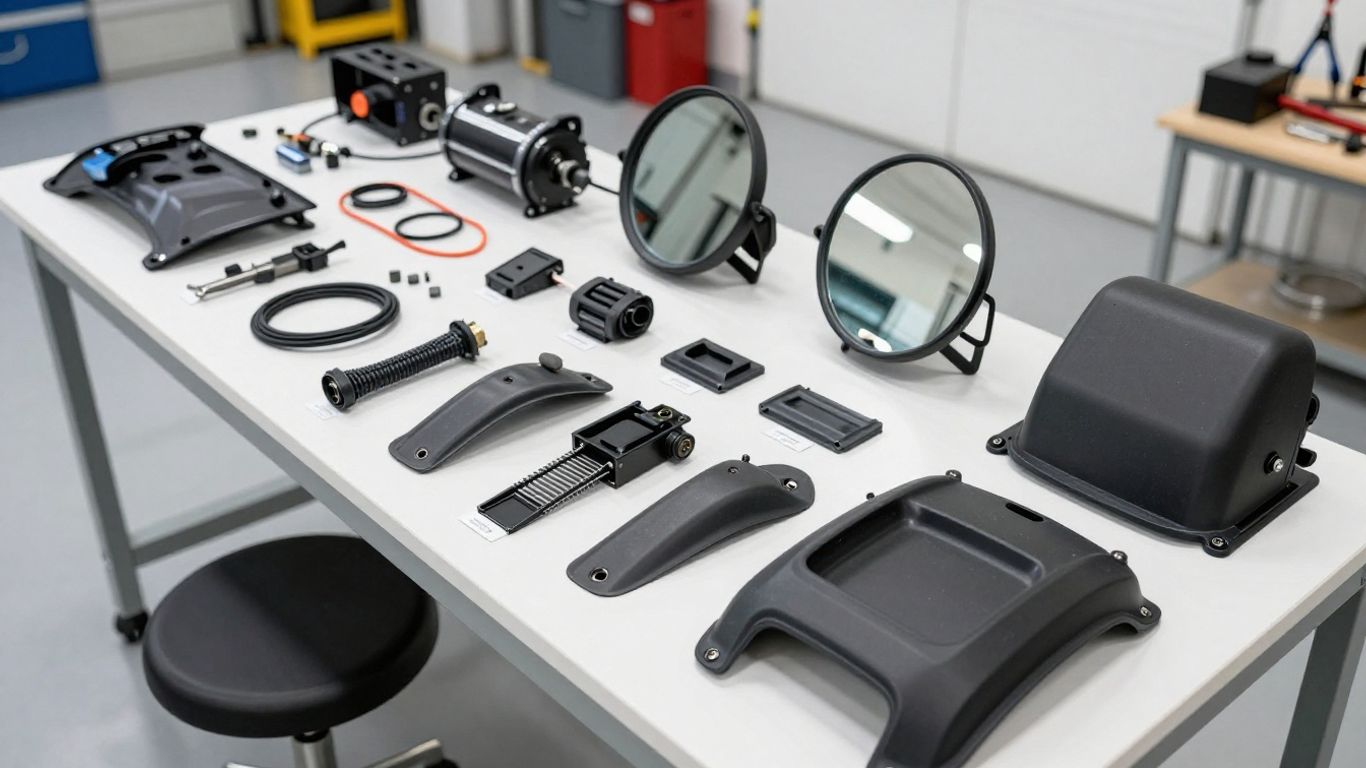
Check the compliance plate, registration record, vehicle identification number, and build information. Note whether the vehicle is electric, hybrid, or another drivetrain type, along with its trim and body style. Photos of the damaged item, its connectors, mounting points, and labels can help a seller narrow the search.
Do not rely on a photograph of a similar vehicle. Two cars that look alike from the outside may use different components underneath, particularly around sensors, charging equipment, and control systems.
Matching part numbers and specifications
Part numbers provide a stronger starting point than a title such as “front module” or “door controller.” Compare the number on the removed component with the seller’s number, then check revisions, connector layouts, dimensions, voltage ratings, and mounting points. If the label is damaged, ask for a close-up image and have the seller confirm the identification in writing.
A reputable seller should be willing to discuss uncertainty rather than promise a fit from a single photograph. Keep those messages with the invoice in case the item needs to be returned.
Checking compatibility across BYD models
Compatibility across models should be treated as something to prove, not assume. Some parts may share a platform or connector, while differences in sensors, software, body dimensions, or trim can prevent installation. Ask whether the component was removed from the same model, year range, and variant as yours.
The EVDealer Group network is a useful example of why model-level information matters when researching current vehicle ranges; a parts seller should be equally precise about the donor vehicle. If compatibility remains unclear, ask a repairer to compare the original and replacement specifications before purchase.
Understanding EV-specific components
Electric vehicles add components that require more care than ordinary cosmetic replacements. Motors, inverters, onboard chargers, charging ports, battery packs, and high-voltage cables may need specialist testing, isolation procedures, or system checks. A seller’s statement that a part “looks good” is not enough evidence for these items.
For lower-risk purchases, such as trim or a mirror housing, ordinary inspection may be adequate. For anything tied to propulsion, charging, or high voltage, plan the inspection and installation with a qualified technician.
Where to buy quality used BYD parts in Sydney
Sydney buyers have several routes to used components, from dismantlers with physical stock to online sellers arranging delivery. Each route offers a different balance of price, convenience, technical knowledge, and after-sales support. The seller’s process matters as much as the listing itself. Look for clear identification, realistic photographs, responsive answers, and written conditions.
BYD wreckers and automotive recyclers
Automotive recyclers can be a practical first stop for panels, lamps, wheels, seats, trim, and other parts removed from damaged vehicles. They may also know which assemblies were stored together and can provide photographs of the donor vehicle. Ask whether the part is already removed, how it was stored, and whether the price includes brackets, sensors, or attached wiring.
Local pickup can be helpful for large or fragile items, but inspect the part before loading it. If the seller offers delivery, confirm packaging and the process for reporting freight damage.
Specialist EV dismantlers
Specialist dismantlers are more likely to understand the difference between ordinary bodywork and EV components that need controlled handling. They may be able to explain whether a motor, battery-related component, or charger was tested and what information is available about its condition. That does not remove the need for an independent check, especially for high-voltage equipment.
For a broader comparison, tested EV parts listings can show the kinds of documentation and warranty language buyers may encounter in the Australian market. Treat each seller’s claims as specific to that listing and ask what the warranty actually covers.
Online parts marketplaces and local sellers
Online marketplaces make it easier to compare inventory, but they also make incomplete descriptions easier to overlook. Read the entire listing, inspect every photograph, and check whether the pictured item is the actual part rather than a stock image. A seller with a local warehouse may offer faster collection, while another may need to arrange interstate freight.
Use the message function to ask direct questions before paying: Is the item tested? What is the part number? Why was it removed? Are all connectors, clips, and brackets included? Clear answers are more useful than a long list of vague assurances.
Dealers, repairers, and independent workshops
Dealers and independent workshops may be able to identify a part even when they do not sell used components themselves. A repairer can sometimes confirm whether a replacement is likely to require coding, calibration, or additional hardware. It is worth paying for accurate advice before buying an expensive item.
A local dealer locator such as BYD Retailer support may also help owners find servicing guidance or a nearby point of contact. Keep the request focused on identification and installation requirements rather than assuming a dealer will supply a used component.
Inspecting used BYD parts before purchase
Inspection should match the part’s function and risk. A bumper requires a different check from a control module, and a battery-related component demands far more than a visual glance. If an item cannot be inspected in person, request enough evidence to make a considered decision. A seller who cannot answer basic questions may not be the right source for a critical component.
Evaluating visible wear and damage
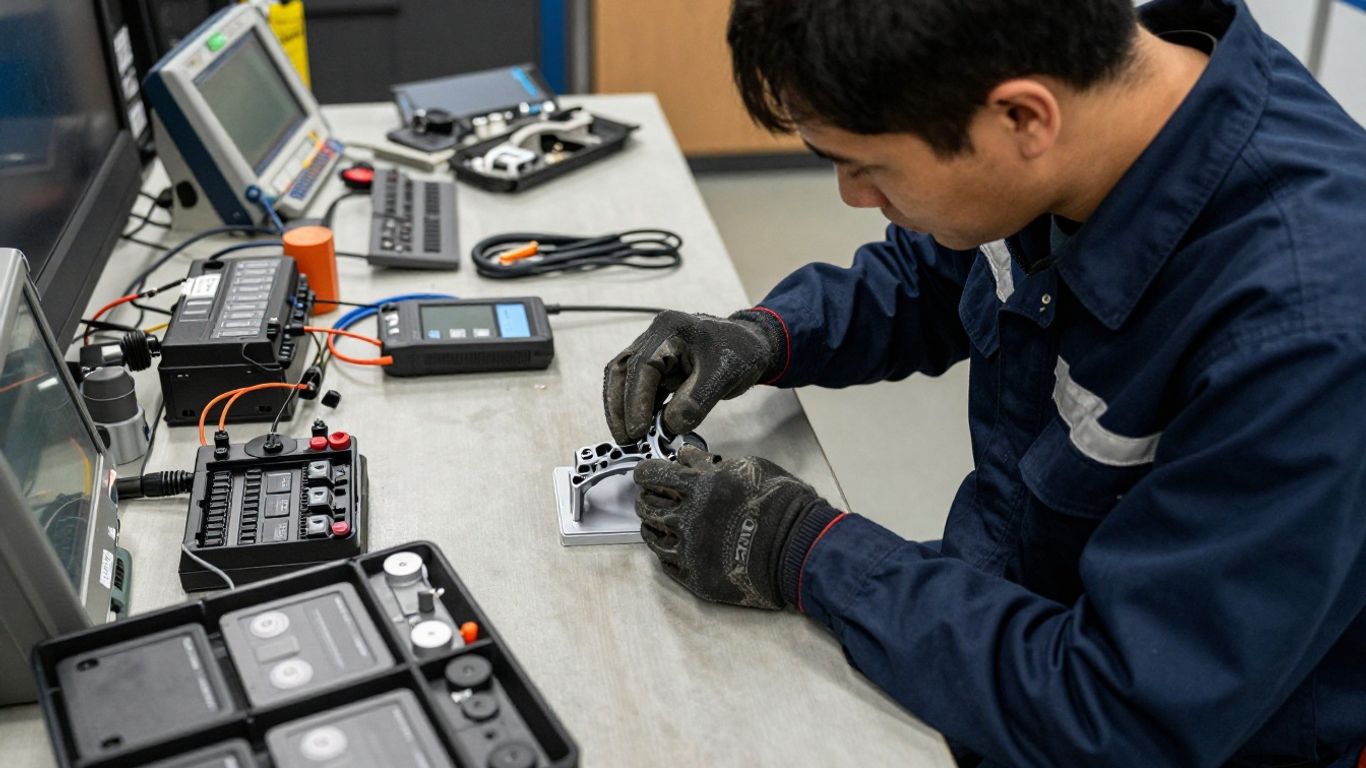
Look for cracks, bends, corrosion, broken tabs, water marks, deep scratches, and signs of previous repair. For panels and trim, compare mounting points and finish rather than judging only the front-facing surface. Wheels should be checked for bends or repairs, while suspension parts need attention to bushings, seals, and corrosion.
Ask whether damage shown in the photograph is cosmetic or functional. Small missing clips can create extra cost, and a panel that appears straight may still have distorted mounting points.
Checking electrical and electronic components
Electronic parts should be checked for damaged connectors, bent pins, moisture, heat marks, and missing labels. Ask whether the item was tested in a vehicle or only checked for visible damage. For modules and infotainment units, compatibility may also depend on programming, pairing, or calibration.
Request the exact part number and any available fault-code or test information. If the seller cannot test the item, price it as unverified and make sure the return policy reflects that uncertainty.
Assessing battery health and safety
Battery-related parts require a cautious process. Ask whether the component is a complete battery pack, a module, a casing, a cable, or another assembly, and request relevant test results rather than a general claim that it works. The handling history, storage conditions, isolation status, and visible damage should all be discussed.
Do not open, probe, transport, or install a high-voltage battery component yourself unless you have the training and equipment to do so safely. A qualified EV professional should determine whether the part can be handled and fitted.
Requesting photos, testing records, and history
Good evidence usually includes clear images of labels, connectors, mounting points, and the whole component. For electrical parts, ask for test records, removal details, and any known fault history. Written confirmation is useful because it creates a shared record of what was promised.
Before paying, make sure the invoice identifies the exact item and states the warranty or return terms. If the seller will not provide basic documentation, keep searching rather than treating the missing information as harmless.
Buying high-demand BYD replacement parts
Demand tends to be strongest for parts that are frequently damaged, difficult to source new, or expensive to replace through conventional channels. Popularity can shorten availability and encourage rushed decisions. Use it as a reason to prepare, not as a reason to skip inspection. A part that is easy to sell should still be traceable to the right vehicle and specification.
Body panels, lights, mirrors, and trim
These parts are often good candidates for used purchase because their condition can be assessed directly. Match paint, camera apertures, sensor mounts, lamp type, mirror features, and bracket locations. Ask whether bulbs, wiring, cameras, glass, or trim inserts are included, since a low headline price may cover only the outer shell.
For large panels, plan transport before buying. Freight damage can turn a sound door or bumper into a difficult return, especially when packaging is not designed for the item.
Wheels, suspension, and braking components
Wheels should be checked for correct size, offset, bolt pattern, cracks, and bends. Suspension and braking parts need closer attention to wear, corrosion, leaks, and remaining service life. A used component may be reasonable when it is inspected by a technician, but safety-critical parts deserve a higher standard than cosmetic items.
Ask whether fasteners, sensors, hubs, or brackets are included. Confirming the complete assembly can prevent a second order and another period off the road.
Interior controls and infotainment parts
Interior switches, screens, consoles, seats, and trim can be economical used purchases when the appearance and connectors match. Check for broken clips, worn buttons, screen damage, water exposure, and differences in finish. Some electronic controls may need pairing or configuration after installation.
Photographs of the rear connectors are especially useful. The front of a screen or switch can look identical while the wiring arrangement differs.
EV motors, inverters, and charging equipment
Motors, inverters, onboard chargers, and charging ports should be approached as specialist components. Confirm the part number, voltage and configuration details, donor vehicle, test procedure, and warranty exclusions. A component that powers up is not necessarily ready for safe installation or long-term use.
The EV Accessories Australia range is a useful reminder that EV-related parts and accessories can vary by vehicle and use case. For used high-voltage equipment, rely on documented compatibility and qualified technical advice rather than a generic accessories description.
Comparing prices, warranties, and seller policies
Price comparisons are useful only when the items being compared are genuinely equivalent. One listing may include sensors, brackets, testing, and a warranty, while another may be for a bare, untested component. Read the small details before deciding that one seller is cheaper. A written quote also makes later conversations much easier.
Calculating the total cost of a used part
Start with the listed price, then add freight, insurance, taxes or fees where applicable, fitting, calibration, programming, and disposal of the old item. Large panels and battery-related components can have unusual transport costs. If the repair requires a second component or new fasteners, include those as well.
A useful comparison is the installed cost, not the price shown in the search results. This often changes which option offers the best value.
Understanding warranties and return conditions
Ask how long the warranty lasts, what defects it covers, and whether labor, freight, diagnostic fees, or removal costs are excluded. Find out whether electrical items have different conditions from body panels. Returns may also depend on the part remaining unmodified and on the buyer reporting a fault within a stated period.
Keep the invoice, listing, messages, photographs, and fitting report. These records can support a claim if the part does not match its description.
Factoring in delivery across Sydney
Delivery within Sydney can still vary by distance, vehicle size, access, and packaging requirements. Confirm whether the seller delivers to your suburb, whether collection is available, and who carries the risk of damage in transit. For fragile or oversized parts, inspect the packaging immediately and photograph any damage before signing where possible.
A local pickup may be worthwhile even when the posted price is slightly higher. Seeing the component before transport can reduce both uncertainty and return expense.
Recognizing unusually cheap or suspicious listings
An unusually low price deserves questions rather than excitement. Warning signs include stock photographs, missing part numbers, pressure to pay outside the platform, vague testing claims, inconsistent seller details, and refusal to explain the donor vehicle. A legitimate bargain should still come with a clear description and reasonable terms.
Compare several similar listings and ask why the price differs. If the explanation is missing, assume the risk is real and move on.
Installing and maintaining used BYD parts safely
The purchase is only one part of the repair. Installation quality, calibration, and record-keeping can determine whether a used component performs as expected. Cosmetic items may be straightforward, but electrical and safety-related parts can introduce faults if fitted incorrectly. Plan the work before the part arrives, especially if the vehicle is needed for daily travel.
When to use a qualified EV technician
Use a qualified EV technician for battery packs, high-voltage cables, inverters, motors, onboard chargers, charging ports, and any repair involving isolation procedures. A technician can also assess whether a part is damaged beyond safe use and can check for related faults. Do not substitute online instructions for appropriate training and protective equipment.
For panels, trim, or other lower-risk items, a capable repairer may be sufficient. When uncertain, ask for an assessment before removing the original component.
Calibration and software considerations
Some replacements may need calibration, coding, pairing, or a system reset after installation. This can apply to cameras, sensors, displays, control modules, and charging-related electronics. Ask the installer whether diagnostic equipment is required and whether the quoted labor includes those steps.
A part that physically fits may still produce warning lights or fail to communicate with the vehicle. Confirm the post-installation checks before closing the repair job.
Safe handling of high-voltage components
High-voltage components should be isolated, transported, stored, and installed according to appropriate professional procedures. Keep damaged or wet components away from improvised work areas, and never open a battery enclosure or test exposed terminals without the required qualifications and equipment.
If a part has been involved in a crash, fire, flood, or impact, disclose that history to the technician. Hidden damage can affect both safety and the suitability of the replacement.
Keeping records for future repairs and resale
Save the seller’s details, part number, donor information, invoice, warranty, test results, installation date, and technician report. These records help with future troubleshooting and make it easier to identify related components later. They can also reassure a future buyer that the repair was considered rather than improvised.
A small folder, either digital or printed, is enough. Good records turn a one-off used-parts purchase into useful maintenance history.
Conclusion
The best way to find quality used BYD parts Sydney owners can rely on is to slow down the buying process: identify the vehicle precisely, compare the complete cost, inspect the evidence, and use qualified help for EV-specific work. A careful seller and clear documentation are worth more than a dramatic discount, particularly when the part affects charging, propulsion, safety, or software.
Frequently Asked Questions
Are used EV parts safe to buy?
They can be suitable when the part is correctly identified, properly inspected, and sold with clear testing or return information. High-voltage components require professional assessment and handling.
How do I know whether a used part will fit?
Match the vehicle identification details, model year, variant, part number, connectors, dimensions, and mounting points. A seller or technician should confirm compatibility rather than relying on appearance alone.
Is a reconditioned part better than a used part?
Not automatically. Reconditioning can involve different levels of repair and testing, so ask what work was performed, what was tested, and what warranty applies.
What information should I request from a seller?
Request clear photographs, the exact part number, donor vehicle details, testing records where relevant, included hardware, delivery terms, and written warranty or return conditions.
Should I buy used body panels online?
Online purchase can work if the listing shows the actual panel and clearly describes its condition, finish, mounting points, and freight arrangements. Inspect the item promptly when it arrives.
Do replacement electronic parts need programming?
Some electronic components may require pairing, calibration, coding, or diagnostic checks. Confirm the requirement with a qualified repairer before buying.
What should I do if a listing seems too cheap?
Check whether it is tested, complete, correctly identified, and covered by a meaningful return policy. If the seller avoids basic questions or pressures you to pay quickly, choose a more transparent listing.