

Key Takeaways
An EV’s high-voltage system links energy storage, power conversion, and motion, while separate controls and safety features help keep those functions coordinated.
- The traction battery stores energy and supplies the drive system.
- An inverter converts battery power into the form the motor needs.
- The motor turns electrical energy into wheel-driving torque and can recover energy during braking.
- Charging and accessory systems use different paths to convert and distribute power.
- Battery and motor condition are best assessed through symptoms, records, and qualified diagnostics.
How the high-voltage system is arranged
The high-voltage system is a connected set of components, not a single box beneath the floor. Its main path runs from the traction battery through power electronics to the electric motor, while charging and accessory circuits handle other jobs. The exact layout varies by vehicle, but the basic relationships are similar. A useful overview of EV high-voltage components can help place these parts in context.
What makes an EV system high voltage
“High voltage” describes the traction system’s electrical level relative to the vehicle’s low-voltage accessories, but the exact threshold and pack voltage depend on the vehicle and applicable standards. EV packs commonly use voltage well above a conventional 12-volt system so they can transfer substantial power without relying on extremely high current. That arrangement brings efficiency and packaging trade-offs, as well as specific isolation and service requirements. Voltage is only one part of the design; current, insulation, controls, and operating conditions matter too.
How the battery, inverter, and motor connect
The traction battery supplies direct current (DC). The inverter takes that power and converts it into controlled alternating current (AC) for many traction motors; the motor then converts electrical energy into rotation. During regenerative braking, energy can flow back through the power electronics toward the battery, subject to system limits. Together, these components form the central drive path described in an all-electric car overview.
Where the onboard charger and DC-DC converter fit
When an EV is connected to an AC charging source, the onboard charger converts incoming AC into DC suitable for charging the traction battery. A DC-DC converter serves a different purpose: it reduces high-voltage DC to the lower voltage used by the vehicle’s auxiliary electrical system and 12-volt battery. DC fast charging generally follows a different path, with conversion handled by the charging equipment rather than the onboard AC charger. These distinctions explain why a charging connection and an accessory circuit do not simply feed the same components.
How the high-voltage system differs from the 12-volt system
The high-voltage system supplies energy for propulsion and other substantial electrical loads. The low-voltage system runs many familiar functions, such as control electronics, lighting, and locks, and helps power systems that bring the high-voltage circuit online. The two systems are electrically distinct but coordinated: a fault in one can affect what the other is allowed to do. For drivers, a dead 12-volt battery can therefore prevent an otherwise charged EV from starting normally.
How the traction battery stores and delivers energy
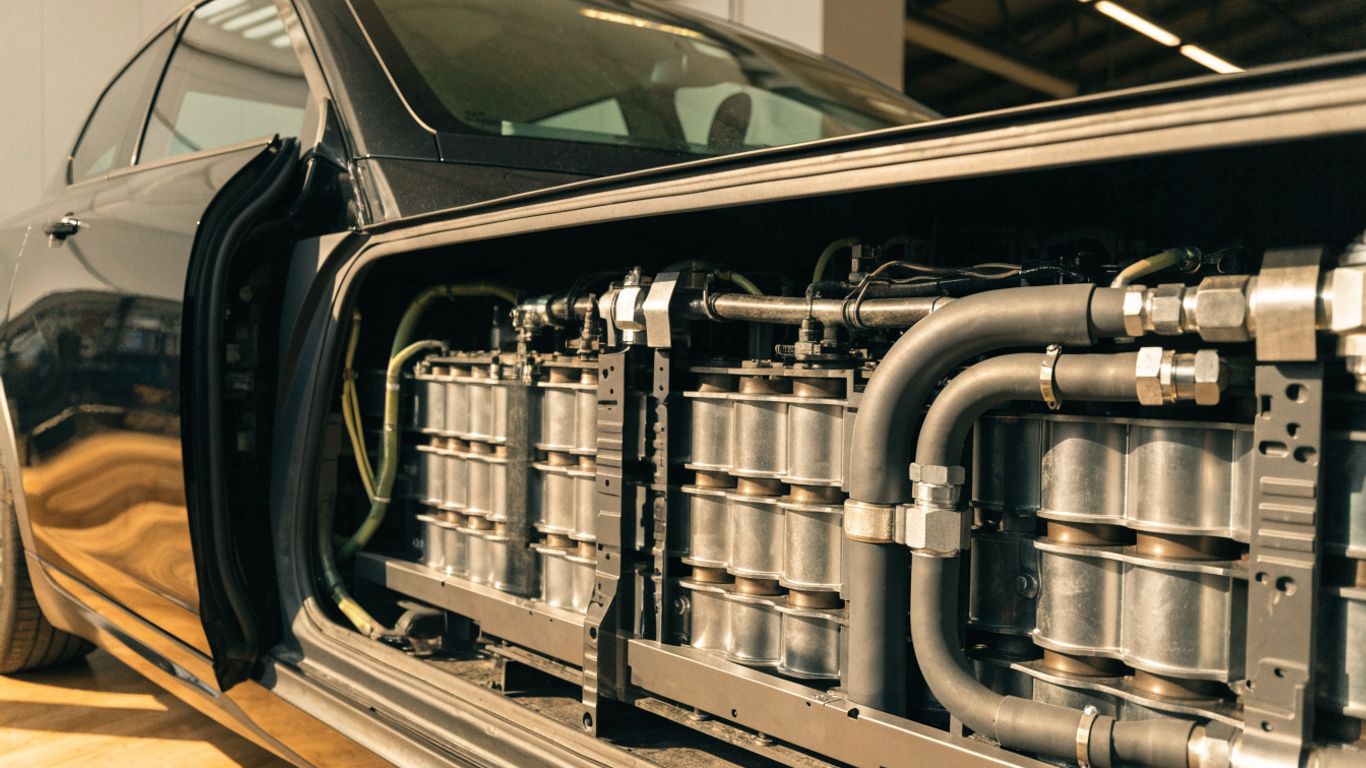
The traction battery is the vehicle’s main energy store, but it is more than a collection of cells. Its enclosure, electrical connections, monitoring electronics, and temperature controls all shape how energy can be used. Capacity and design differ from model to model, so a battery’s size alone does not tell the whole story. The essential EV components guide offers another way to see how the pack fits among the vehicle’s other systems.
Battery cells, modules, and pack construction
Cells are the basic units that store energy electrochemically. They are connected in series and parallel arrangements to build the voltage and capacity required by a particular vehicle; groups of cells may be assembled into modules, though some designs use cell-to-pack construction without conventional modules. The pack enclosure protects its contents and provides structure, while sensors and wiring connect the cells to monitoring and control systems. A compact layout can help use available space, but it also makes thermal and service design important.
Battery chemistry and pack configurations
Different lithium-ion chemistries trade off energy density, cost, power delivery, durability, and material choices. No chemistry is best in every respect, and manufacturers select a combination that suits the vehicle’s requirements. Pack configuration also matters: connecting cells in series raises voltage, while parallel connections increase available capacity and current capability. A battery’s chemistry and layout influence its characteristics, but they do not alone determine real-world range or lifespan.
The battery management system’s role
A battery management system (BMS) monitors cell and pack conditions, including voltage and temperature, and helps keep operation within permitted limits. It can estimate state of charge and support decisions about charging and power delivery. This information is useful, but estimates are not the same as a direct measurement of how much energy the pack can still store compared with when it was new. Battery records and a proper assessment matter, much like checking KiwiSaver settings when the question is about a changing balance rather than one figure alone.
Thermal management and operating temperature
Battery performance and charging limits depend partly on temperature. A thermal management system may use liquid cooling, air, heating, or a combination to keep the pack within its intended operating range. Cold conditions can temporarily reduce available power or slow charging, while excessive heat can prompt protective limits. The details vary among vehicles, so a driver should follow the vehicle’s temperature and charging guidance rather than assume every pack behaves the same way.
How the electric motor turns electricity into motion
An electric traction motor converts electrical energy into mechanical rotation, which reaches the wheels through the vehicle’s drivetrain. Compared with an engine that produces power through combustion, an electric motor relies on electromagnetic forces. The result is a system whose response can be controlled rapidly by adjusting electrical input. Understanding the basic principles of EV operation makes the links between battery, motor, and controls easier to follow.
Common EV motor types and their characteristics
EVs use several motor designs, including permanent-magnet synchronous motors and induction motors. Permanent magnets can provide strong performance in a compact package, while induction designs create their magnetic field through electrical current in the rotor and avoid permanent magnets. Other design choices affect efficiency, cost, material requirements, and performance across different speeds. A vehicle may use one motor or more than one, and the motor type is only one factor in how the whole drive system behaves.
How the rotor and stator create torque
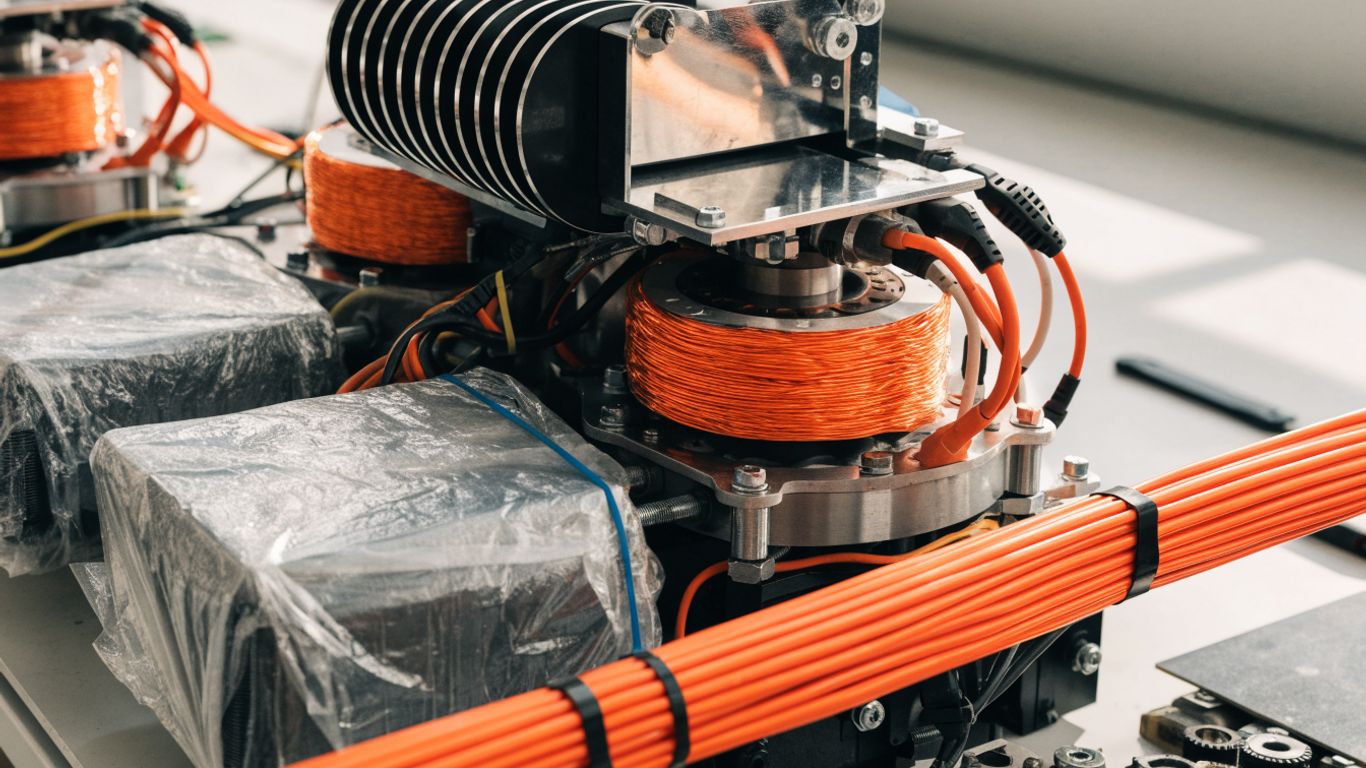
The stator is the stationary part of the motor, with windings that create a changing magnetic field when energized. The rotor, which turns inside it, responds to that field; the interaction produces torque. The inverter controls the electrical supply to the stator, allowing the motor’s magnetic field to be adjusted as driving conditions change. In plain terms, the battery provides energy, but the coordinated fields inside the motor turn that energy into rotation.
Regenerative braking and energy recovery
During deceleration, a traction motor can operate as a generator. The wheels drive the motor, and some of the vehicle’s motion is converted back into electrical energy that can return to the battery. The amount recovered depends on factors such as battery charge, temperature, speed, traction, and the vehicle’s control strategy. Regeneration supplements energy use; it does not recover all the energy spent accelerating or eliminate the need for friction brakes.
A simple drive sequence helps show where energy changes form:
- The battery supplies DC power to the drive system.
- The inverter adjusts power for the motor’s operating needs.
- The motor produces torque that turns the wheels.
- During suitable deceleration, the motor can send some energy back toward the battery.
That sequence is a useful mental model, though real vehicle controls continuously adapt to driver input and operating conditions. Regenerative braking also varies between vehicles, so the feel of deceleration is not identical across every EV.
Motor cooling and efficiency considerations
Motors and their power electronics generate heat while operating, so many EVs use a cooling system to maintain suitable temperatures. Efficiency changes with speed and load, and the cooling system itself also draws energy. A motor that is efficient at one operating point may be less so at another; the vehicle’s controls balance performance, temperature, and energy use. For drivers, changes in efficiency can show up as a difference in energy consumption rather than a clear motor symptom.
How power electronics control energy flow
Power electronics sit between energy sources, motors, and other electrical loads, converting and regulating power as the vehicle operates. The inverter is central to propulsion, while chargers and DC-DC converters handle separate conversion tasks. Control units also share information so the system can respond to acceleration, braking, charging, and safety conditions. A wider view of EV repair safety practices helps explain why the same power flow that enables driving also calls for careful isolation during service.
The inverter’s role in driving the motor
The inverter converts battery DC into AC for motors that require it and controls the output supplied to the motor. By changing the electrical waveform and its timing, it helps regulate the motor’s magnetic field and torque. In regenerative operation, the flow reverses direction: electrical energy produced by the motor is managed back toward the battery. The inverter is therefore not just a switch between two components; it is an active part of drive control.
How the motor controller adjusts speed and torque
A motor controller uses driver demand and information from sensors and other vehicle systems to determine how much power to send to the motor. Pressing the accelerator requests torque, but the controller also considers limits such as temperature, available battery power, traction, and system protections. This is why pedal position does not correspond to a fixed amount of electrical output. The system continuously balances the driver’s request against what the vehicle can safely and effectively provide.
Power conversion during charging and driving
Charging and driving use related components but different conversion paths. AC charging uses the onboard charger to prepare power for the battery; DC fast charging supplies DC through equipment outside the vehicle, with the vehicle managing the charging process. While driving, the inverter conditions battery power for the motor, and the DC-DC converter supplies the low-voltage network. This distinction also helps avoid confusing EV charging with home energy arrangements such as solar panels and battery storage, which concern a building’s energy system rather than the vehicle’s internal conversion path.
| Operating situation | Main conversion | Destination |
|---|---|---|
| AC charging | Onboard charger converts AC to DC | Traction battery |
| DC fast charging | Charging equipment supplies DC | Traction battery |
| Driving | Inverter converts DC to controlled AC | Traction motor |
| Accessory supply | DC-DC converter reduces DC voltage | Low-voltage system |
These are simplified paths, and a vehicle may include additional switching and protection components. Still, the table shows why “charging” and “powering the motor” are not the same conversion task. A vehicle identification QR code may help connect a vehicle to its records in some settings, but it does not replace diagnosis of the electrical system itself.
How components communicate and coordinate
Controllers exchange information about conditions such as battery state, motor speed, temperature, and driver demand. That communication lets the vehicle coordinate propulsion with braking, charging, thermal management, and protective limits. If a sensor reports an unexpected value or a control unit detects a fault, the system may restrict power or display a warning. The driver usually sees only the resulting message or behavior, not the network of decisions behind it.
How high-voltage safety is designed into an EV
EV safety relies on physical protection and electronic controls working together. High-voltage cables and components are identified and insulated, while the vehicle monitors circuits and can disconnect power under certain fault conditions. Safety measures reduce risk during normal operation and after an incident, but they do not make damaged high-voltage equipment safe to touch. If there is visible damage or a warning, distance and professional assessment are the sensible first steps.
Isolation, shielding, and high-voltage interlocks
Insulation separates high-voltage conductors from the vehicle body and from low-voltage circuits. Protective covers and shielding help prevent accidental contact or damage, and high-voltage interlock circuits can detect when certain connectors or covers are opened or disconnected. These features work as part of a larger safety design; they are not a guarantee that every damaged vehicle is de-energized. The orange color often used for high-voltage cables is a warning cue, not permission to handle them.
Contactors, fuses, and emergency disconnects
Contactors are electrically controlled switches that connect or isolate the battery from parts of the high-voltage system. Fuses are designed to interrupt excessive current, while a service disconnect can provide a way for trained personnel to isolate sections of a circuit during service. The exact arrangement differs by vehicle, and a disconnected circuit may still contain stored electrical energy. These components are layers of protection, not a substitute for vehicle-specific procedures.
Warning signs and safe response after a collision
After a collision, damage to the battery enclosure, cables, or charging components may not be immediately obvious. Warning messages, unusual heat, smoke, hissing, a strong chemical odor, or visible fluid are reasons to move away and contact emergency services or qualified responders. Do not touch exposed wiring, attempt to open the pack, or charge a vehicle that may be damaged. Emergency guidance for a particular vehicle takes precedence, and responders should be told that it is an EV.
Why high-voltage work requires trained technicians
High-voltage systems can present shock, arc, and fire hazards, and components may retain energy after the vehicle is switched off. Proper service requires vehicle-specific procedures, appropriate protective equipment, and verification that the circuit is safe to work on. A dashboard warning disappearing does not confirm that a circuit is isolated. For that reason, owners should leave battery, inverter, and high-voltage wiring work to technicians trained for the vehicle and task.
How to assess battery and motor condition
A single dashboard number rarely tells the full story of an EV’s condition. Range changes with temperature, speed, terrain, tires, cabin heating or cooling, and driving style, while motor behavior can depend on software and load. It is more useful to look for repeatable changes and pair them with service history and diagnostic information. When arranging a vehicle inspection or even planning an international move, clear records and advance preparation make it easier to ask the right questions.
Battery capacity, range, and state of health
State of charge describes the battery’s estimated current energy level; state of health compares its present condition with a reference for a new battery, using methods that can vary. Usable capacity and predicted range are related but not interchangeable: range also depends on the vehicle and the conditions in which it is driven. A consistent reduction in range under comparable conditions is more informative than one short trip in cold weather. For a used EV, ask for available battery reports and records, and interpret them alongside the vehicle’s age and use.
Common battery performance changes and faults
Some changes are ordinary: cold temperatures can reduce temporary range or charging speed, and usable capacity generally changes with age and use. More concerning patterns include repeated charging interruptions, persistent warning messages, unexpectedly large range changes under similar conditions, or a vehicle that regularly limits available power. Such symptoms can have several causes, so they do not by themselves prove that the battery has failed. A qualified diagnostic assessment can distinguish normal variation from a fault that needs attention.
Motor and inverter symptoms to watch for
Unusual whining, grinding, vibration, abrupt changes in acceleration, or recurring drivetrain warnings deserve attention, particularly if they persist or worsen. Similar symptoms can also originate elsewhere in the drivetrain, tires, mounts, or control systems. A brief sound in a particular driving condition is not enough to identify a failed motor or inverter. Note when the symptom occurs, what the vehicle is doing, and whether any warning appears; those details help a technician narrow the possibilities.
Diagnostic checks and service considerations
A sound assessment combines a physical inspection with fault-code review and, where available, battery and charging data. Service records can clarify whether a change is new and whether earlier repairs or updates are relevant. Before an inspection, gather charging history, dashboard warnings, and notes about when symptoms occur. Avoid opening high-voltage covers or trying improvised tests: qualified technicians can follow the correct isolation and diagnostic procedures for that vehicle.
Conclusion
The high-voltage EV system works because the battery, inverter, motor, charging equipment, and safety controls each perform a distinct job and communicate with the others. Knowing the basic flow of energy makes everyday behavior easier to understand, while repeated symptoms and appropriate diagnostics are more reliable than assumptions based on one range estimate or warning. When a high-voltage fault or collision is involved, a trained technician is the right person to investigate.
Frequently Asked Questions
What voltage is considered high voltage in an EV?
The term depends on the applicable standards and vehicle design. EV traction systems operate at substantially higher voltages than the 12-volt accessory system, and owners should treat high-voltage components as hazardous rather than trying to assess them by touch or appearance.
What does an EV inverter do?
An inverter converts battery DC into controlled AC for motors that use it and helps regulate the electrical supply to the motor. During regenerative braking, it also helps manage energy flowing back toward the battery.
What is the difference between an EV battery and a 12-volt battery?
The traction battery stores energy for propulsion and other high-power functions. The 12-volt battery supports many low-voltage accessories and control systems; the two batteries serve different purposes and are connected through vehicle controls and power conversion.
Do all electric vehicles use the same type of motor?
No. EVs use different motor designs, each with trade-offs involving efficiency, cost, materials, and performance. A vehicle’s overall behavior also depends on its battery, inverter, software, and drivetrain configuration.
Can regenerative braking fully recharge an EV battery?
No. Regenerative braking can recover some energy during deceleration, but it cannot return all the energy used to accelerate and operate the vehicle. How much is recovered depends on driving conditions and the vehicle’s control limits.
Is a shorter driving range always a sign of battery failure?
No. Temperature, speed, terrain, tire condition, and cabin climate use can all affect range. A persistent change under comparable conditions is more useful to investigate than a single low estimate, and a diagnostic assessment can help identify the cause.
Is it safe to work on EV high-voltage components at home?
High-voltage work can cause serious injury, and circuits may retain energy after the vehicle is switched off. Battery, inverter, and high-voltage wiring work should be left to technicians trained in the correct vehicle-specific procedures.