

Key Takeaways
Buying genuine used BYD parts can save money, but only when compatibility, condition, and safety are checked together.
- Match the part to the exact model, year, trim, drivetrain, and steering side.
- Use the VIN and part number rather than relying on a similar-looking component.
- Ask for donor-vehicle details, inspection evidence, and clear photographs.
- Treat batteries, airbags, and other high-voltage or safety-critical parts differently from cosmetic items.
- Include testing, freight, taxes, installation, warranty, and return costs in the final comparison.
Why genuine used BYD parts can be a smart choice
A used original component may offer a practical middle ground between an expensive new part and an uncertain substitute. The key is not simply finding the lowest advertised price. It is finding a part with a traceable source, correct fitment, and enough remaining service life for the repair to make sense.
For owners comparing PartsClub listings, a careful process can make the search faster without turning the purchase into a gamble. Genuine used BYD parts are most useful when the component is identified accurately and its condition is described honestly.
Lower costs without sacrificing model compatibility
A recycled original part is often less expensive because it has already been removed from a donor vehicle, not because it is a different design. That can preserve the connectors, mounting points, software relationships, and physical dimensions expected by the vehicle. Still, “original” does not automatically mean “compatible.” Model updates, trim levels, and production changes can matter.
Ask the seller to confirm the exact application in writing. A useful listing should identify the model and production range, describe the component, and provide a part number or donor-vehicle reference where available.
Why original BYD components matter for safety and performance
Vehicles depend on many components working together, especially around braking, restraint systems, steering, thermal management, and electronic controls. An original used part may be closer to the vehicle’s intended specification than an unverified substitute, but its condition still has to be established before installation.
The right question is not whether a part is merely genuine. It is whether it is genuine, undamaged, correctly matched, and suitable for the intended repair. That distinction is central to a safe purchase.
When used parts are preferable to aftermarket alternatives
Used original parts can be a sensible choice for body panels, lamps, interior pieces, mirrors, trim, wheels, and some non-safety-critical electronic modules. They may also be useful when a particular factory component is difficult to source new or when a vehicle owner wants to retain the original look and fit.
For every part, compare the used option with new and aftermarket choices on more than price. Check the return terms, testing method, delivery time, installation requirements, and whether calibration or coding may be needed.
Balancing price, condition, mileage, and remaining service life
A low price is less attractive if the part has unknown damage, heavy wear, or no return protection. Conversely, a higher-priced component can be reasonable when it comes from a lower-mileage donor vehicle and includes clear inspection evidence.
A simple comparison helps keep the decision grounded rather than emotional.
| Factor | Questions to ask | Why it matters |
|---|---|---|
| Compatibility | Does the VIN or part number match? | Prevents an unusable purchase |
| Condition | Was the component tested or visually inspected? | Reveals likely repair risk |
| Donor history | What was the vehicle’s mileage and damage? | Adds context to wear and possible impact |
| Total cost | Are freight, taxes, and fitting included? | Shows the real value |
Use the table as a starting point, then ask the seller to fill in any gaps. A part that looks inexpensive may not be good value if important information is missing.
How to identify the right BYD part
Correct identification should happen before price comparison. Start with the vehicle’s exact model, build year, trim, drivetrain, and steering configuration, then narrow the search using the VIN and the number printed on the old component. This is especially useful where a vehicle has several versions that share a name but not every part.
A clear identification process protects against wasted freight and delays. It also gives a technician enough information to flag an apparent mismatch before the part is ordered.
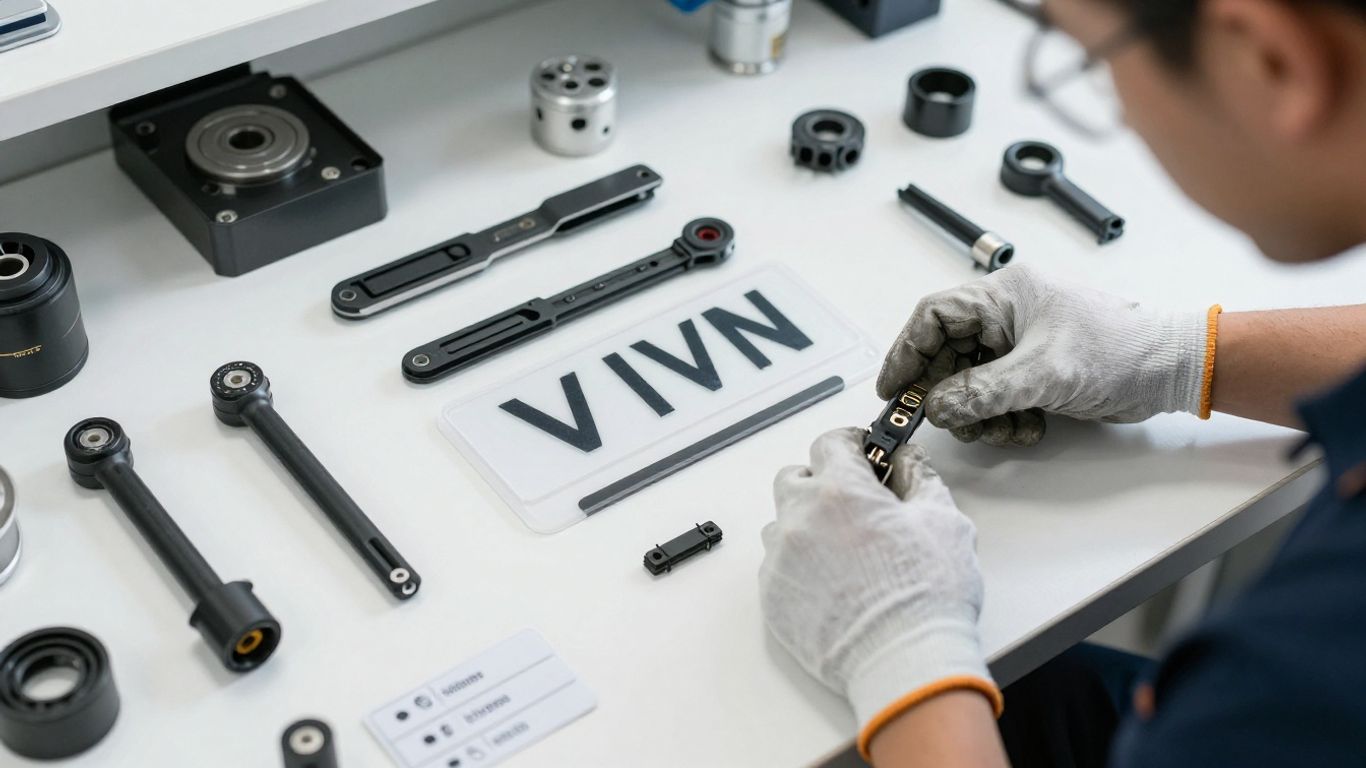
Matching the exact BYD model, year, and trim
Record the full vehicle description rather than writing only “BYD SUV” or “BYD hatchback.” Include the model, build date if available, trim, body style, drivetrain, and any relevant facelift or generation information. A door mirror, lamp, bumper, or control module can differ even when two vehicles look broadly alike.
Photographs of the vehicle and the old part can help, but they should support—not replace—the formal identification details. Ask for confirmation before paying.
Using VINs and part numbers to confirm compatibility
The VIN gives a seller or qualified technician a stronger basis for checking the vehicle than a casual visual match. The part number on the old component can add another layer of confidence, although suffixes and revisions should be compared carefully rather than ignored.
Provide both wherever possible. VIN verification support is particularly useful when a listing covers several model variants or when the seller offers a fitment guarantee.
Checking differences between battery electric and hybrid systems
Do not assume that a part from a battery-electric vehicle will suit a hybrid vehicle with a similar model name. Powertrain components, wiring, cooling arrangements, control units, and battery-related systems can differ substantially. Even a bracket or sensor may be tied to a particular configuration.
State the drivetrain at the start of the enquiry. For high-voltage components, wait for confirmation from a suitably qualified technician rather than relying on a seller’s photograph alone.
Understanding left-hand-drive and right-hand-drive variations
Steering position can change dashboards, pedal assemblies, steering components, wiring routes, mirror assemblies, wiper layouts, and some interior trim. A part that fits a left-hand-drive vehicle may not be suitable for a right-hand-drive vehicle, even if the model and year appear identical.
Tell the seller which side of the vehicle is involved and which steering configuration applies. For exterior parts, specify left or right from the driver’s seated position or use the seller’s established convention.
Where to find genuine used BYD parts
The source of a used part affects the quality of the information available about it. Specialist dismantlers and established recyclers are more likely to record donor details, label removed components, and explain how parts were tested. Marketplaces can also be useful, provided the individual seller is assessed rather than the platform name alone.
A reliable search should leave a paper trail: listing details, photographs, messages, invoice, and any testing statement. That record becomes valuable if the part arrives differently from its description.
BYD dismantlers and specialist auto recyclers
A specialist dismantler may understand recurring differences between models and may be able to check stock across several donor vehicles. Ask whether the component was removed from a complete vehicle, whether the vehicle was damaged on the relevant side, and whether the part was tested before removal or after arrival.
A professional seller should also be willing to explain what is included. For example, an electronic module may be sold bare, with a bracket, or with a connector and wiring section, and those differences affect installation.
Salvage yards and verified online marketplaces
Salvage yards can offer good value when their inventory is accurately catalogued. Online marketplaces widen the search, but the burden of checking photos, seller history, descriptions, and return conditions becomes greater.
Before ordering, work through a short set of questions:
- Is the exact model, year, trim, and drivetrain stated?
- Is the part number visible or available on request?
- Does the seller explain testing, damage, and missing accessories?
- Are delivery, returns, and refunds described clearly?
These questions separate a documented listing from one that depends on a vague promise. The used BYD parts network is one example of how vehicle and part details can be brought together in a search.
Dealer networks and professional parts suppliers
Dealers and professional suppliers may be useful when a part requires technical confirmation, programming, or a specialised installation procedure. They may also provide clearer invoices and more formal warranty terms than an informal seller.
The best source depends on the component. A body trim piece may be straightforward to buy from a recycler, while a battery-related component deserves a supplier that can explain testing, handling, and documentation.
Warning signs of unreliable sellers and counterfeit listings
Be cautious when the seller refuses to provide a part number, uses only generic photographs, avoids questions about the donor vehicle, or claims that every model uses the same component. Pressure to pay immediately is another warning sign, especially when the return policy is absent or difficult to understand.
Inconsistent labels, unusually low prices, copied descriptions, and photographs that do not show the actual item should also prompt further questions. Walking away is often cheaper than correcting a misidentified purchase.
How to verify a part’s authenticity and condition
Verification is a process of matching evidence, not spotting one magic mark. Compare the listing with photographs of the actual component, inspect labels and casting references, and ask how the seller knows the part works. The answer should be specific enough for another person to understand what was checked.
This matters most for parts that are expensive to ship, difficult to install, or connected to safety systems. If the seller cannot explain the inspection, price alone should not settle the decision.
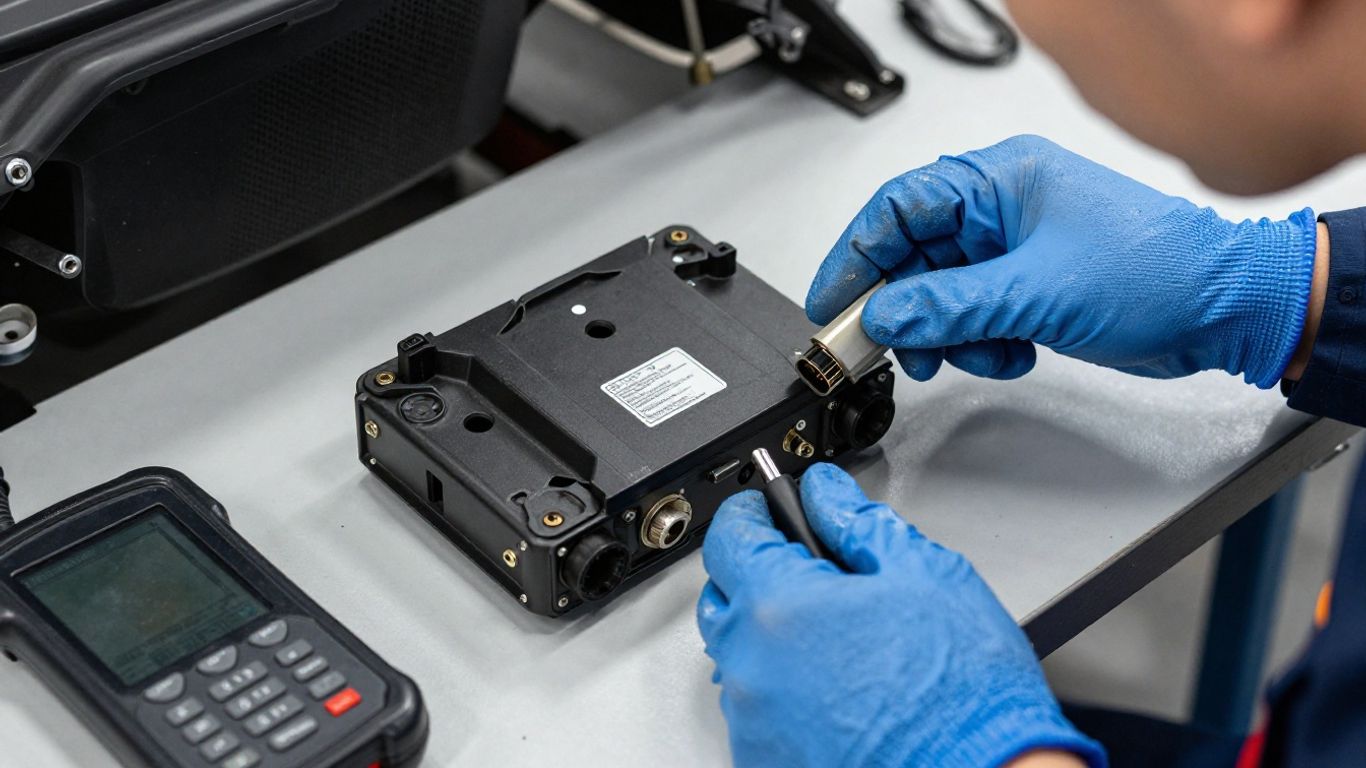
Reviewing labels, casting marks, and manufacturer references
Look for labels, serial numbers, moulded references, connector shapes, mounting points, and manufacturer markings. Compare these with the old part and with the vehicle information supplied to the seller. A label that has been removed, altered, or photographed too poorly to read deserves clarification.
Markings can support authenticity, but they are not proof of condition. A genuine component may still have impact damage, corrosion, electrical faults, or wear that is not visible in one photograph.
Requesting clear photos and inspection records
Ask for well-lit photographs of every relevant side, including connectors, mounts, labels, damage, and wear. For larger items, request images of the exact part rather than catalogue images. Inspection records should state what was tested and when, not simply say “good condition.”
If a seller provides a report, keep a copy with the invoice. It creates a useful reference if the item arrives with damage or behaves differently after installation.
Evaluating mileage, storage history, and donor-vehicle details
Mileage is helpful context, though it does not tell the whole story. A low-mileage part from a flood-damaged or severely impacted vehicle may be a poor choice, while a higher-mileage cosmetic component may remain perfectly usable. Ask how long the part was stored, whether it was protected from moisture, and what happened to the donor vehicle.
For electronic and high-voltage components, storage conditions deserve particular attention. Heat, water, impact, and prolonged neglect may matter even when the casing looks acceptable.
Checking high-voltage components for damage or degradation
Battery packs, inverters, chargers, high-voltage cables, and related assemblies require specialist handling and testing. Do not infer battery health from the vehicle’s mileage alone. Ask for relevant test results, visible damage checks, isolation information where appropriate, and details of how the component was removed and stored.
A qualified technician should review the evidence before installation. If the seller cannot provide credible documentation for a high-voltage component, a cheaper price does not compensate for the uncertainty.
What to check before buying and installing
The purchase is not complete when the payment is made. Fitment, transport, programming, calibration, and safe installation can all affect whether the repair succeeds. Get the practical details in writing while the seller can still answer questions easily.
This stage is also where apparently small omissions become expensive. A missing bracket, damaged connector, or unsuitable shipping method can delay the vehicle and add another round of freight.
Confirming fitment with a qualified technician
A technician can check whether the part is mechanically suitable, whether related components must be transferred, and whether coding or calibration may be required. Share the VIN, part number, photographs, and seller’s description rather than taking only the part itself to the workshop.
For steering, braking, restraint, battery, and power electronics work, use a technician with appropriate training and equipment. A correct part can still be unsafe if installed or commissioned incorrectly.
Reviewing warranties, returns, and testing policies
Read the warranty before ordering, including exclusions for installation damage, coding problems, wear items, and incorrect fitment. Confirm the period, evidence required for a claim, and whether return freight is the buyer’s responsibility.
A testing policy should say what was tested and what condition the seller guarantees. “Untested” can be a fair description, but it should be priced and treated as a risk rather than as an assurance.
Estimating shipping, taxes, and installation costs
Compare the complete landed cost rather than the listing price. Oversized panels, fragile lamps, batteries, and heavy drivetrain components may require special packaging or freight arrangements. Taxes and regional delivery charges can also change the final figure.
Ask for the expected delivery time and inspect the package before signing where possible. Photographing the packaging and part on arrival gives you useful evidence if transport damage is visible.
Handling airbags, batteries, and other safety-critical parts
Airbags, pretensioners, high-voltage batteries, and damaged electrical assemblies should not be handled casually. Follow local transport and workshop rules, and use an appropriately qualified professional for removal, storage, testing, and installation.
Never buy a safety-critical component solely because its photograph looks clean. The seller’s handling history, test evidence, packaging method, and return process are all part of the safety decision.
How to get better value from your purchase
Value comes from reducing uncertainty as well as reducing the price. A documented component with a clear return route may be a better purchase than a cheaper part that requires guesswork. Take a few minutes to compare the repair path, not just the item in the search results.
The same discipline also makes future repairs easier. Keeping the vehicle information, correspondence, and invoice together helps you explain what has already been replaced and why.
Comparing genuine used parts with new and aftermarket options
Create a like-for-like comparison that includes the part, delivery, tax, installation, programming, warranty, and likely delay. New is not automatically necessary for every component, and used is not automatically the best bargain. The right choice depends on the part’s safety role, wear, condition, and remaining service life.
For broader sourcing, car parts supplier options can help illustrate how widely prices and specifications vary, but every listing still needs individual verification. Treat a broad catalogue as a starting point, not as proof of fitment.
Prioritizing parts that are safe to buy used
Used body panels, interior trim, mirrors, wheels, and some non-safety-critical fittings are often easier to inspect and compare. Parts involving restraint systems, steering, braking, or high voltage need stronger evidence and professional review.
A sensible priority order is:
- Buy used when the part’s identity and condition are easy to establish.
- Seek documented testing when the part contains electronics or moving mechanisms.
- Use qualified technicians for safety-critical and high-voltage work.
- Choose a new or professionally supplied alternative when the risk cannot be assessed.
This approach does not reject used parts. It assigns more scrutiny where a failure could have greater consequences.
Negotiating based on condition and available documentation
Negotiation is strongest when it is based on specific gaps. You might ask for a better price if the mileage is unknown, the photos show cosmetic damage, a bracket is missing, or the warranty is shorter than comparable listings. Avoid making an offer based only on the fact that another seller is cheaper.
PartsClub can make the search more practical across Melbourne, Sydney, Brisbane, and nationwide, but the buyer should still compare the actual condition and documentation of each item. A precise question often produces a better result than a general request for a discount.
Maintaining records for future repairs and resale value
Keep the invoice, VIN confirmation, part number, photographs, test results, installation date, and technician’s notes. Record whether the part was used, refurbished, or tested, and store warranty information with the vehicle’s service history.
Good records can shorten future diagnosis and give a prospective buyer a clearer account of the vehicle’s maintenance. They also make it easier to identify the same component if a later replacement is needed.
Conclusion
Choosing genuine used BYD parts with confidence means treating identification, condition, safety, and total cost as one decision. Verify the VIN and part number, ask for donor and testing details, use professional help for safety-critical systems, and keep the paperwork. With that groundwork, a used original component can be a practical and well-informed repair choice.
Frequently Asked Questions
Are genuine used BYD parts always cheaper than new parts?
Not always. Compare the complete cost, including shipping, taxes, installation, programming, warranty, and the risk of needing another replacement.
How can I tell whether a used part will fit my vehicle?
Match the exact model, year, trim, drivetrain, steering configuration, VIN, and part number. Have a qualified technician confirm the match before installation.
Is a part number enough to guarantee compatibility?
No. Part numbers are useful, but revisions, suffixes, vehicle configuration, and required accessories can affect fitment. Confirm the number against the VIN and the vehicle application.
What information should a seller provide?
Ask for the donor vehicle, mileage, removal reason, condition, testing performed, clear photographs, included accessories, warranty, return terms, and shipping details.
Are used high-voltage batteries safe to buy?
They can be purchased only with appropriate specialist testing, handling, storage, and installation. Battery condition should not be guessed from mileage or appearance alone.
Should I install a used safety-critical part myself?
For airbags, pretensioners, braking, steering, and high-voltage systems, use a suitably qualified technician who can follow the required safety and calibration procedures.
What should I do if the part arrives damaged?
Photograph the packaging and component immediately, keep all shipping materials, and contact the seller through the documented warranty or returns process before installing the part.