

Key Takeaways
Choosing aftermarket BYD parts in Australia is less about finding the cheapest listing and more about confirming fit, quality, safety, and support. A measured upgrade plan can improve daily practicality without creating avoidable servicing or warranty problems.
- Confirm the exact BYD model, year, trim, and right-hand-drive fitment before ordering.
- Separate simple accessories from safety-critical or high-voltage components.
- Compare material quality, installation requirements, delivery, warranty, and returns.
- Use local supplier support when fitment or replacement advice matters.
- Keep purchase and installation records for future servicing and resale.
Understanding the aftermarket BYD parts market in Australia
The Australian aftermarket includes everything from floor protection and storage accessories to wheels, tyres, charging equipment, and replacement components. Some products are model-specific, while others are universal and need more careful checking. The right choice depends on how you drive, where you live, and whether the part affects safety or vehicle systems.
What aftermarket BYD parts include
Aftermarket BYD parts are components or accessories made by a supplier other than the vehicle manufacturer. They may cover cabin protection, exterior styling, charging, lighting, suspension, wheels, tyres, storage, and everyday convenience. Some are designed for one model, while others are intended to suit several vehicles with suitable dimensions or connectors.
A useful first step is to separate appearance and organisation products from parts that carry loads, connect to electricity, or affect steering and braking. That distinction makes research more focused and helps prevent a low-cost accessory from being assessed with the same standards as a safety-critical component.
How aftermarket parts differ from genuine BYD components
Genuine components are supplied through the vehicle maker’s parts system and are generally selected for the original vehicle specification. Aftermarket items can offer more choice in design, materials, price, or availability, but their quality and fit vary between suppliers. A product that looks similar in a photograph may still differ in tolerances, fasteners, finish, or instructions.
The practical question is not whether aftermarket is automatically better or worse. It is whether the specific part has clear dimensions, suitable materials, credible fitment information, and a return path if it does not match the vehicle.
Popular BYD models and compatible upgrades
Australian owners commonly shop for accessories for models such as the Atto 3, Dolphin, Seal, Sealion variants, and Shark. Model names alone are not enough, because an accessory can change between production years, markets, body styles, and trim levels. Screen protectors, mats, organisers, seat covers, and boot liners are often easier to match than suspension or electrical components, but every listing still deserves a fitment check.
For a broad look at model-based accessory categories, genuine BYD accessories can help illustrate how products are grouped by vehicle. Treat any catalogue as a starting point rather than proof that a particular item fits an Australian right-hand-drive variant.
Why Australian driving conditions affect parts selection
Australian conditions can put extra demands on heat resistance, UV stability, dust protection, water resistance, and material durability. City parking, long highway trips, gravel roads, coastal air, and regional distances all create different priorities. A soft interior organiser may be perfectly adequate for commuting, while an exterior cover or floor liner needs to tolerate more exposure.
Think about the environment before choosing a finish or material. A product that is easy to clean and replace may be more sensible than a delicate item that looks attractive but shows wear quickly.
Choosing the right parts for your BYD
Fitment research is the quiet part of buying aftermarket parts, but it prevents the most frustration. Listings can use similar model names while referring to different dimensions, trims, or markets. Take a few minutes to compare the listing with the vehicle and ask the seller for confirmation where the information is incomplete.
Checking model year and trim compatibility
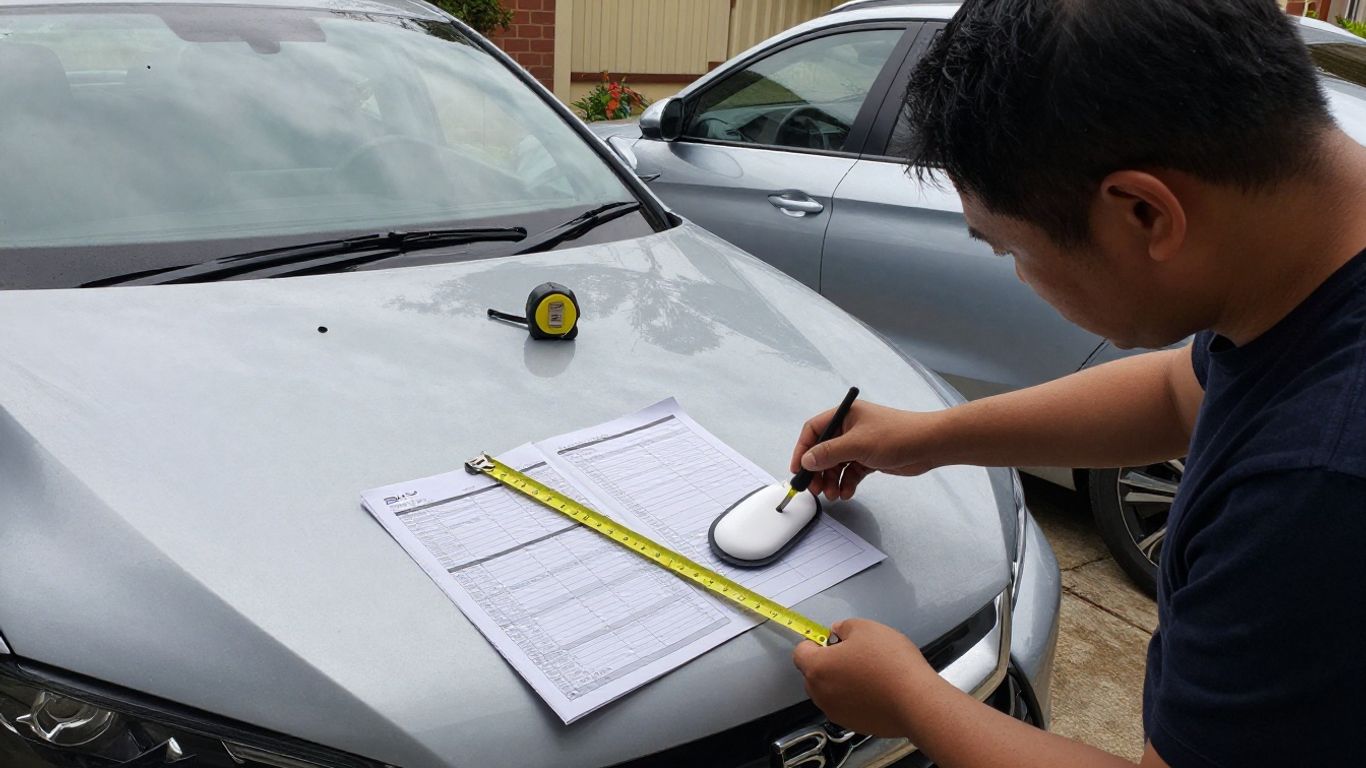
Start with the vehicle identification details: model, model year, trim, body style, and any relevant factory options. Compare measurements, mounting points, connector types, and the shape of surrounding panels rather than relying only on a product title. If a listing says “universal,” check what adjustment or drilling is required before assuming it will be a clean fit.
Screens, console inserts, mats, and covers can vary around small changes in interior layout. A seller who cannot explain the applicable model range may not be the best source for a close-fitting part.
Confirming fitment for right-hand-drive vehicles
Australia’s right-hand-drive layout affects dashboard accessories, steering-wheel items, pedal-area protection, camera placement, and some wiring routes. Product photos from overseas may show a left-hand-drive cabin even when the listing appears relevant. Ask for right-hand-drive confirmation in writing and check whether the supplied instructions match the Australian vehicle.
This is also where local knowledge has value. A supplier serving Australian owners may be better placed to clarify whether a product has been tested against the relevant cabin layout, but the buyer should still verify the details before paying.
Comparing materials, construction, and quality
Look beyond colour and appearance. Check thickness, stitching, edge finishing, fasteners, adhesive type, heat tolerance, cleaning instructions, and whether the part is likely to move or rattle. Fitment evidence matters most when two listings appear similar but one provides measurements, installation photographs, and a clear model range.
A simple comparison table can keep the decision grounded rather than letting the lowest price dominate.
| Check | What to look for | Why it matters |
|---|---|---|
| Dimensions | Measurements and vehicle references | Reduces fitment surprises |
| Materials | Thickness, finish, and heat or UV suitability | Predicts durability in Australian conditions |
| Installation | Tools, clips, drilling, or wiring | Reveals time and technical risk |
| Support | Warranty, returns, and replacement parts | Gives you an option if the product fails |
The table is not a substitute for inspecting the actual vehicle, but it helps compare like with like. A slightly higher purchase price may be reasonable when it includes clearer specifications and better after-sales support.
Identifying safety-critical components that need extra care
Braking, steering, suspension, wheels, tyres, restraints, electrical connections, and high-voltage equipment deserve a higher standard of evidence. Do not choose these parts on appearance or price alone. Confirm the specification, load rating, connector compatibility, and installation procedure, then use a qualified technician where the work affects vehicle control or electrical safety.
Cosmetic accessories can usually be judged by fit and finish. Safety-related components need documented suitability and an installation process that can be checked.
Popular aftermarket BYD parts and accessories
The most useful upgrades are often modest ones that solve a repeated irritation: dirty carpets, loose items, glare, awkward charging, or limited boot organisation. Start with the problem rather than browsing every available accessory. That keeps the vehicle practical and avoids adding products that make cleaning or servicing harder.
Exterior protection and styling upgrades
Exterior accessories can include paint protection items, mud protection, sun shades, covers, trim pieces, and other styling additions. Check how a product attaches and whether it covers sensors, cameras, cooling openings, or access points. Adhesive products also need a clean surface and suitable temperature during installation.
The best protection upgrade is one that can be removed or replaced without damaging the underlying finish. Be cautious with parts that require drilling or permanent changes unless the benefit is clear.
Interior accessories and storage solutions
Interior upgrades commonly include floor mats, boot liners, console organisers, seat protection, screen protectors, phone mounts, and small storage trays. These can make a noticeable difference to daily use, especially for families, rideshare drivers, or owners carrying tools and outdoor equipment.
For examples of model-organised interior and protective products, interior organisers and protective upgrades are a useful reference point. Check the exact model listing, edge coverage, and whether the accessory interferes with seat movement, airbags, pedals, or visibility.
Charging cables, adapters, and home charging equipment
Charging products require careful attention to connector type, cable rating, weather protection, current limits, and the instructions for the vehicle and electrical installation. A cable should not be treated as a generic lifestyle accessory simply because it is easy to order online. Home charging equipment may also require qualified electrical work and appropriate circuit protection.
Keep charging equipment dry where required, inspect cables for damage, and avoid improvised adapters. When a listing does not clearly state its electrical specifications, look for a better-documented option.
Suspension, wheels, and tyre-related components
Wheels, tyres, suspension parts, and spacers can change clearance, ride quality, steering feel, and load behaviour. Confirm wheel diameter, width, offset, bolt pattern, load rating, tyre specification, and clearance before ordering. Changes may also affect alignment, electronic systems, insurance, or roadworthiness requirements.
Because these parts influence how the vehicle contacts the road, professional advice is sensible when the change is more substantial than replacing like for like. A visually appealing setup is not necessarily a suitable one.
Technology, lighting, and convenience upgrades
Lighting, cameras, mounts, dash accessories, and other technology can be convenient, but they may interact with sensors, screens, wiring, or the vehicle’s software. Check power draw and placement, and avoid blocking driver-assistance cameras or reducing the driver’s view. Products that attach without permanent wiring are generally easier to remove, but they still need secure installation.
A useful accessory should improve the routine without creating a new distraction or maintenance task. That is a small test, but it eliminates many unnecessary purchases.
Where to buy aftermarket BYD parts in Australia
Buying locally can make returns and fitment questions simpler, while online suppliers may offer a broader range. Neither channel guarantees quality. The seller’s specifications, support process, and willingness to confirm compatibility matter more than the appearance of the storefront.
Specialist EV and BYD accessory retailers
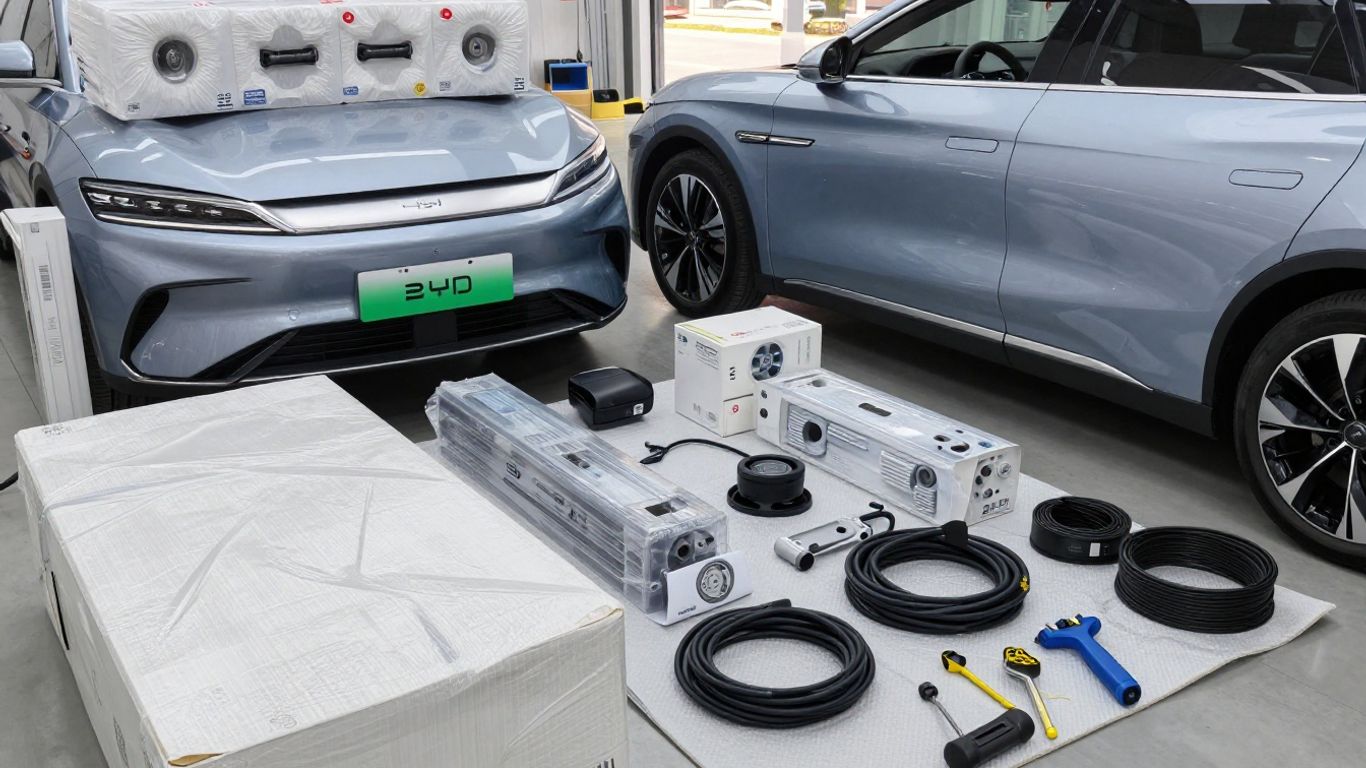
Specialist retailers may organise products by model and understand common EV accessory questions. For instance, custom-fit BYD accessories are presented around items such as mats, screen protectors, seat covers, phone mounts, and dash cams. Use that kind of catalogue to narrow the search, then verify the exact vehicle details and delivery terms.
Specialist advice is particularly useful for fitment-sensitive products, but a retailer’s claims should still be checked against the product specifications and your vehicle.
Online marketplaces and independent suppliers
Marketplaces can make price comparison easy, but product descriptions may be copied, incomplete, or written for an overseas market. Review the seller’s location, dispatch estimate, return address, warranty wording, and customer service history. Read reviews for repeated comments about fit, missing hardware, odour, rattling, or premature failure rather than focusing only on star ratings.
A supplier guide to genuine and aftermarket parts can provide useful background on the difference between categories, but it should not replace checking the individual listing before purchase.
Local automotive parts stores and installers
Local parts stores and installers can be valuable when you need immediate advice, fitting, or a practical inspection. They may also help identify whether a replacement is a direct match or requires modification. Ask whether the installer has experience with EVs and whether the quoted work includes clips, fasteners, calibration, alignment, or disposal of the old part.
For Australian sourcing, local EV parts support is another example of a supplier positioning its service around BYD and other electric vehicles. Confirm stock and installation arrangements directly rather than assuming every listed item is available nearby.
Comparing delivery times, stock, and regional availability
Delivery matters when a vehicle is off the road or a part is needed before a trip. Compare dispatch time, carrier, tracking, shipping cost, and whether the item is held in Australia or imported after purchase. Remote locations may also face longer delivery windows or higher return costs.
Before ordering, save a copy of the listing and ask whether all hardware is included. That small record can help if the product arrives incomplete or the description changes later.
Evaluating product quality, warranties, and seller reliability
A convincing listing is not necessarily a reliable product. Good evaluation combines technical information, customer feedback, seller responsiveness, and a clear remedy when something goes wrong. This is especially important for parts that are difficult to remove or expensive to return.
Reading specifications and customer reviews
Look for actual measurements, materials, compatibility notes, load or electrical ratings, installation instructions, and photographs of the item installed on the relevant model. Reviews are most useful when they describe the vehicle, trim, time in use, and the issue or benefit in concrete terms. Several independent comments are more helpful than one polished testimonial.
If specifications are missing, ask a direct question before purchase. The quality of the answer can tell you as much about the supplier as the product page does.
Understanding warranty coverage and returns
Check how long the warranty lasts, what it covers, who pays return freight, and whether installation by a professional is required. A warranty may exclude incorrect installation, wear, misuse, water entry, or modifications. Return windows can also be shorter than warranty periods, so note both dates.
Keep packaging where practical until the part has been fitted and tested. If the product is damaged or incorrect, photographs and prompt written contact make the process easier.
Checking supplier support and replacement availability
Reliable support is more than a contact form. Look for a physical business address, clear response channels, replacement hardware, spare clips, and an explanation of how fitment questions are handled. It is worth asking whether a damaged single component can be replaced rather than requiring the purchase of a whole kit.
For owners outside major cities, replacement availability can matter more than a small initial discount. A part that cannot be supported after installation may become expensive very quickly.
Spotting counterfeit, poorly made, or unsafe parts
Warning signs include copied photographs, vague compatibility claims, unusually low prices, missing company details, inconsistent logos, no technical rating, and reviews that refer to a different product. Poor moulding, sharp edges, loose wiring, weak fasteners, and strong chemical odours are also reasons to stop and reassess.
Do not fit a questionable part simply because returning it feels inconvenient. A refund is preferable to creating a safety, electrical, or vehicle-damage problem.
Installation, servicing, and warranty considerations
Installation should be planned alongside purchase, not treated as an afterthought. Some accessories take minutes and leave no lasting change, while others require trim removal, wiring, calibration, lifting the vehicle, or work near high-voltage systems. The method you choose can affect cost, safety, and future troubleshooting.
Parts you can install yourself
Owners can often handle low-risk items such as mats, boot liners, organisers, sun shades, simple covers, and some screen protectors. Read the instructions first, clean the mounting area, check clearances, and test that doors, seats, pedals, and storage lids operate normally afterward. Do not force clips or trim panels when the installation method is unclear.
A careful installation is usually slower than a rushed one, but it reduces broken fasteners and rattles later.
When to use a qualified EV technician
Use a qualified technician for high-voltage systems, charging equipment, brakes, steering, suspension, wheel changes requiring alignment, airbag-adjacent work, complex wiring, and any installation requiring calibration. Ask what qualifications, tools, and testing process are included. For electrical work at home, use an appropriately licensed electrician.
If a product changes a safety system or requires access behind trim, professional installation is usually the sensible cost rather than an optional extra.
How modifications may affect BYD warranty coverage
Warranty outcomes depend on the vehicle warranty terms, the nature of the modification, and whether the modification caused the reported fault. An unrelated accessory will not necessarily affect every warranty claim, but poor wiring, incorrect fitment, or an unsuitable mechanical change can complicate diagnosis. Ask the vehicle service provider for guidance before installing anything that connects to vehicle systems.
Keep the original parts where practical, particularly when a modification is reversible. Avoid making broad assumptions about warranty coverage from a seller’s short product description.
Keeping records of parts and professional installation
Save invoices, product pages, model and part numbers, installation instructions, photographs, and technician receipts. Record the date of installation and any measurements or settings, such as wheel alignment. These details help with future servicing, warranty conversations, insurance questions, and resale.
A tidy record also makes it easier to return the vehicle to its original configuration when needed.
Building a cost-effective BYD upgrade plan
A cost-effective plan is not simply a list of low prices. It weighs usefulness, durability, installation, downtime, and the likelihood that an upgrade will need to be replaced. Start with the changes that protect the vehicle or solve a problem you experience regularly.
Prioritising safety, protection, and everyday practicality
Begin with safe visibility, reliable charging, tyres, brakes, and protection from routine wear. Then consider storage, cleaning, comfort, and appearance. This order keeps money focused on improvements that affect daily ownership rather than short-lived novelty items.
Write down the problem each proposed accessory is meant to solve. If the answer is unclear, postpone the purchase and see whether the need remains.
Calculating the full cost beyond the purchase price
The real cost can include shipping, taxes, tools, professional fitting, alignment, electrical work, replacement clips, calibration, and future maintenance. A cheap part that needs modification or fails quickly may cost more than a better-specified alternative. Add these costs before comparing two products.
Also account for downtime. Waiting several weeks for a replacement can be more expensive than paying for local stock when the vehicle is essential for work or family travel.
Balancing genuine, aftermarket, and refurbished components
Genuine parts can make sense when exact fitment, electronics, or warranty support is the priority. Aftermarket parts may suit cosmetic, organisational, or protective jobs where there is good documentation and a reliable return process. Refurbished components can be worthwhile when their condition, testing, and warranty are clearly explained.
The sensible mix varies by part. The key is to match the source and quality standard to the risk of failure, not to apply one purchasing rule to every component.
Planning upgrades around future servicing and resale value
Avoid accessories that conceal damage, obstruct inspection points, complicate routine servicing, or leave permanent changes without a clear benefit. Keep original parts and installation records, and choose removable upgrades when resale flexibility matters. A clean, well-documented vehicle is easier for a future buyer or technician to understand.
For owners comparing BYD parts suppliers or other sources, the same principle applies: choose evidence and support over a catalogue that merely looks comprehensive.
Conclusion
The best aftermarket BYD parts Australia purchases are the ones that fit correctly, suit local conditions, and remain easy to support after installation. Confirm compatibility, separate low-risk accessories from safety-critical work, compare the complete cost, and keep clear records. That approach makes upgrades more useful, more affordable over time, and less likely to create problems at the next service.
Frequently Asked Questions
Are aftermarket BYD parts safe?
They can be safe when correctly specified, compatible with the vehicle, and installed according to the instructions. Safety-critical, electrical, braking, steering, and suspension parts require more careful verification and may need professional installation.
How do I check whether an accessory fits my BYD?
Confirm the model, year, trim, body style, and right-hand-drive configuration. Compare dimensions and mounting points, then ask the seller for written confirmation if the listing does not clearly cover your vehicle.
Are universal accessories a good choice?
Universal products can work for simple items when their dimensions, attachment method, and clearances are suitable. They are less appropriate when a precise fit, electrical connector, sensor position, or safety system is involved.
Should I install parts myself?
Simple, non-structural accessories are often suitable for careful home installation. Work involving high voltage, brakes, steering, suspension, airbags, charging infrastructure, or calibration should be handled by an appropriately qualified professional.
What should I check in a parts warranty?
Review the coverage period, exclusions, installation requirements, return window, freight responsibility, and process for replacement. Keep the invoice, product information, and installation records in case you need to make a claim.
Can aftermarket modifications affect vehicle warranty coverage?
They may complicate a claim if the modification caused or contributed to the fault. Ask the service provider before making changes to electrical, mechanical, safety, or charging systems, and retain original parts where practical.
How can I avoid wasting money on upgrades?
Start with a specific everyday problem, calculate the complete installed cost, and compare evidence rather than price alone. Prioritise safety, protection, durability, and support before cosmetic or novelty accessories.