

Key Takeaways
A fast quote is useful only when it identifies the right part, states realistic timing, and makes the total cost clear.
- Define what “same day” means before requesting a quote.
- Send model, year, serial, part number, quantity, and destination together.
- Compare availability and delivery timing, not just the item price.
- Ask suppliers to document substitutions, warranty terms, and extra fees.
- Confirm the order in writing before urgent freight or payment is arranged.
What a same day BYD part quote guarantee means
A same day BYD part quote guaranteed promise normally concerns the time needed to respond with pricing and availability, not the time needed to deliver the part. The wording should be precise enough that both sides understand when the clock starts and what information the supplier needs. A quote may still depend on inventory checks, compatibility review, freight capacity, and the destination. Treat the guarantee as a service-level commitment to communication unless the supplier separately guarantees delivery.
Defining “same day” for quote requests
“Same day” might mean within a few business hours, before the supplier’s local closing time, or within one calendar day. Ask whether weekends, holidays, time-zone differences, and requests submitted after a cutoff are excluded. It is also worth confirming whether the response will be a complete quote or merely an acknowledgment that someone received the request. A clear definition prevents a quick but unusable reply from being treated as success.
What a guaranteed quote should include
A useful quote should identify the requested part, quantity, currency, validity period, stock status, and estimated dispatch date. It should also show shipping, taxes, duties where applicable, and any core or handling charges. If compatibility has not been fully confirmed, that limitation belongs in the quote rather than being left implicit. The strongest response gives you enough information to approve the purchase without starting another round of emails.
Quote turnaround versus part delivery time
A supplier can return a price within hours while the part remains several days away. Those are separate milestones: quote receipt, order acceptance, warehouse dispatch, customs clearance, and final delivery. Ask for each one, especially when equipment downtime is already affecting operations. Timing needs separate milestones because a same-day response does not remove transport or import constraints.
A simple schedule can also expose an unrealistic promise. For example, a locally stocked item may dispatch today, while an overseas item may require export preparation and express freight even after payment arrives. The request should therefore ask for both the quote deadline and the delivery deadline.
Why availability and location affect response times
A supplier must often check more than one stock location before confirming a part. Local inventory can shorten the process, while international sourcing may add time for warehouse confirmation, export documents, customs, and carrier booking. The BYD parts sourcing guide offers useful background on why regional availability and lead times can vary for EV components. Use that context to ask practical questions rather than assuming every part follows the same schedule.
How to prepare a complete BYD parts request
The fastest request is usually the most complete one. Give the supplier enough detail to identify the equipment, match the component, calculate freight, and understand your deadline in one pass. A vague message creates a pause while the supplier asks for missing information. Before sending, gather the records that a technician or warehouse manager would normally use to verify the repair.
Identify the correct BYD vehicle or equipment
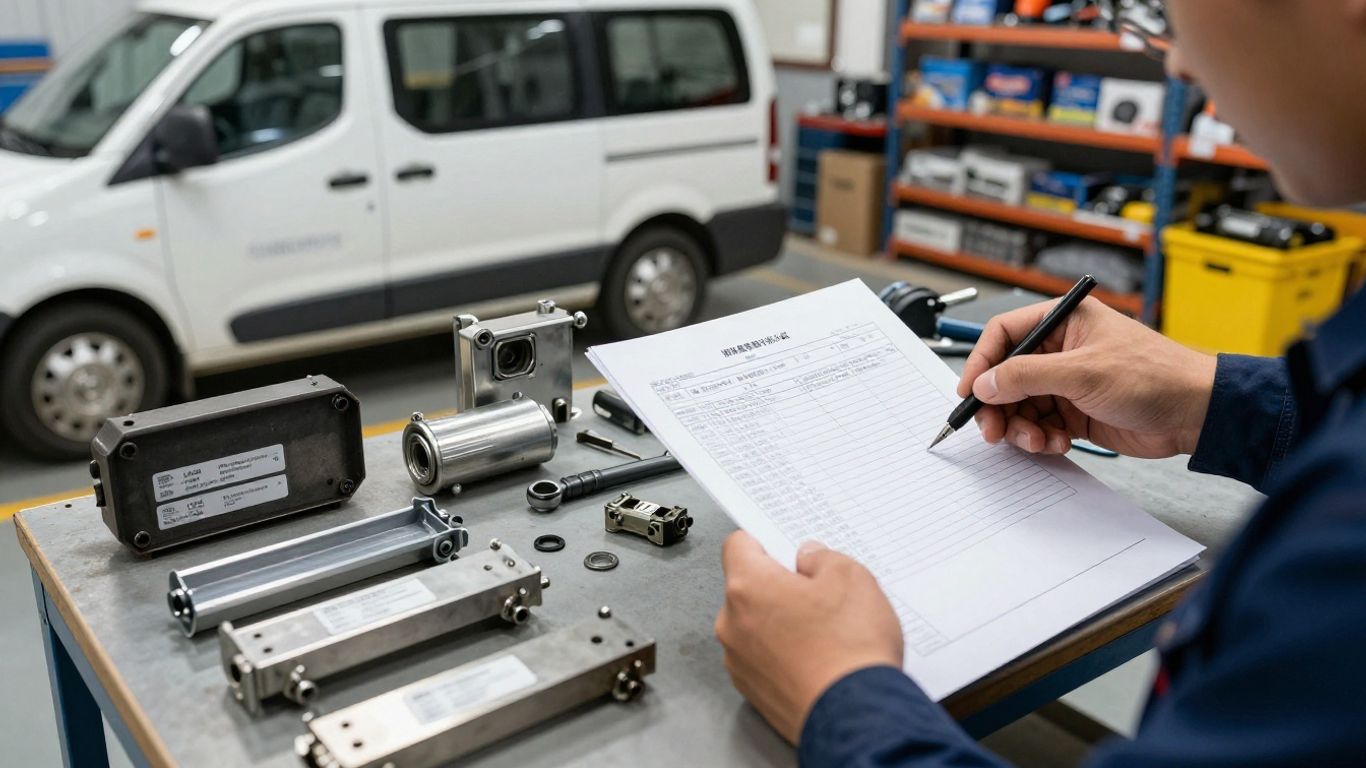
Start with the exact vehicle or equipment type, model designation, model year, market, and operating environment. A passenger vehicle and a material-handling machine can have very different parts systems, even when the request uses the same brand name. For fleet equipment, include the unit number and any registration or asset identifier. The more precisely the asset is identified, the less likely the supplier is to search the wrong catalog.
Provide the part number and compatible model details
The original part number is the best starting point, but it should not be the only detail. Include the model, production year, trim or configuration when relevant, and the side or position of the component. If a catalog shows an updated number, ask the supplier to confirm that it supersedes the number you provided. A parts platform such as BYD forklift parts may also allow buyers to search by technical specifications or make and model, while showing pricing, lead times, and availability.
Share photos, serial numbers, and technical specifications
Photos can reveal connector shape, mounting points, damage, and labels that a text description misses. Send clear images of the part, its identification label, and the surrounding installation area. Add serial numbers, voltage or capacity information, dimensions, and relevant fault codes where appropriate. Keep the files named sensibly so the supplier can associate each image with the correct asset.
Include quantity, delivery location, and deadline
State how many units you need, where they must be delivered, and the latest acceptable arrival date. Include a postal code, receiving hours, contact name, and whether a liftgate or appointment is required. If the part is needed for a vehicle or machine held at a remote site, say so early. A short request checklist can prevent avoidable back-and-forth:
- Exact asset identity and location.
- Part number, quantity, and requested condition.
- Photos, serial numbers, and technical details.
- Quote deadline and required delivery date.
That information gives the supplier a workable brief and lets the freight team price the shipment accurately. It also creates a useful record if the request is transferred between sales, parts, and logistics staff.
Where to source BYD parts quickly
The best source depends on the part, the equipment type, the destination, and the consequences of a delay. An authorized channel may offer stronger documentation, while an experienced independent supplier may locate stock across several warehouses. Local inventory is often faster, but international sourcing can make sense for uncommon components. Compare the source’s verification process as carefully as its advertised price.
Authorized BYD dealers and distributors
Authorized dealers and distributors are a natural first call when the part is safety-critical, software-dependent, or covered by a service agreement. Ask whether the requested item is held locally, available through a regional network, or subject to factory order. The Southern California BYD dealer page illustrates how a dealership can provide a local route for material-handling support. Confirm the actual stock position for your part rather than relying on the existence of a dealership alone.
Independent parts suppliers with BYD experience
An independent supplier can be helpful when it has a documented history with the relevant vehicle or equipment category. Ask how it verifies fitment, whether its inventory is physically checked, and how it handles superseded numbers. Experience matters most when a listing lacks a clear model-year range or when several connector and voltage variants look similar. Do not assume that a lower price means the same condition, warranty, or return rights.
Local inventory versus international sourcing
Local stock usually reduces transit and customs uncertainty, but it may cost more or be limited to common service items. International sourcing can expand the search, especially for less frequently requested components, yet it requires careful attention to freight, duties, export paperwork, and exchange rates. The New Southgate BYD offers page is an example of a location-specific BYD sales resource; location-specific information is useful, but it should not be mistaken for confirmation that a replacement part is in stock.
Genuine, aftermarket, and refurbished part options
Ask the supplier to label the condition and source of every quoted item. Genuine parts may be preferred for fit, documentation, or warranty reasons; aftermarket parts may offer another price point; refurbished items may be suitable when tested condition and return protection are clear. The decision should reflect the equipment’s duty cycle and the risk of a repeat repair. For broader procurement decisions, the same habit of comparing speed, cost, and information quality appears in App Idea Report, although the subject there is app validation rather than parts sourcing.
How suppliers verify compatibility and availability
Verification is the step that turns a plausible listing into a dependable quote. A supplier should compare the request against a catalog, technical record, warehouse entry, or manufacturer reference. Availability should likewise be checked rather than inferred from a generic online listing. If the response contains uncertainty, ask for the exact question that remains unresolved and the evidence needed to close it.
Matching part numbers to vehicle specifications
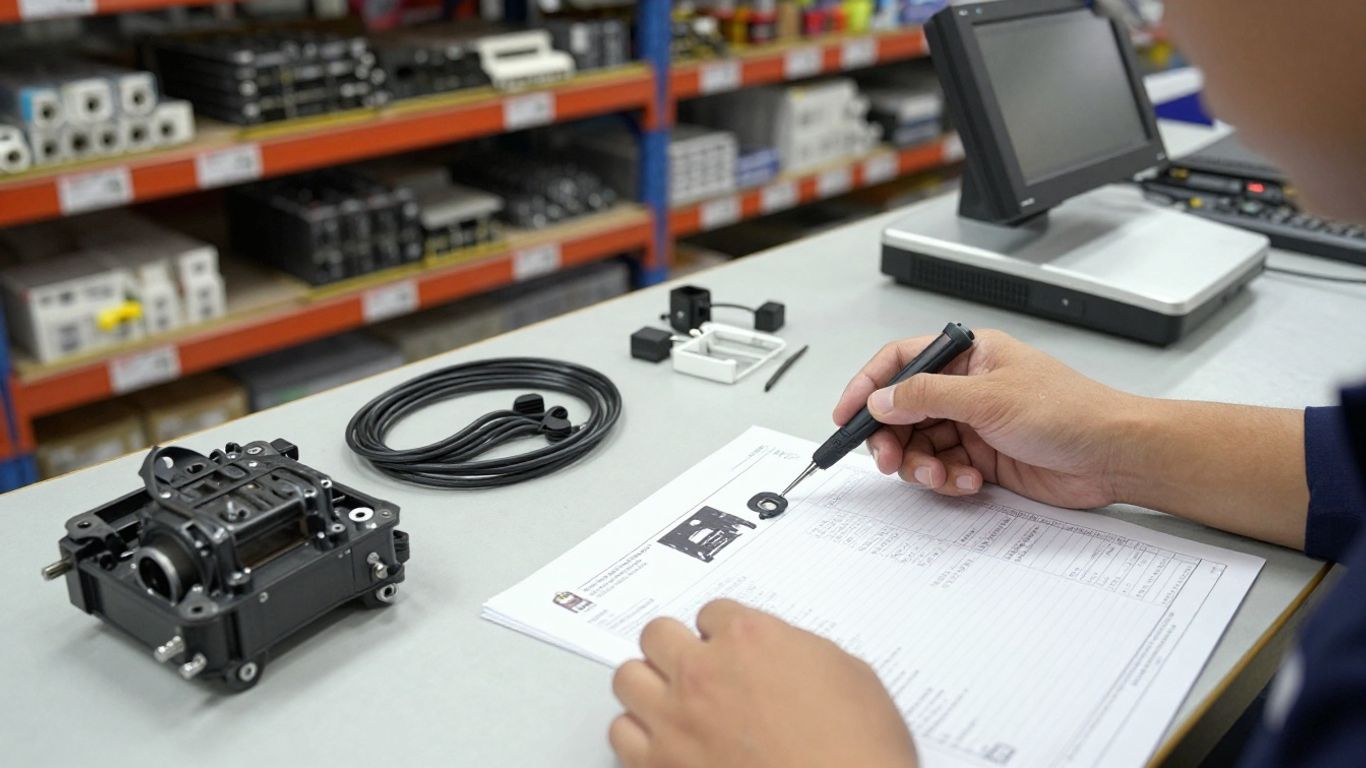
The supplier should match the part number with the model, year, configuration, and relevant serial range. This is particularly important for electronic modules, charging components, harnesses, and parts with different revisions. A photograph can support the match, but it should not replace a catalog or technical confirmation. Request the compatibility basis in writing when installing the wrong part could create additional downtime.
Checking warehouse and supplier inventory
A quote should distinguish between stock physically available to the quoting supplier, stock held by a partner, and stock that still needs to be ordered. Ask whether the quantity is reserved, committed to another customer, or subject to a final warehouse check. If only one unit is available, the quote should say so. The BYD electric vehicle scan offers a visual look at EV engineering, but practical sourcing still depends on the specific part record and physical inventory confirmation.
Confirming substitutions and updated part numbers
Part numbers can change because of revisions, packaging updates, or catalog consolidation. Never accept a substitute solely because its description looks similar. Ask for the old and new numbers, the reason for the substitution, and confirmation that the replacement fits the stated asset. If an adapter, programming step, or extra seal is required, it should appear in the quote.
Evaluating genuine BYD quality and warranty coverage
For a genuine part, ask how authenticity is established and what warranty applies in the destination market. Check whether warranty coverage starts at shipment, delivery, or installation, and whether installation by an authorized technician is required. A supplier should also explain what documentation accompanies the part. General quality and warranty questions should remain tied to the quoted item rather than broad assumptions about every product carrying the same name.
What to compare in a same day BYD part quote
Two quotes can show the same item price and still produce very different final costs. Compare the commercial terms line by line, including delivery assumptions and conditions that could shift after approval. A low headline price is less useful if the item is not actually available or if urgent freight is omitted. Keep the quote, attachments, and supplier clarifications together in the purchase record.
Item price, taxes, and shipping charges
Check the currency, unit price, quantity extension, sales tax, import charges, and shipping method. Ask whether the freight figure is estimated or fixed and whether residential, liftgate, appointment, or remote-area charges could be added. The final comparison should use the delivered cost, not just the catalog price. If taxes or duties cannot yet be calculated, mark them as pending instead of treating the quote as all-inclusive.
Delivery estimates and express freight options
Request a dispatch date and an arrival estimate, then ask what service level supports that estimate. Express air freight may shorten transit, but it does not necessarily shorten warehouse handling or customs clearance. Confirm the carrier, tracking availability, cutoff time, and whether the supplier can ship partial quantities. This separates a genuine urgent option from a vague promise to send the item quickly.
Core charges, minimum orders, and additional fees
Some components may carry a refundable core charge, while some suppliers apply minimum order values or handling fees. Ask when a core must be returned, who pays the return freight, and what condition is required for credit. Also look for documentation, packaging, inspection, brokerage, and payment-processing fees. Listing these items before approval avoids a difficult price change after the order is already urgent.
Warranty, returns, and damaged-shipment policies
Read the return window, restocking charge, exclusions, and procedure for reporting transit damage. Electronic or installed parts may have special restrictions, and a supplier may require photographs before issuing a replacement. Record who is responsible for the carrier claim and whether the part must remain unopened. A quote with clear remedies is more useful than one that only promises fast dispatch.
How to speed up approval and ordering
Once the quote arrives, internal approval can become the new bottleneck. Make the request easy for a manager, buyer, technician, and receiving team to understand without reconstructing the original conversation. Set expectations before the quote is issued, and keep commercial and technical questions visible in the same thread. Speed should come from preparation, not from skipping verification.
Use a clear subject line and complete request
A subject such as “Urgent quote—model, part number, quantity, destination” is easier to route than “Need part ASAP.” Put the deadline in the first paragraph and attach the relevant records. If you are contacting several suppliers, keep each request accurate and separate so replies cannot be confused. Clear labeling also helps when a buyer needs to forward the quote for approval.
Set a firm response and delivery deadline
Give the supplier a specific response time and state the latest acceptable delivery date. Explain whether the date is tied to a scheduled repair, a rental return, or a production requirement. This helps the supplier propose an alternative service level or substitute when the original option cannot meet the need. It also prevents a same-day quote from being mistaken for an open-ended order.
Confirm payment and account requirements early
Ask whether a new account, credit approval, tax certificate, deposit, or prepayment is needed. International orders may also require importer information and customs documents before dispatch. Resolve those requirements while compatibility is being checked, not after the quote expires. Other specialized buying processes, such as Elite Trader Funding, also make rules and account conditions explicit; the same clarity is useful here even though the subject is entirely different.
Request written confirmation before placing the order
Before payment, request a final confirmation listing the exact part number, condition, quantity, price, stock status, shipping method, and delivery estimate. Have the supplier confirm any substitution and identify the person responsible for the order. Save the confirmation with the purchase order and receiving instructions. Written alignment is a small step that can prevent a costly dispute later.
A short video can be useful for explaining general parts-request workflow to a team, but it should supplement—not replace—the written part and delivery confirmation.
Common problems with fast BYD parts quotes
Urgency creates predictable errors. Buyers may omit a serial number, suppliers may quote stock that is not reserved, and freight assumptions may change at checkout. A quick review of these failure points can protect the repair schedule without making the process cumbersome. When in doubt, pause long enough to clarify the one detail that determines fit or delivery.
Delayed responses caused by incomplete information
A supplier cannot reliably quote an unidentified part or destination. Missing model details, photos, quantity, or postal code often lead to several rounds of questions, consuming the same day that the buyer hoped to save. Use a standard request template and attach the evidence at the start. If a technical detail is unknown, say so plainly and ask what alternative identifier the supplier can use.
Incorrect parts caused by model or year mismatches
Similar names do not guarantee interchangeable components. Model revisions, regional specifications, production changes, and equipment configurations can all affect fit. Compare the proposed part number with the asset record before approving payment. If the supplier cannot explain the match, request a technical review rather than relying on a photograph or a short product description.
Out-of-stock items and backorder risks
Online availability may describe a supplier network or a catalog entry rather than a unit ready to ship. Ask whether the item is physically counted, reserved, and dispatchable. If it is backordered, request the expected replenishment date and a realistic alternative. A second source can be kept in reserve, but do not treat an unconfirmed substitute as equivalent until compatibility is documented.
Hidden costs in urgent international shipments
Urgent freight can add brokerage, duties, fuel surcharges, remote-area fees, and storage charges. Customs delays can also outlast the transit estimate shown in a quote. Ask for the delivery term, importer responsibility, and all known charges before approval. Resources such as international parts planning can help frame the questions, while the actual supplier quote must provide the numbers for your shipment.
A careful process is also useful outside parts procurement. For example, AB Spectrum discusses treatment costs and financial support in Missouri, while omninoo GmbH describes a staged migration approach for Camunda. Neither topic determines a parts quote, but both illustrate why scope, assumptions, and next steps should be documented before a decision is made.
Conclusion
A same-day quote is most valuable when it is accurate, complete, and connected to a realistic delivery plan. Send precise asset and part information, ask suppliers to verify stock and compatibility, compare the delivered total, and secure written confirmation before ordering. That approach makes urgent BYD parts sourcing faster without turning speed into a reason to accept avoidable risk.
Frequently Asked Questions
Does a same-day quote mean the part arrives the same day?
No. It usually refers to the supplier returning pricing and availability within the agreed response window. Delivery still depends on stock, handling, freight, customs, and the destination.
What information should I send with a parts request?
Include the equipment or vehicle model, year, serial or asset number, part number, quantity, photos, destination, and required delivery date. Technical specifications and fault information can further reduce uncertainty.
Is a genuine part always the fastest option?
Not necessarily. Speed depends mainly on verified inventory and location. A genuine part may be locally available, while another genuine part may require factory or international sourcing.
How can I tell whether inventory is real?
Ask whether the quantity has been physically checked, where it is located, whether it is reserved, and when it can dispatch. A generic “available” label is not the same as confirmed stock.
Should I accept a superseded part number?
Only after the supplier confirms the relationship between the original and replacement numbers and verifies compatibility with your exact asset. Ask whether extra hardware, programming, or installation requirements apply.
What extra charges should I look for?
Review taxes, freight, duties, brokerage, handling, core charges, minimum-order fees, restocking charges, and remote-delivery surcharges. Ask which amounts are fixed and which remain estimates.
What should written order confirmation contain?
It should state the exact part number and condition, quantity, total price, stock status, shipping method, dispatch date, delivery estimate, warranty, and return terms. Any substitution or exception should be written clearly.