

Key Takeaways
Keeping BYD EVs on Australian roads is mostly a matter of building dependable routines rather than learning complicated mechanical procedures. Charging, tyres, software, weather planning, and timely inspections all matter.
- Charge around your normal weekly driving, not out of habit.
- Use scheduled servicing and inspect tyres regularly.
- Treat fast charging as a useful travel tool, not the only routine.
- Plan carefully for heat, floods, remote roads, and sparse repair access.
- Keep records for warranty, insurance, and future resale.
Understand what BYD EV ownership involves in Australia
Owning an electric vehicle changes where and when routine care happens. There are fewer engine-related service items, but charging access, tyre condition, software alerts, and battery temperature become more visible parts of daily ownership. A sensible approach to keeping BYD EVs on Australian roads starts with understanding those differences before a problem appears.
How BYD EVs differ from petrol and diesel cars
An EV does not need engine oil changes, spark plugs, or exhaust-system maintenance. It still needs tyres, suspension components, brake checks, windscreen washer fluid, cabin filtration, and regular inspections. Regenerative braking can reduce friction-brake use, but it does not remove the need to check the braking system.
The ownership rhythm also shifts. Rather than visiting a fuel station every few days, many drivers add energy at home while the car is parked. That convenience is valuable, though it makes electrical safety and charging reliability part of ordinary car care.
Common BYD models and their ownership needs
Australian buyers may encounter the Dolphin, Atto 3, Seal, and Sealion in local discussions, with the exact needs depending on the vehicle, battery, tyres, and usage pattern. A hatchback used mainly for city errands will be managed differently from a larger vehicle that regularly carries passengers and luggage on country roads. Always use the handbook and the service schedule for the exact variant.
Model comparisons should focus on the work the car actually does: daily distance, cargo, parking location, towing requirements if applicable, and access to charging. A useful overview of BYD car sales can provide market context, while details about a prospective compact model should be checked separately rather than assumed from another vehicle.
Warranty coverage and owner responsibilities
Warranty terms vary by component and model year, so owners should read the supplied warranty documents rather than rely on informal summaries. Keep invoices, service records, tyre receipts, and notes about warning messages. Following the stated maintenance intervals and using approved procedures helps establish a clear history if a claim or inspection is needed.
Owners are still responsible for ordinary wear and damage. Punctures, kerbed wheels, neglected tyres, contaminated interiors, and damage from unsuitable charging equipment are not the same as a manufacturing fault. Clear records make conversations with a service centre more straightforward.
How Australian climate and driving conditions affect EVs
Australia brings intense sun, high ambient temperatures, long distances, dust, coastal air, and roads that can change sharply between towns. Heat can affect charging speed and short-term range, while heavy rain and flooding create hazards for every vehicle. Parking in shade where practical and checking tyres before long trips are simple habits with broad value.
The same principle applies to driving style. Strong acceleration, high speeds, roof loads, cold starts, and frequent elevation changes can all increase energy use. Range estimates are best treated as planning aids, not guarantees.
Build a reliable charging routine
Charging works best when it becomes part of the week instead of a last-minute task. Home charging may cover most commuting, while workplace and public stations fill different gaps. Before choosing equipment, consider the building, electricity supply, parking rights, travel pattern, and who will be responsible for installation.
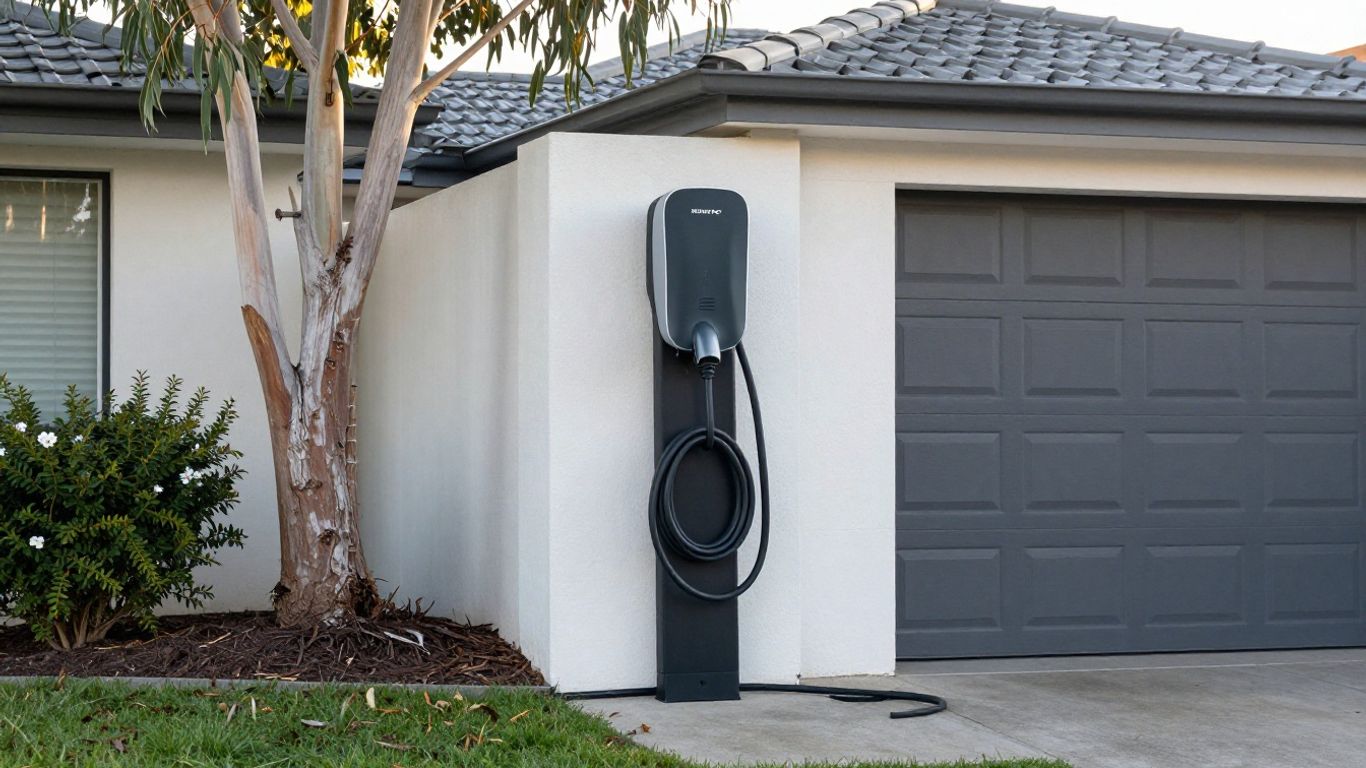
Choosing between home, workplace, and public charging
Home charging is convenient for drivers with a suitable parking space and electrical installation. Workplace charging can reduce the need for a dedicated home setup, but it depends on access rules and availability. Public charging is essential for many road trips and useful when an unexpected journey extends the usual week.
Do not plan solely around the fastest advertised charger. The practical question is whether the available locations fit your route, opening hours, payment method, and likely queue. Keep a backup destination in mind when travelling beyond familiar suburbs.
Selecting the right home charger and electrical setup
A licensed electrician should assess the switchboard, cable route, protection, and available capacity before installation. Apartment residents may also need strata approval and a method for measuring electricity use. A portable charging cable can be useful, but it should be connected only to a safe, appropriate outlet and used according to its instructions.
The vehicle handbook and charger documentation should guide settings and compatibility. Avoid improvised extension arrangements, damaged plugs, or charging equipment exposed to conditions it was not designed to handle. A slower, dependable setup is preferable to an unsuitable high-power installation.
Managing charging during long-distance travel
Long journeys require more than locating one station on a map. Check the distance between stops, likely charging duration, weather, roadworks, terrain, and alternate facilities. In remote areas, a detour to a working charger can consume a meaningful part of the available range.
Before departure, save offline details where coverage may be weak and leave a buffer for wind, traffic, hills, cabin heating, and detours. Travel reports such as Australian EV market coverage can help explain broader adoption, but they cannot replace route-specific checking.
Reducing battery wear through smarter charging habits
A calm charging routine is usually easier on the vehicle and the owner. Follow the manufacturer’s instructions for charge limits, avoid leaving the car at a very high or very low state of charge for extended periods, and use scheduled charging when it suits the tariff and departure time.
Several small habits make charging more predictable:
- Plug in when the remaining range fits the next day’s needs.
- Keep cables, connectors, and sockets clean and dry.
- Check the planned departure time after changing schedules.
- Watch for repeated interruptions rather than repeatedly resetting equipment.
These steps do not eliminate normal battery ageing, but they reduce avoidable stress and help reveal a charger or electrical fault early.
Protect battery health over the long term
Battery health is affected by time, temperature, usage, and charging conditions. A gradual change in range is different from a sudden warning or repeated charging failure. Owners should watch patterns over several trips and record relevant conditions instead of judging the battery from one unusually hot, cold, or hilly drive.
How driving style affects range and battery performance
Smooth acceleration, moderate highway speeds, and anticipating traffic can make energy use more consistent. Carrying unnecessary weight and driving with underinflated tyres has the opposite effect. Strong headwinds, steep roads, and extensive heating or cooling can also reduce the distance available from a charge.
Range is not a fixed promise. Compare similar journeys over time, using the same rough route and season where possible. This gives a more useful picture than comparing one trip with the number shown when the car was new.
Managing heat, cold, and extended parking periods
Park under cover or in shade when practical during extreme heat. In colder conditions, allow extra range for cabin heating and slower early-trip efficiency. For extended parking, follow the handbook’s recommended state of charge and check the vehicle periodically rather than leaving it unattended indefinitely.
Floodwater deserves separate attention. Never drive through water of uncertain depth, and do not handle a vehicle or charging equipment that may have been affected by flooding until it has been assessed safely. Batteries can have useful life beyond their automotive service, as explained in this overview of EV battery reuse, but that is not a reason to ignore present-day damage or warnings.
When to use fast charging
Fast charging is valuable when time and distance matter, especially between regional destinations. It may be less necessary for a car that spends most nights at home. Charging speed can vary with battery temperature, state of charge, station output, and the vehicle’s own limits.
Use the time at a fast charger sensibly: confirm the next stop, check the cable and connector, and avoid assuming the session will follow an ideal estimate. If a station behaves unusually, move to a safe alternative rather than repeatedly forcing a connection.
Recognizing changes in range and charging behavior
A persistent drop in range, a new warning, unusual heat, repeated charge interruptions, or a significant change in charge time deserves attention. First record the circumstances: outside temperature, route, load, charger type, and starting state of charge. Then contact an appropriate service provider if the pattern continues.
Do not diagnose high-voltage components yourself. A dashboard message that disappears may still be worth recording, particularly when it returns under similar conditions.
Keep BYD EV maintenance on schedule
EV maintenance is quieter than engine maintenance, not absent. Tyres and suspension carry the vehicle’s weight, brakes can receive less friction use, and small consumables still affect visibility and comfort. A scheduled inspection is a chance to catch gradual changes before they become roadside problems.
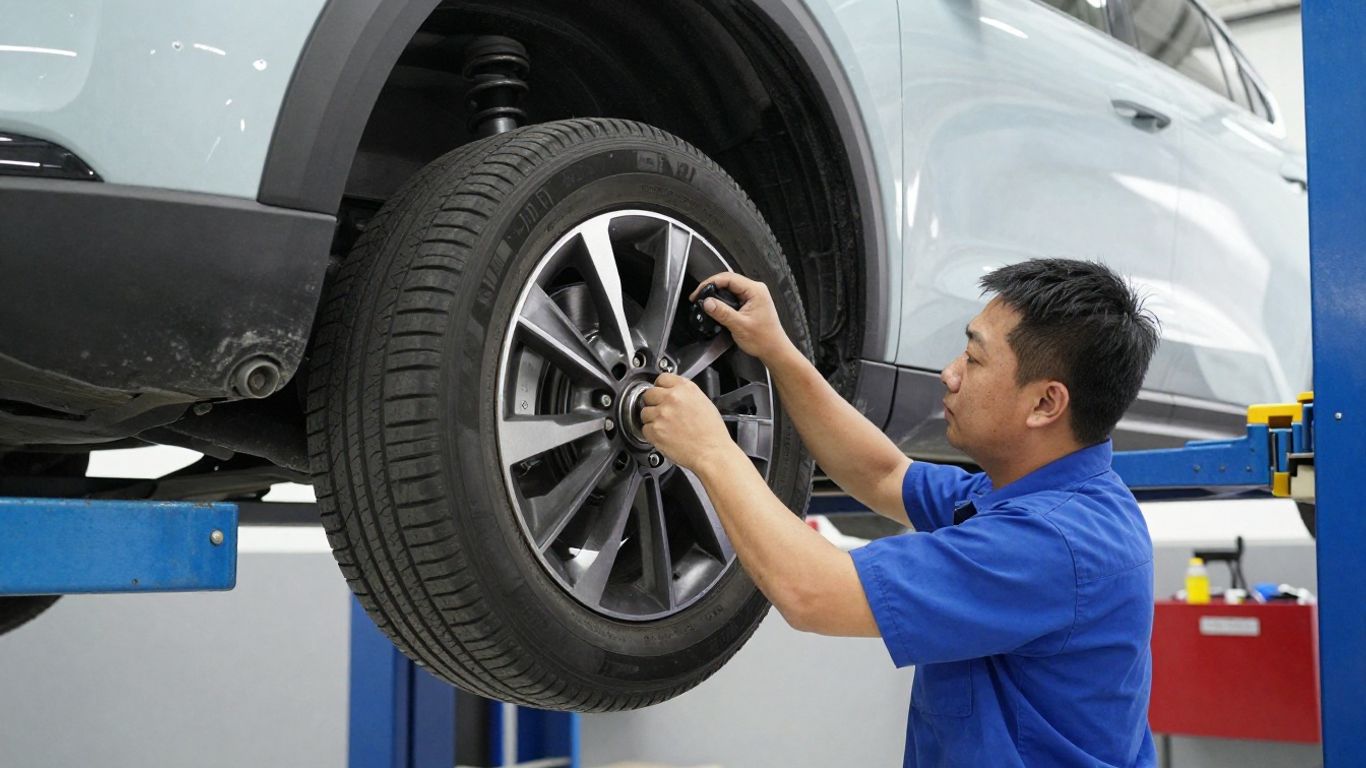
Tyres, wheel alignment, and suspension checks
Check pressures when the tyres are cold and use the vehicle’s specified values. Uneven wear, steering pull, vibration, or a new thump after a pothole can point to alignment, wheel, or suspension issues. Electric vehicles can deliver immediate torque, so careless acceleration may also expose weak tread or poor road conditions quickly.
Inspect before long regional trips, especially after rough roads or kerb impacts. Replacing tyres as a matched, appropriate set where required can preserve handling and predictable grip.
Brake inspection and regenerative braking
Regenerative braking changes how the car slows, but the friction brakes remain safety-critical. A vehicle that is driven gently may use them less often, which makes inspection and appropriate cleaning or servicing worthwhile. Any grinding, pulling, vibration, or change in pedal feel should be investigated promptly.
Use the controls as instructed and do not assume a regenerative setting can compensate for wet roads, poor tyres, or excessive speed. Braking distance still depends on conditions and grip.
Cabin filters, fluids, wipers, and other service items
Cabin filters, coolant or other specified fluids, wiper blades, lights, air-conditioning performance, and door seals all deserve attention. The exact list depends on the model and schedule. Simple checks are especially useful before summer, dusty travel, and long periods of rain.
For workshop communication, a Digital Vehicle Inspection process can make inspection findings easier to review when a garage offers it. The useful principle is straightforward: understand what was checked, what needs attention, and what can safely wait.
Preparing for scheduled servicing and inspections
Bring the service history and mention every symptom, even if it is intermittent. Note when a warning appeared, whether charging was affected, and what the car was doing at the time. Ask which items are due now and which are recommendations based on condition.
A practical record can include:
| Record to keep | Why it helps | When to update it |
|---|---|---|
| Service invoice | Confirms completed work | After every visit |
| Tyre pressures and tread notes | Reveals gradual wear | Before longer trips |
| Charging interruptions | Identifies recurring patterns | Each unusual event |
| Warning-light details | Gives technicians useful context | As soon as possible |
The table is deliberately simple, but consistency matters more than elaborate record-keeping. A clear history can save time when different technicians see the vehicle over its life.
Use software and connected features effectively
Software is now part of vehicle ownership, though it should support—not replace—careful driving. Updates, mobile applications, driver-assistance settings, and account permissions can affect the daily experience. Read prompts fully and avoid making changes while driving.
Keeping vehicle software and apps up to date
Install updates through the vehicle’s stated process and keep the phone application current where it is needed for charging or account functions. Use a reliable connection, maintain adequate vehicle power, and allow time for a restart or temporary loss of a feature. If an update fails repeatedly, record the message and seek support rather than experimenting with unofficial files.
Digital routines are easier to maintain when they stay modest. Advice on healthier daily habits is not automotive guidance, but its broader lesson—small routines are easier to sustain—also applies to checking updates and charging notifications.
Using driver-assistance systems responsibly
Driver-assistance features have limits and require an attentive driver. Keep your hands, eyes, and judgement engaged, and follow the vehicle’s instructions about roads, weather, lane markings, and sensor obstructions. Clean cameras and sensors when conditions affect visibility.
No assistance feature removes responsibility for speed, following distance, or hazard awareness. Treat it as help with a task, not permission to disengage.
Troubleshooting warning lights and system alerts
Start by reading the exact message and checking whether the vehicle is safe to drive. If there is smoke, burning smell, impact damage, loss of control, or a serious electrical warning, stop safely and follow emergency or roadside guidance. For less urgent alerts, photograph the display and note the time, temperature, and charging state.
A useful support conversation is specific. “The car felt different” becomes more actionable when paired with a repeatable route, an alert code, or a clear description of what happened.
Protecting accounts, keys, and vehicle data
Use strong, unique passwords for connected accounts and avoid sharing login details casually. Review who has digital access, protect physical keys, and remove former users when ownership changes. Be careful with third-party services that request more permissions than their purpose requires.
Owners who manage several digital tools may find general mental energy management useful as a reminder to reduce unnecessary notifications and account clutter. Keep the vehicle’s essential access methods available even when a phone is unavailable.
Prepare for Australian roads and ownership costs
A car can be mechanically sound and still be poorly prepared for its route. Australian travel may involve long gaps between towns, sudden weather, unsealed surfaces, and limited mobile coverage. Ownership planning should therefore include practical contingencies, not just the purchase price and advertised range.
Planning road trips across remote areas
Build the route around confirmed charging points, realistic distances, and a reserve for detours. Check station status close to departure, save addresses and phone numbers, and tell someone the broad itinerary when travelling through isolated areas. Food, water, sun protection, a tyre inflator or repair plan, and a charged phone are sensible additions.
Do not assume the next charger will be open, compatible, or free. A slower fallback may be more useful than a perfect plan that depends on one location.
Handling floods, extreme weather, and rough roads
Avoid floodwater and heed road closures. After a deep-water crossing, impact, or suspected underbody damage, arrange an inspection before continuing normal use. Heat can also affect people, tyres, charging equipment, and roadside recovery, so plan breaks and protect the car where possible.
Unsealed roads call for lower speeds, greater following distances, and more frequent checks for stones, dust, and tyre damage. A route that is technically possible may still be unsuitable for the vehicle, weather, or recovery resources available.
Understanding roadside assistance and repair access
Read the roadside-assistance terms before travelling: towing distance, charging-related callouts, remote-area limits, and coverage for punctures may differ. Save the manufacturer’s support number and your insurer’s claim line offline. In remote regions, ask in advance whether a local provider can safely recover an EV.
For businesses coordinating customer enquiries, DealDrive is a separate sales CRM example rather than a vehicle service; the relevant ownership lesson is simply to keep support contacts organised and easy to retrieve. Do not wait for a breakdown to discover that a preferred repairer cannot work on high-voltage systems.
Managing insurance, registration, and resale considerations
Keep registration dates, insurance renewals, finance documents, and service records together. Tell the insurer about modifications, accessories, regular travel, and any relevant usage. Resale value is influenced by condition, mileage, battery and charging history where available, tyres, records, and the remaining terms of applicable coverage.
A clean interior and honest disclosure will not guarantee a particular price, but they make a future sale less complicated. If you use outside help for owner communications or social media management, keep marketing language separate from verified vehicle condition and service evidence.
Conclusion
Keeping BYD EVs on Australian roads becomes much less daunting when ownership is treated as a collection of repeatable habits: charge with a plan, inspect wear items, respect weather and distance, keep software and records current, and ask for qualified help when a warning appears.
Frequently Asked Questions
How often should an electric vehicle be serviced?
Follow the service interval in the vehicle handbook and warranty documents. Arrange an earlier inspection if you notice warning lights, unusual noises, tyre problems, charging changes, or handling issues.
Is home charging always necessary?
No. Workplace and public charging can work well, depending on access, route, parking, and weekly distance. Home charging is mainly valuable for convenience and predictable overnight replenishment.
Does fast charging damage an EV battery?
Fast charging is a normal feature when used appropriately, but charging behavior and limits vary by vehicle and conditions. Follow the manufacturer’s guidance and use slower charging when it better suits your routine.
What should I do if range suddenly drops?
Record weather, speed, route, load, tyre pressures, and charger details. If the change is persistent or accompanied by a warning, contact a qualified service provider rather than trying to diagnose high-voltage systems yourself.
Can an EV drive through floodwater?
Do not enter water of unknown depth or drive around road closures. Flooding can create serious hazards for occupants, the vehicle, and recovery workers.
What should I carry on a remote road trip?
Carry water, food, sun protection, a charged phone, route information, and a realistic tyre and recovery plan. Confirm charging availability and keep a reserve for detours and changing conditions.
How can I preserve an EV’s resale value?
Keep the vehicle clean, maintain tyres and service items, follow the scheduled inspections, and retain invoices and charging-related records. Accurate disclosure is preferable to making unsupported claims about battery condition.