

Key Takeaways
Finding the right replacement starts with accurate vehicle details and a part number, not a guess from a photo. A little checking before you order can prevent delays and make installation safer.
- Confirm the model year, trim, market, and VIN before buying.
- Compare part numbers and specifications, especially for safety-critical components.
- Weigh fit, quality, warranty terms, and total cost when choosing genuine or aftermarket parts.
- Check a supplier’s credentials, stock status, and return policy before paying.
- Use a qualified technician when a repair involves high-voltage systems or safety-critical work.
Identify the right part for your Atto 2
Atto 2 spare parts can vary by model year, trim, and the market a vehicle was built for. Start with the details on the vehicle and the part you need, then check them against a reliable catalog or supplier listing. A similar-looking component is not necessarily interchangeable. A few minutes spent confirming the match can save time and return costs.
Check the model year, trim, and market
Write down the vehicle’s model year, trim, and country of original sale before searching. Vehicles sold in different markets can have different specifications, so a listing that names the same model may not confirm a fit for yours. If the car was imported, note that too; the vehicle import requirements may help explain why its original market matters when checking parts and paperwork.
Use the VIN to confirm compatibility
The vehicle identification number can help a dealer or parts supplier check the correct configuration. Share it directly with a trusted seller when requesting a match, and avoid posting it publicly alongside personal details. Treat a VIN result as a useful cross-check rather than a reason to skip comparing the actual part number and specifications.
Compare part numbers and specifications
A part number is usually more useful than a broad description such as “fits Atto 2.” Compare the number on the existing component, where visible, with the replacement listing and any catalog information available. The table below shows which details are worth lining up before you commit.
| Detail to compare | What to check | Why it matters |
|---|---|---|
| Part number | Exact number or documented supersession | Helps distinguish similar components |
| Vehicle fitment | Model year, trim, and market | Reduces the chance of ordering a near-match |
| Physical details | Mounts, connectors, dimensions | Helps confirm that the part can be fitted |
| Condition and contents | New, used, or remanufactured; included hardware | Clarifies what arrives and what else may be needed |
If a listing does not provide enough detail, ask the seller to confirm the missing information in writing. A clear match across several details is more reassuring than a single broad compatibility claim.
Ask a dealer to verify uncertain matches
If the catalog result is ambiguous, ask an authorized BYD dealer or a parts professional to check the VIN and part number together. Send clear photographs of the old component and its markings if requested, but do not rely on appearance alone. When you receive an answer, keep the confirmation with your quote so there is a record of what was checked.
Understand which spare parts you may need
A replacement part may be needed after damage, wear, or a fault, and each type calls for a different level of checking. Begin by identifying the area of the vehicle and whether the component affects visibility, restraint, braking, or electrical safety. Accessories can be useful for protection and storage, but they are not substitutes for a failed or damaged repair part. For everyday add-ons, Atto 2 accessories are a separate category from replacement components.
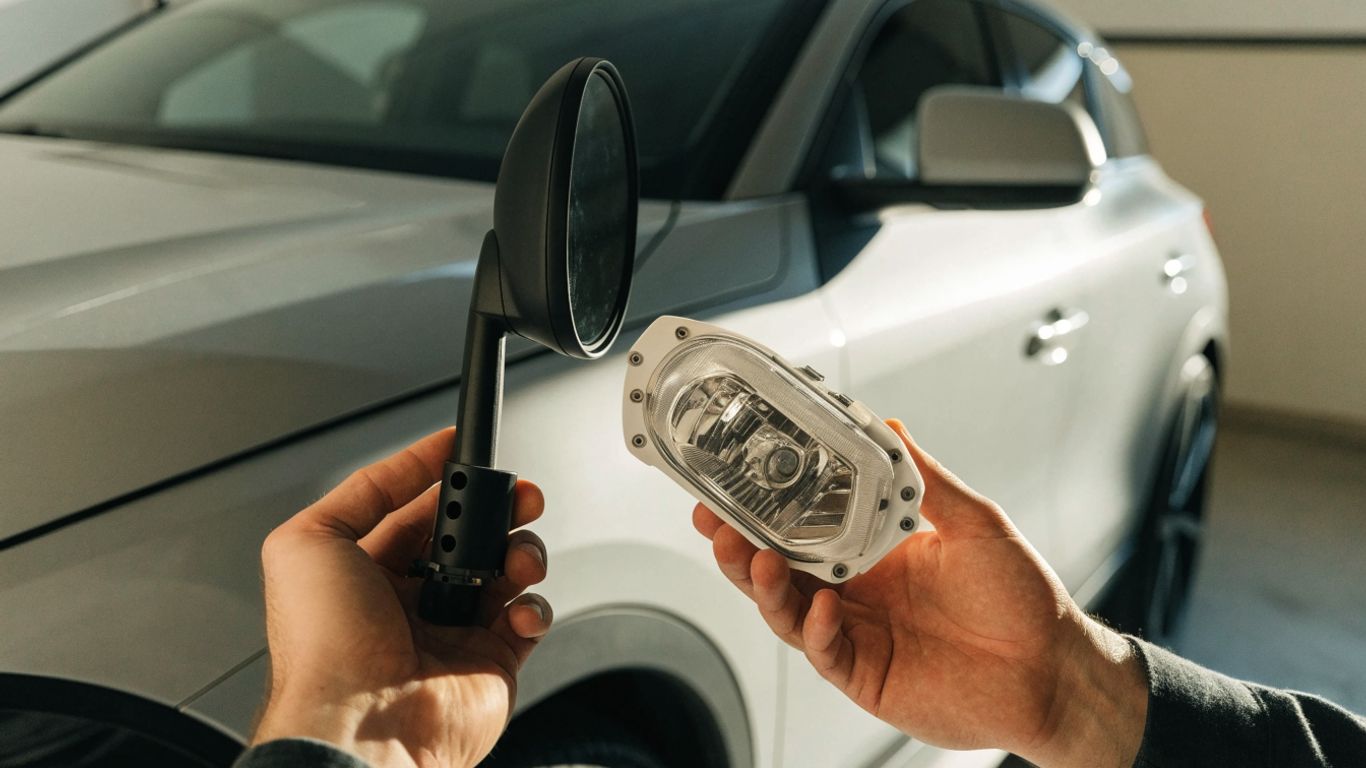
Exterior panels, mirrors, and lighting
Body panels, mirror assemblies, and lamps can look alike while differing in fixings, connectors, or finish. Check the side of the vehicle, mounting points, and any included hardware; for lighting, make sure the listing identifies the correct assembly rather than only a bulb or lens. Damage near a sensor or wiring should be assessed before ordering, since the visible piece may not be the only component affected.
Interior trim and comfort components
Interior replacements can include trim pieces, switches, seat-related parts, or storage components. Compare color, finish, shape, and attachment points, and ask whether clips or fasteners are supplied. If you are actually looking to protect or organize the cabin rather than replace a damaged part, tailored storage and protection accessories may be a more relevant search.
Tires, brakes, and suspension parts
Tires, brake components, and suspension parts affect how the vehicle drives and stops, so match specifications carefully and avoid choosing solely by price. Check the vehicle documentation or ask a qualified professional to confirm the required size and specification. For a general parts search, keep separate notes for consumables such as tires and for model-specific components; that helps prevent a broad listing from being mistaken for a confirmed fit.
EV-specific components and charging equipment
Electric vehicles have components and charging equipment that require careful identification. Confirm whether a listing concerns the vehicle itself, an accessory, or charging equipment intended for a particular use, and follow the relevant manuals. If you use a public charger, this public charging safety guide covers practical checks such as inspecting equipment and protecting payment details.
Choose between genuine and aftermarket parts
The right choice depends on the component, available documentation, fit, cost, and any applicable warranty conditions. Genuine parts and aftermarket parts should both be checked against the vehicle details rather than chosen by label alone. For items that affect safe operation, ask a qualified professional to review the proposed replacement. A confirmed fit matters more than a familiar-looking listing.
Compare fit, quality, and warranty coverage
Ask what evidence supports compatibility, what condition the part is in, and what warranty applies to both the component and its installation. Warranty terms vary by seller and product, so request them before purchase rather than assuming that coverage is included. A useful comparison focuses on documented fit and terms, not a vague assurance that a part is “the same.”
Check safety and regulatory requirements
Some components may be subject to safety or regulatory requirements, and the relevant rules can depend on the part and where the vehicle is registered. Check local requirements or consult a qualified repairer before fitting parts that affect lighting, braking, restraints, or other safety systems. Keep any supporting documentation with the repair records in case it is needed later.
Weigh cost savings against long-term reliability
A lower advertised price does not always mean a lower total cost if the part needs extra shipping, hardware, or repeat fitting. Compare the same specification and condition across quotes, then weigh the savings against the seller’s return terms and warranty. For a cosmetic, low-risk item, your priorities may differ from those for a component that affects safe driving.
Find reputable Atto 2 parts suppliers
A reliable seller should be willing to confirm compatibility, explain the part’s condition, and set out delivery and return terms clearly. Start with a dealer or established parts retailer, then compare the information they provide rather than relying on a polished listing alone. The purpose is to find a supplier who can answer specific questions about the component and stand behind the transaction.

Start with authorized BYD dealers
An authorized BYD dealer is a sensible place to ask about genuine parts and uncertain catalog matches. Provide the VIN and the part number if you have it, and request a written quote that identifies the component. If the quote is unclear, ask what vehicle details were used to confirm the match before placing an order.
Evaluate independent parts retailers
Independent retailers may offer used, genuine, and aftermarket parts, so check the condition and source of each item rather than treating all listings alike. Ask whether the seller has checked compatibility for your specific vehicle and what information supports that answer. Comparing parts sourcing options can help you see what details a retailer provides, but verify any fitment and shipping terms directly before buying.
Verify seller credentials and return policies
Look for clear business contact details, written fitment information, and a return policy that explains deadlines, condition requirements, and who pays return shipping. A seller should be able to tell you how an incorrect match is handled. When judging service providers, credential checks and clear communication matter; these provider selection criteria offer a general reminder to ask about qualifications and follow-up, though vehicle parts have their own fitment requirements.
Watch for counterfeit or misrepresented listings
Be cautious when the part number, condition, or source is missing, or when the price is unusually low without a clear explanation. Ask for current photographs and written confirmation of what is included, especially for used components. Keep a copy of the listing and seller responses, and do not proceed if the details change between the quote and checkout.
Compare prices and plan your purchase
A useful quote makes it possible to compare like with like. Send each supplier the same part number and vehicle details, and ask them to state the part’s condition, availability, and included items. Then calculate the delivered and fitted cost rather than comparing only the headline price. For decisions involving a health check, readers may find this preventive health check overview useful; for a vehicle purchase, keep your focus on part fitment and repair documentation.
Request quotes using the part number
Share the part number, VIN, model year, trim, and a short description of the issue when asking for a quote. If you do not yet have a part number, explain what needs replacing and include photographs, while making clear that the match still needs verification. Consistent details make it easier to compare responses and spot differences in condition or scope.
Include shipping, taxes, and fitting costs
The purchase price is only one part of the bill. Ask whether freight, taxes, installation, or diagnostic work are included, and check whether additional hardware may be needed. A quick written breakdown can make two similar quotes easier to compare and help avoid surprises after ordering.
Check stock status and delivery estimates
Ask whether the item is physically in stock, needs to be sourced, or is expected to arrive later. Request an estimated dispatch and delivery window, and confirm how the seller will contact you if that changes. If the vehicle is off the road, share that timing when requesting the estimate, but avoid treating an estimate as a guarantee.
Review warranty terms before ordering
Read the warranty and returns information before paying, including any conditions tied to professional installation. Keep the order confirmation and the exact listing details together in your records. Reading policies closely is a useful habit in many purchases, as these terms and conditions illustrate, but the seller’s own parts warranty is the one that governs your order.
Arrange safe installation and ongoing care
Some replacements are straightforward, while others require specialist tools, calibration, or electrical safety procedures. Decide who should do the work before ordering, since installation requirements can affect the choice of part and the total cost. Keep the vehicle’s manuals in reach, and stop if the repair instructions or component identity are unclear.
Decide when professional fitting is necessary
Use a qualified repairer for work involving brakes, suspension, airbags, high-voltage systems, or components that may need calibration. A professional can also check whether a visible fault has a less obvious cause and whether additional parts are required. For simpler cosmetic replacements, follow the vehicle guidance and the part instructions, and do not force a component that does not align as expected.
Follow EV safety precautions
Follow the vehicle manufacturer’s safety instructions and do not work on high-voltage components unless you are qualified to do so. If a repair involves charging equipment or electrical systems, use an appropriately trained professional and the correct procedures. When in doubt, stop and arrange an inspection rather than experimenting with an unfamiliar connector or cable.
Keep records of parts and repairs
Save receipts, part numbers, seller details, installation dates, and any work notes or diagnostic results. A simple record makes it easier to identify what was fitted if a later issue arises and gives a repairer useful context. Keep photographs of labels or old components when practical, but store personal vehicle details securely.
Confirm how replacement parts affect warranty coverage
Before a repair, ask the relevant dealer or warranty provider whether the proposed part or installation has any effect on coverage. Request an answer in writing and keep it with the invoice and repair records. Avoid assuming that every aftermarket part changes warranty coverage—or that none do—because the answer depends on the terms and the circumstances.
Conclusion
Choosing Atto 2 spare parts is mostly a matter of careful matching, clear questions, and sensible planning. Confirm vehicle details and part numbers, compare the full cost and terms, and use a qualified professional when safety or EV systems are involved. A well-documented purchase is easier to fit, maintain, and revisit if something does not go as expected.
Frequently Asked Questions
How can I check whether a replacement part will fit?
Compare the vehicle’s model year, trim, market, VIN, and the part number against a reliable catalog or supplier confirmation. Ask for written verification if any detail is uncertain.
Is a VIN enough to identify the correct part?
A VIN can help identify the vehicle configuration, but it is best used alongside the part number and specifications. A professional or supplier can help interpret catalog information when a match is unclear.
Are genuine parts always the best choice?
Not necessarily. Compare the documented fit, condition, warranty, and total cost of each option, and consider professional advice for safety-critical components.
What should I ask a parts seller before ordering?
Confirm compatibility, condition, what is included, stock status, delivery estimate, warranty, and return terms. Keep the answers and quote for your records.
Can I install replacement parts myself?
That depends on the part and your experience. Repairs involving brakes, suspension, airbags, high-voltage systems, or calibration are best handled by a qualified professional.
What details should I include when requesting a quote?
Provide the VIN, model year, trim, market, and part number if available. Add clear photographs and a short description if you are not sure which component is needed.
How should I compare two parts quotes?
Check that both quotes cover the same part number, condition, fitment, and included items. Then compare shipping, taxes, installation costs, delivery estimates, and warranty terms.