

Key Takeaways
Knowing how to track your vehicle’s energy storage capacity is essential for longevity. This article highlights the best methods for monitoring your battery’s condition.
- Understand the unique chemical structure of the Blade Battery.
- Utilize onboard infotainment systems for basic energy data.
- Integrate external OBDII tools for granular, real-time insights.
- Implement charging habits that mitigate long-term degradation.
- Schedule periodic professional inspections to verify performance.
Understanding the BYD Blade Battery technology
Chemical composition and safety architecture
The BYD Blade Battery utilizes a lithium iron phosphate (LFP) cathode chemistry, which is chosen for its superior thermal stability and structural durability compared to traditional designs. This unique arrangement stacks thin, blade-like cells within the pack to optimize heat dissipation and physical protection, creating a rigid structure that effectively minimizes the risk of overheating. The architecture is designed to handle thousands of charge cycles while maintaining high energy density, ensuring the system remains a reliable part of every BYD electric car lineup.
Expected degradation and cycle life
Battery capacity naturally undergoes microscopic changes over time, as ions are shuttled between electrodes. While initial minor capacity loss is typical, long-term degradation is often much slower than previous generation chemistries due to the inherent stability of the LFP design. Drivers can expect the primary energy storage to sustain the vehicle throughout its service life, provided they follow simple charging methods designed for long-term health.
Manufacturer warranty coverage for battery health
Warranty frameworks are designed to provide peace of mind regarding the BYD battery management system. These policies generally cover performance consistency under normal usage conditions, ensuring that should capacity drop below specified thresholds prematurely, the manufacturer provides corrective support. Checking terms remains important for all owners to understand the specific length and mileage limits associated with their vehicle’s powertrain protection.
In-vehicle battery diagnostic tools

Reading range estimates versus real-world performance
Drivers often notice their expected range fluctuates based on driving habits, current ambient temperatures, and the use of power-hungry comfort features. These fluctuations are normal, as the dashboard calculates range based on recent energy consumption patterns rather than providing a stagnant percentage of current total capacity. Relying on these numbers as a precise BYD battery health check can lead to confusion, as they measure immediate efficiency rather than the actual physical condition of the battery cells.
Navigating the infotainment system for energy data
Modern vehicles include menu systems that provide aggregated energy metrics, which can be useful for identifying abnormal consumption patterns. Users can review historical efficiency ratings in the energy management screen to see how their current vehicle state compares to factory-new performance levels. Below is a breakdown of common metrics found in these systems:
| Metric Category | Data Type | Usage Context |
|---|---|---|
| Active Consumption | Real-time usage | Current drive efficiency |
| Charge History | Capacity logs | Session-based energy inflow |
| Thermal State | Temperature readings | Battery management status |
Looking at these logs consistently helps owners understand how weather or heavy usage impacts their daily driving range, though such data remains an indicator of system output rather than electrochemical health.
Interpreting historical charging logs
Reviewing the charging history provides a clearer picture of how often the vehicle hits full capacity versus partial cycles. Frequent patterns of deep cycling may impact the cell chemistry differently over time, so observing these logs allows drivers to adjust their habits to be more gentle on the battery management system long-term.
External software and monitoring tools
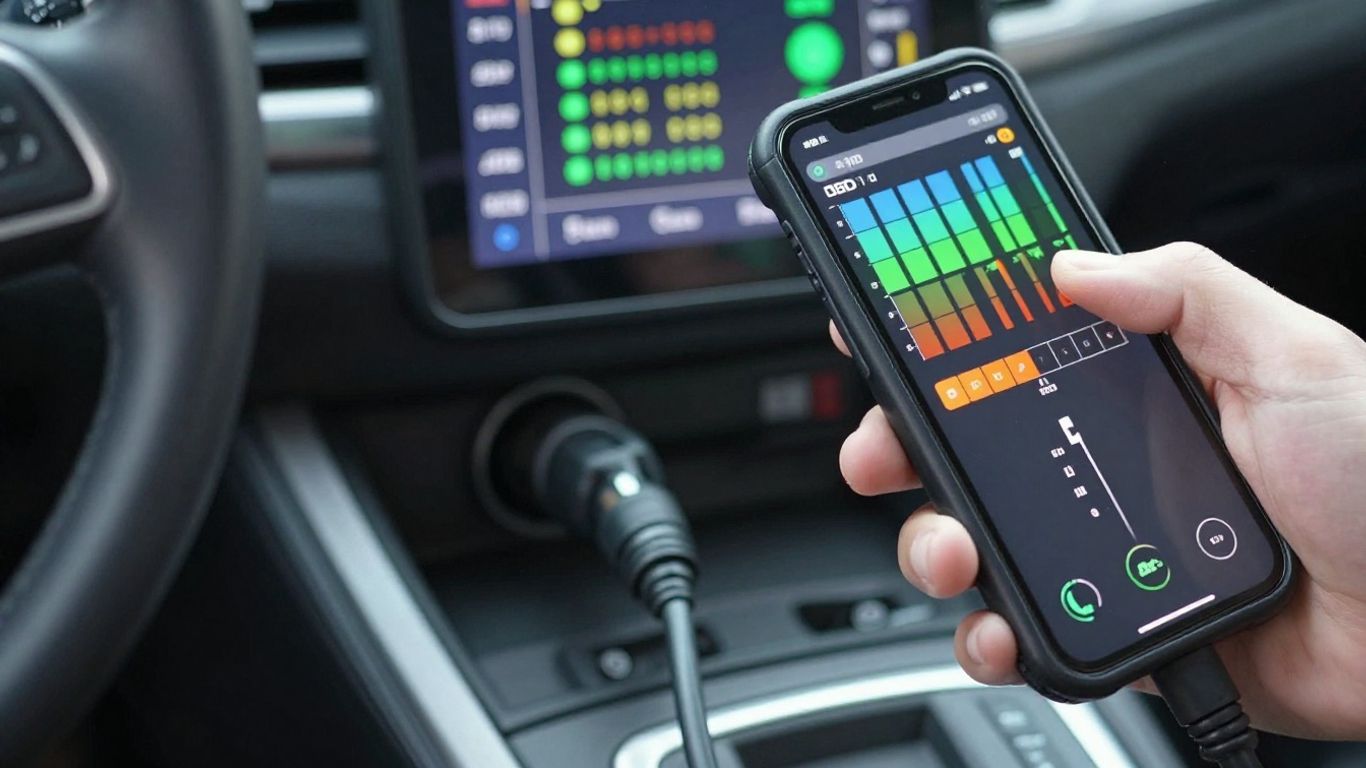
Connecting OBDII adapters for real-time data
For those wanting deeper technical insight, many owners turn to OBDII dongles which bridge the gap between internal data logs and user-accessible applications. These devices tap into the diagnostic port to stream information that isn’t typically displayed on the primary infotainment screen. This approach grants users direct access to raw cell voltages and balancing data, which are more indicative of internal health than the generic dashboard range estimation.
Synchronizing vehicle data with third-party EV applications
Once raw data is captured via an adapter, specialized software helps visualize the information in an easier-to-read format. Many users leverage these applications to track their vehicle’s historical performance, comparing it against others in the community. When setting this up, ensure you use trusted software to keep your vehicle data private and secure.
Understanding state of health (SoH) metrics
State of Health (SoH) is the definitive marker used in professional circles to quantify the aging of an energy storage unit. It typically represents the ratio of the battery’s current maximum capacity compared to its nominal capacity when brand new. Understanding this calculation involves several factors:
- Reviewing the total cumulative energy throughput over months or years of driving.
- Measuring internal resistance which tends to increase as electrode materials age.
- Comparing current discharge patterns against original manufacturer benchmarks for expected capacity.
- Tracking the accuracy of cell balancing which ensures all modules discharge at similar rates.
If you find these metrics useful, you can also explore other battery health tools for your various tech devices to keep everything running securely. For those concerned about technical measurements, professional centers remain the most accurate path to confirming the status of your powertrain.
Best practices for maximizing BYD battery lifespan
Managing state of charge limits for daily use
Maintaining the battery within a "sweet spot" of 20% to 80% is widely considered the best strategy for preserving the electrochemical stability of the cells. Keeping the vehicle fully charged at 100% for extended periods while parked can lead to unnecessary strain, so planning your usage to keep the state of charge in this moderate range will likely provide the most value over time.
Mitigating the impact of constant fast charging
While convenient for long trips, relying exclusively on high-speed DC chargers can create heat and stress that impact the power storage capacity more rapidly than slow, deliberate charging cycles. By balancing high-speed needs with home-based or workplace-based alternating current (AC) charging, owners can minimize the cumulative stress on the internal power architecture. This simple habit keeps your battery health much more consistent.
Protecting the battery from extreme temperature exposure
Extremes of heat and cold significantly impact the efficiency and longevity of lithium-based power units. Parking in covered, temperature-controlled garages when possible is a valuable habit for protecting the battery, as it prevents the on-board systems from continuously working to regulate temperatures. Consistent temperature management ensures that you aren’t forcing the cells to operate outside their optimal comfort range, which directly contributes to higher retention of total capacity.
Professional battery testing and maintenance
Recognizing warning signs of battery degradation
Owners should observe their vehicle for significant deviations in charging speed or unexpectedly rapid drops in range that don’t correlate with weather or heavy acceleration. While standard performance variations are normal, large, abrupt declines in range suggest that a deeper inspection is necessary. If you notice these symptoms, it is worth comparing them against personal maintenance schedules to see if you have missed any routine checks.
Procedures at authorized BYD service centers
Authorized BYD service centers utilize official diagnostic protocols that penetrate deep into the battery management firmware. Technicians perform comprehensive electrical tests while checking for fault codes that standard consumer-facing tools simply cannot see. These technicians can distinguish between legitimate mechanical health concerns and minor software calibrative needs, providing an authoritative assessment of your vehicle’s status.
Obtaining official health reports for vehicle resale
When preparing to sell your vehicle, obtaining a formal certification of the energy storage condition provides potential buyers with the transparency they need to feel confident. These reports serve as a verified record, differentiating your vehicle from others on the used market. Ensuring your ev battery transparency matches the physical data of the car builds trust, making the resale process much smoother for both parties involved.
Conclusion
Maintaining the long-term integrity of your transport energy source depends on a combination of informed charging habits and proactive monitoring. By following the guidelines for keeping your battery within ideal charge ranges and utilizing professional assessment services when necessary, you ensure your car remains as reliable as the day you first drove it. These simple, consistent steps are the most effective ways to preserve the value and function of your investment over the coming years.
Frequently Asked Questions
Does battery life depend on how I drive?
Performance and aging are affected by how you operate the vehicle, including aggressive acceleration and high-speed driving styles which create higher discharge rates and internal heat.
Can I use a generic charger for my vehicle?
It is always recommended to use charging equipment provided or officially suggested by the manufacturer to ensure voltage stability and full compatibility with the car’s protected electrical architecture.
What happens to a battery once it reaches low health?
As a battery ages, users may experience a decline in the real-world distance capabilities of the vehicle, often requiring more frequent stops to charge during long-distance travels.
How often should I perform a diagnostic check?
Many experts suggest checking vehicle energy logs during routine seasonal maintenance, ensuring any anomalies in charging patterns are caught and addressed by trained technicians as soon as they arise.
Are there specific signs of a failing battery pack?
Common indicators include a persistent inability to charge to the full projected capacity, recurring system warnings on the dashboard, or significant increases in charging duration when using standard equipment.
Does the battery need to be fully drained before charging?
Modern lithium-based batteries are designed to perform better with partial cycles rather than a full discharge to zero, so avoiding low-power operating states is generally better for internal health.
Is battery replacement common for electric vehicles?
Most batteries are designed to outlast the intended primary service period of the vehicle itself, making total replacement a rare event rather than a standard or expected maintenance step for the average owner.